Influencer campaigns either become reliable growth engines or expensive experiments that go nowhere.
The difference? Optimization.
Most brands treat influencer marketing like a one-off gamble: hire a few creators, cross your fingers, and hope something sticks. But teams getting real results treat it like a system with three interconnected parts:
• A creative system that produces repeatable formats that actually win attention
• A distribution system that combines organic reach with smart paid amplification
• A measurement system that delivers clear attribution and fast feedback loops
This guide shows you how to build all three. We're covering the complete optimization playbook for TikTok, Instagram Reels, and YouTube Shorts, backed by 2026 data and real campaign mechanics.
Why Influencer Marketing Optimization Matters in 2026
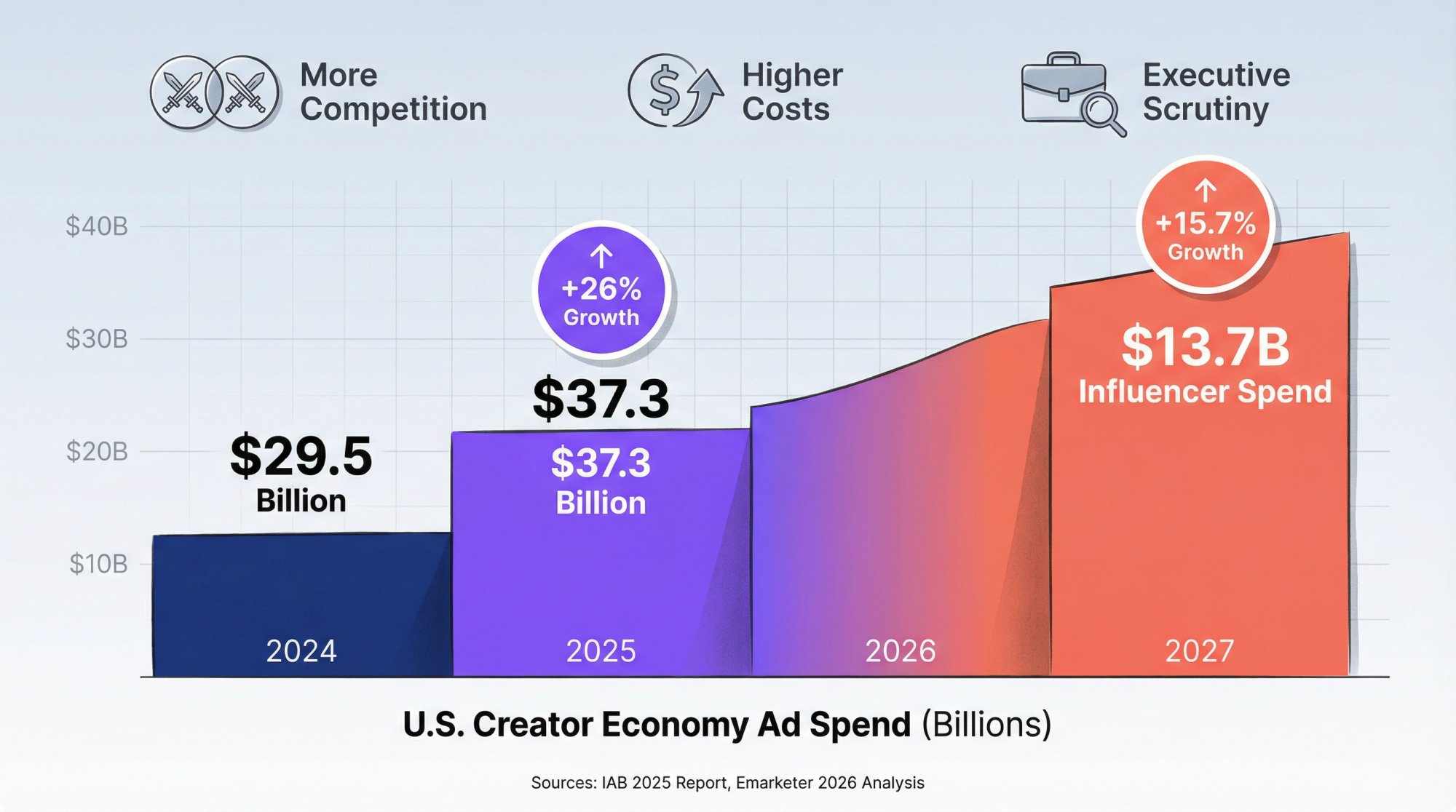
Creator spend isn't a nice-to-have line item anymore. IAB projected U.S. creator economy advertising to grow 26%, jumping from $29.5 billion (2024) to $37.3 billion (2025). Emarketer expects another 15.7% growth in 2026, pushing U.S. influencer marketing spend to $13.7 billion by 2027.
Translation: more competition, higher costs, more executive scrutiny on every dollar spent.
"We'll just hire some creators" doesn't cut it anymore. You need a system that learns and improves with each campaign.
The 6-Step Influencer Campaign Optimization Loop
Every high-performing influencer program follows this cycle:
Design: Define goals, measurement, creator selection criteria
Produce: Create content with clear constraints plus variation plans
Launch: Stage rollout with proper instrumentation and approvals
Read: Track early signals (watch time, saves, comment quality, CTR, CVR)
Decide: Kill losers, iterate on maybes, boost winners, scale breakouts
Systemize: Turn winners into templates and upgrade your creator roster
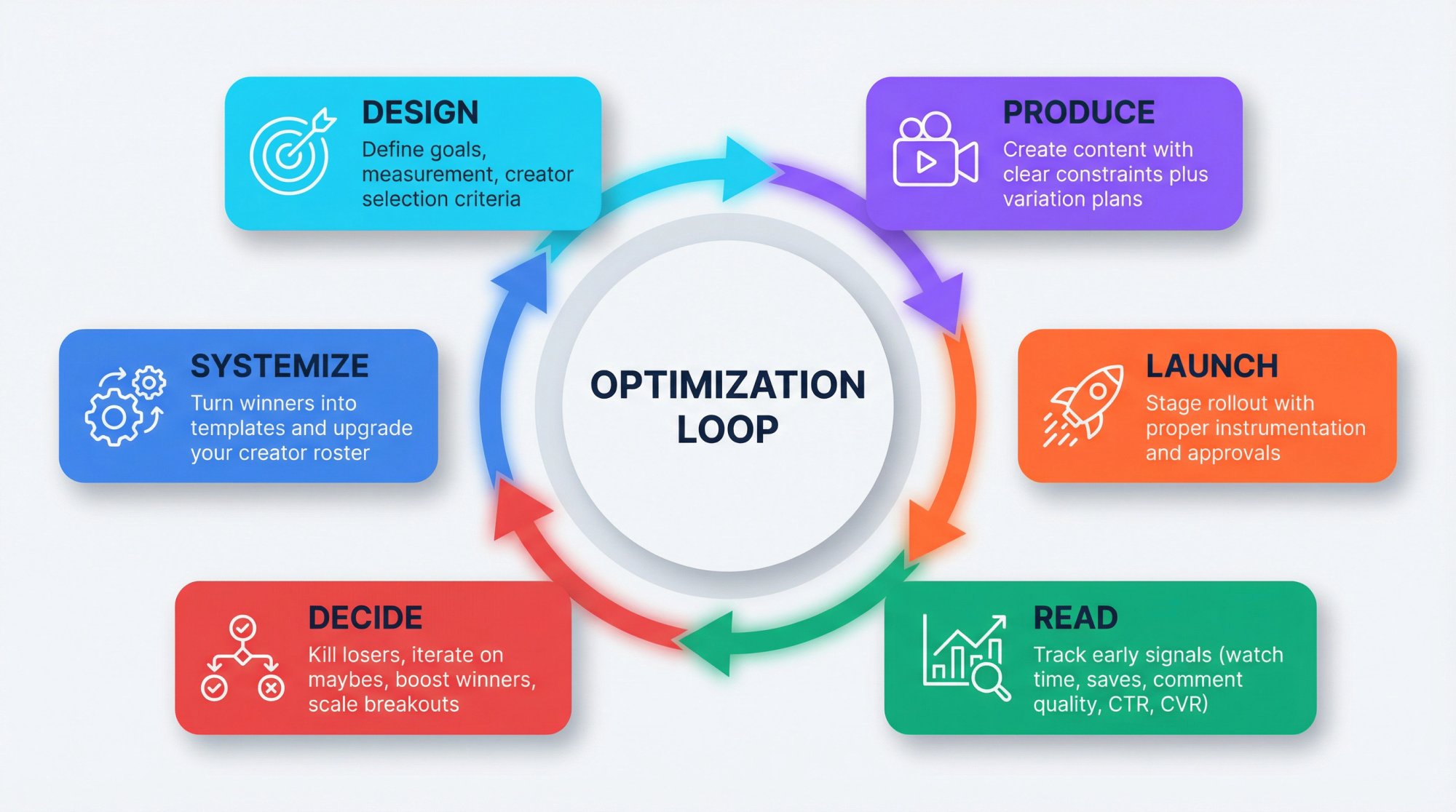
The rest of this post breaks down how to execute each step without handwaving.
How to Set Clear Goals for Influencer Campaigns
Most influencer campaigns try to be two things at once:
A content performance campaign (does the video capture attention?)
Plus a business outcome campaign (does it move installs, sales, or leads?)
When you "optimize," you're usually steering on one of these. Choose one primary goal per campaign. You can track secondary metrics, but don't optimize for them.
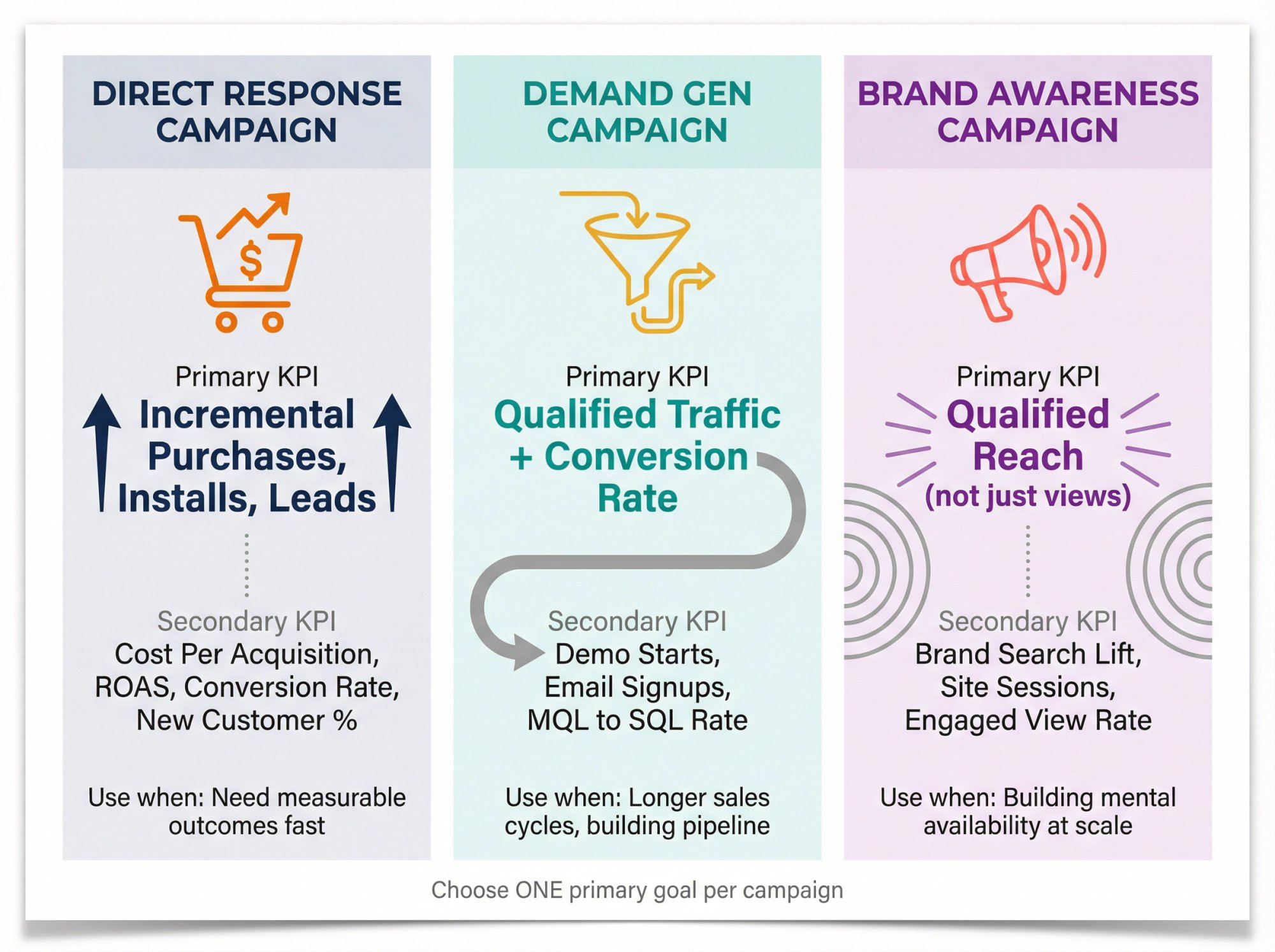
Direct Response Influencer Campaigns: What to Track
Use this when you need measurable outcomes fast (sales, installs, leads).
Primary KPI: Incremental purchases, installs, or qualified leads
Secondary: Cost per acquisition, ROAS, conversion rate, new customer percentage
Demand Gen Influencer Campaigns: What to Measure
Use this when sales cycles are longer and you need to build pipeline.
Primary KPI: Qualified traffic plus downstream conversion rate
Secondary: Demo starts, email signups, MQL to SQL rate
Brand Awareness Campaigns: How to Measure Impact
Use this when you're building mental availability at scale.
Primary KPI: Qualified reach (not just "views")
Secondary: Brand search lift, site sessions, engaged view rate
Critical insight: If you can't explain how your primary KPI eventually maps to revenue, you're doing vibes marketing, not optimization.
How to Track Influencer Marketing Performance
Optimization dies without measurement. You can't fix what you can't see.
The Complete Influencer Tracking Setup
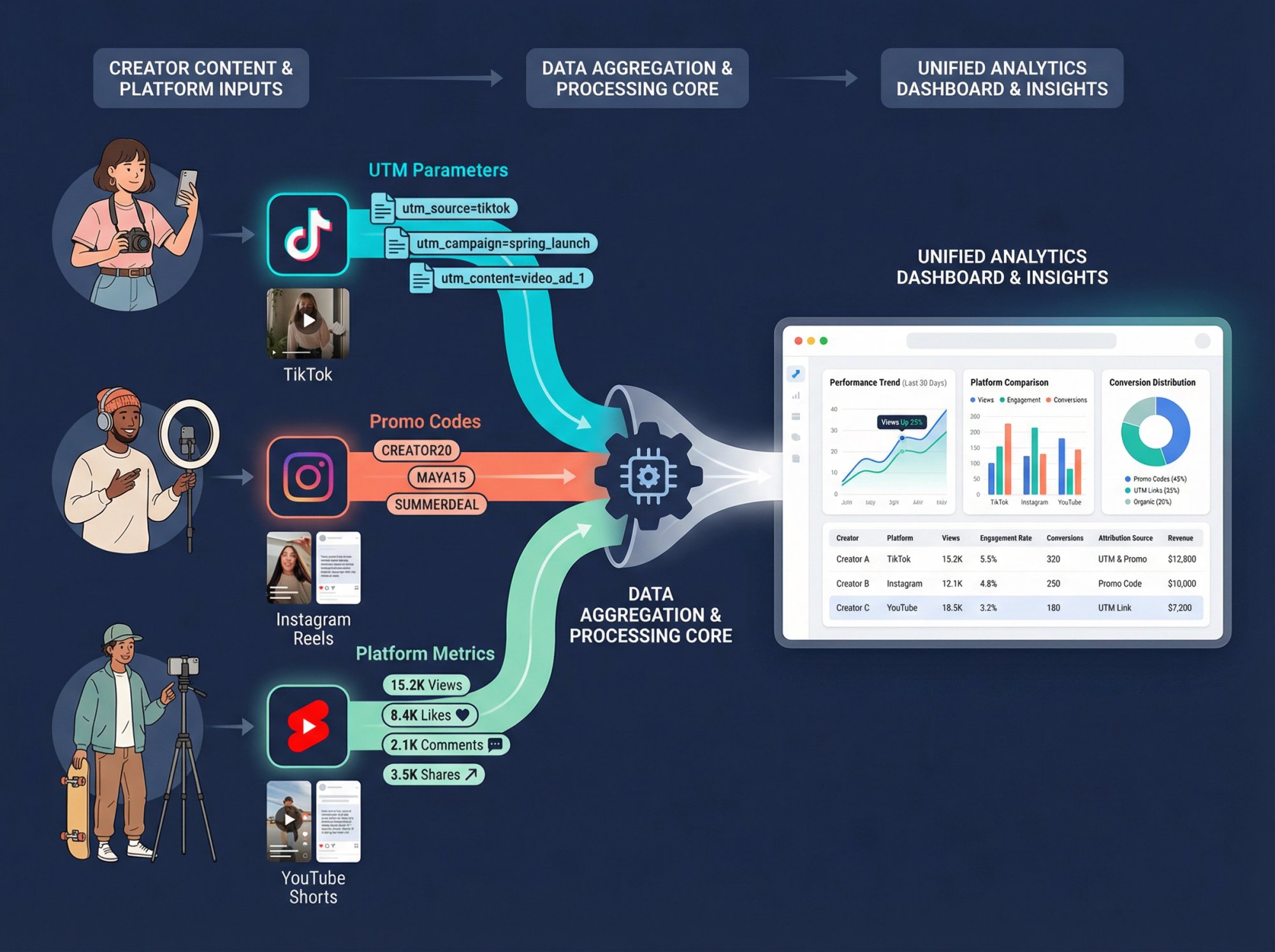
1) UTM links per creator (and per post)
Use unique UTMs so traffic and conversions segment by:
• Platform (TikTok, Reels, Shorts)
• Creator name
• Content concept or hook variant
• Posting date
At Shortimize, we recommend UTM tracking plus unique landing pages for maximum control and attribution clarity.
2) Promo codes or creator-specific offers
Codes are blunt but useful. They catch people who saw the video, didn't click immediately, but bought later. They also track "screenshot buyers" who share links in group chats.
3) Post-level performance capture (cross-platform)
You need every post, every metric, normalized enough to compare across platforms and creators.
Shortimize's influencer tracking tool pulls every post and video from public accounts, giving you aggregate tables you can export plus dashboards for views and engagement over time. We built this specifically because short-form is chaotic. If you can't see performance cleanly across creators and platforms, you'll scale the wrong content.
How to Test Incrementality in Influencer Marketing
Attribution is messy. If you want "board safe" proof, start testing incrementality through:
• Holdout audiences or geos
• Matched market tests
• Lift studies
You don't need a PhD. You need discipline: test one incrementality cut per quarter.
How Much Do Influencers Charge in 2026?
Pricing is negotiated and messy, but you still need benchmarks.
Shopify updated their influencer pricing guide in December 2025 with tier-based pricing ranges that vary significantly by platform and creator size. These are starting points, not fixed rates.
Influencer Pricing by Platform and Follower Count
| Platform | Nano | Micro | Mid-Tier | Macro | Mega |
|---|---|---|---|---|---|
| Instagram (per post) | $10–$100 | $100–$500 | $500–$5,000 | $5,000–$10,000 | $10,000+ |
| TikTok (per post) | $5–$25 | $25–$125 | $125–$1,250 | $1,250–$2,500 | $2,500+ |
| YouTube (per post) | $20–$200 | $200–$1,000 | $1,000–$10,000 | $10,000–$20,000 | $20,000+ |
How to Calculate Your Maximum Influencer Budget
Don't start with "what do they charge?" Start with what you can afford to pay.
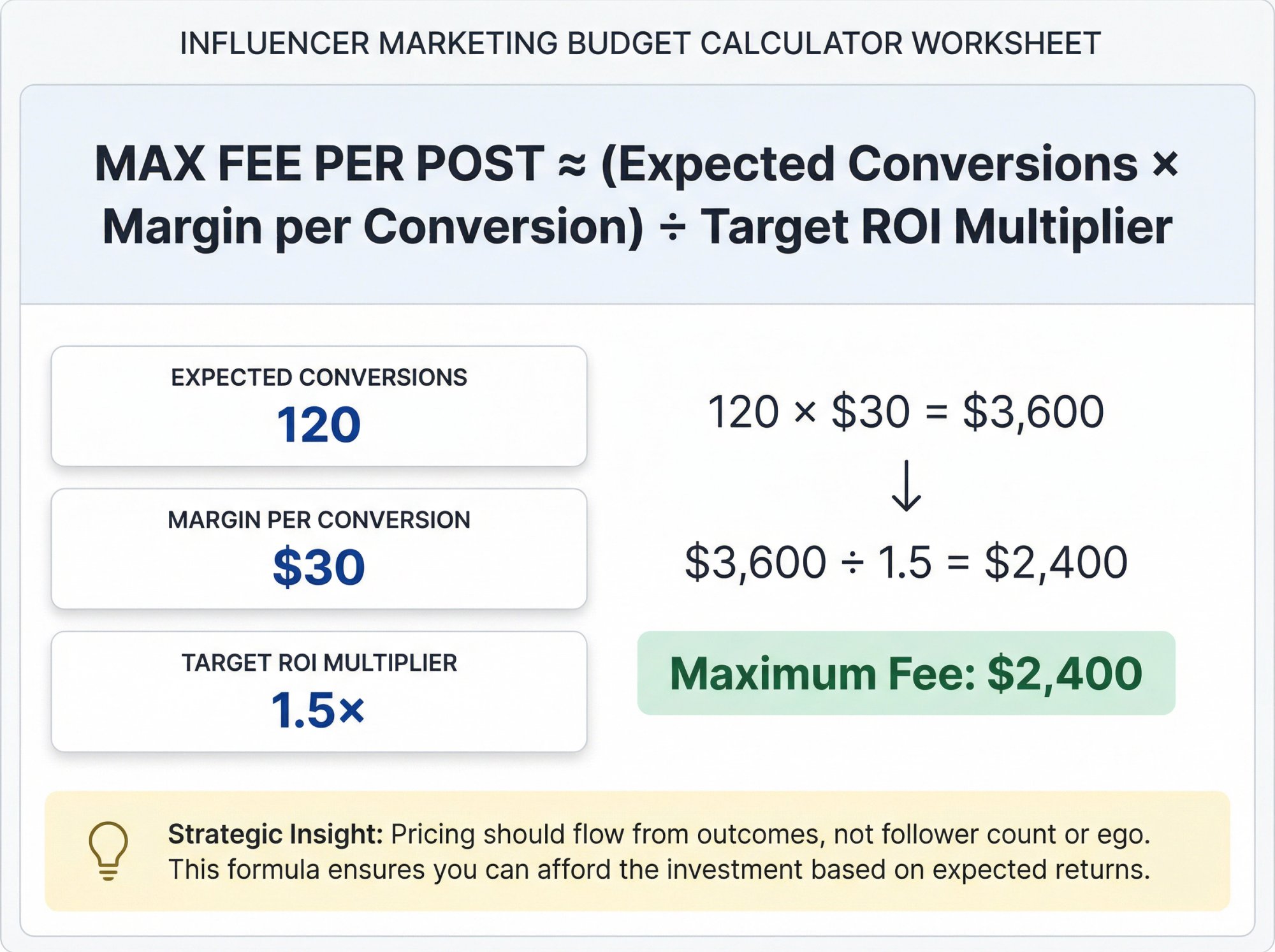
Max fee per post ≈ (Expected conversions × Contribution margin per conversion) ÷ Target ROI multiplier
Example scenario:
• Expected conversions: 120
• Margin per conversion: $30
• Target ROI multiplier: 1.5 (you want $1.50 back per $1 spent)
Max fee ≈ 120 × 30 ÷ 1.5 = $2,400
Then negotiate structure:
• Lower fixed fee plus performance bonus
• Affiliate commission on sales
• Tiered bonuses if they hit view or conversion thresholds
Why this works: Fees are costs. Outcomes are the business. Pricing should flow from outcomes, not ego or follower count.
How to Choose the Right Influencers for Your Campaign
Follower count is a weak predictor of campaign success. Your real job is predicting creative fit and distribution fit.
The 7-Point Influencer Scorecard (Copy This)
Score each criterion 1–5. Total out of 35. Only scale creators who score 26+.
Audience overlap (demographics plus psychographics)
Content format fit (do they already make content that resembles your best ads?)
Hook ability (first 1–2 seconds consistently strong?)
Proof of consistency (how often do they hit above baseline views?)
Comment quality (high-intent comments or just emojis?)
Brand safety plus compliance history
Operational reliability (communication, deadlines, revisions)
Shortimize makes this process faster because you can pull a creator's full content list with median and virality metrics, then identify top-performing patterns without manual scrolling. Learn more about how to analyze TikTok account performance and discover the best micro-influencers for your campaigns.
How to Analyze an Influencer's Best Content
Before hiring any creator, list their top 10 posts and answer:
• What are the recurring hooks?
• What problems do they solve in their content?
• What proof do they show (demo, results, social proof)?
• What's the typical pacing and editing style?
If you can't articulate this clearly, you're not ready to brief them. Use influencer analytics tools to identify these patterns systematically.
What Creative Strategies Work for Influencer Campaigns
Short-form success comes down to retention plus trust, not polish.
Socialinsider's 2026 benchmarks show:
• TikTok engagement rate: 3.70%, up 49% year over year
• Instagram engagement rate: 0.48%, roughly flat in 2025
• Average comments per post fell on TikTok (24%) and Instagram (16%), suggesting more passive engagement behavior
Translation: Your creative needs to earn attention fast and convert without relying on massive comment volumes.
The 5 Influencer Content Formats That Convert
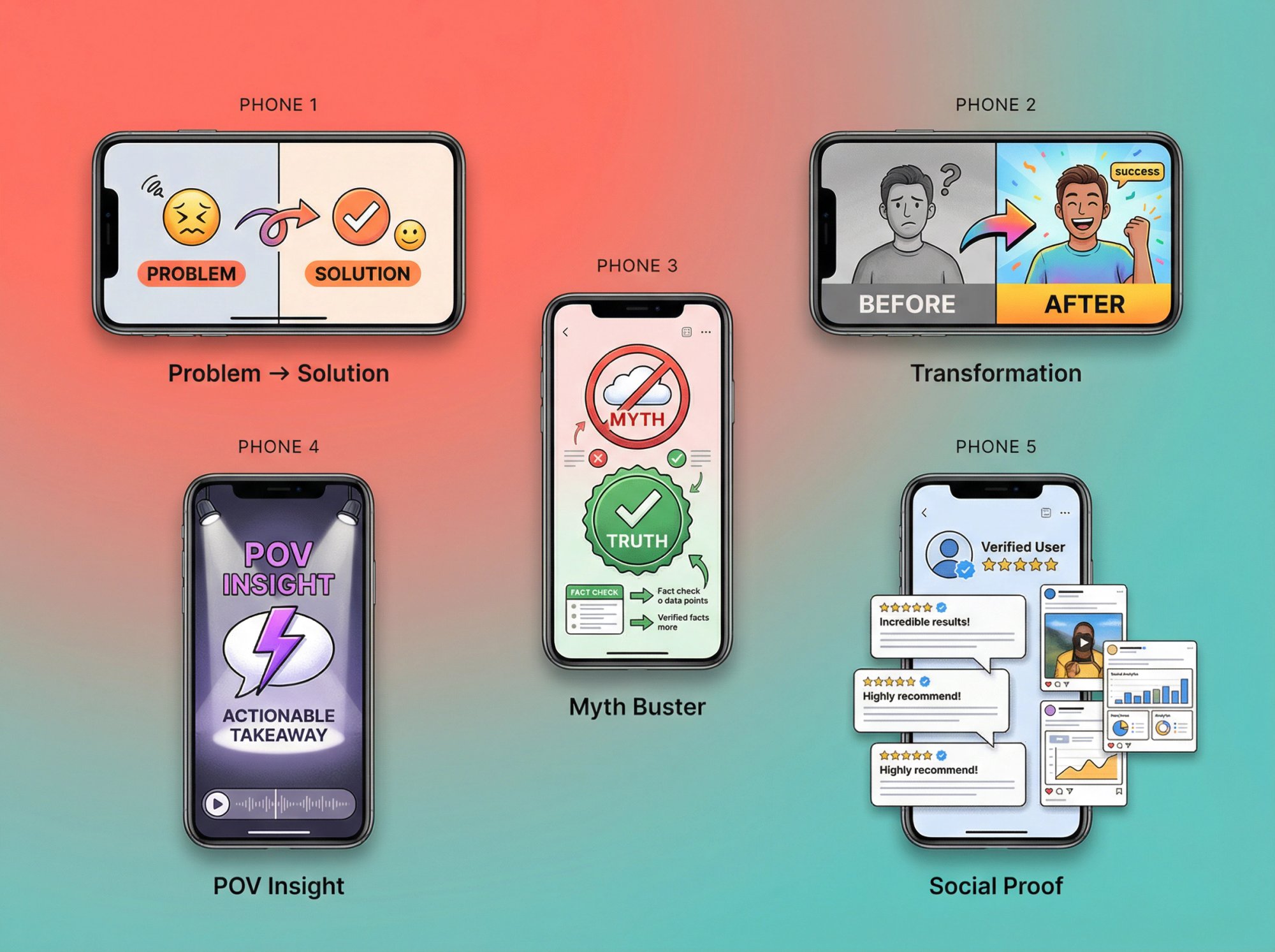
① Problem to solution demo
"If you struggle with X, watch this."
② Before and after transformation
Show change in the first two seconds.
③ My honest take (myth busting)
Works especially well in crowded categories where audiences are skeptical. Learn how to tell if an influencer has fake engagement before committing budgets.
④ POV or skit with sharp insight
Humor plus truth equals shareability.
⑤ Social proof stack
Screenshots, reactions, duets, stitches, reviews (keep it compliant).
How to Brief Influencers Without Over-Scripting
Give creators the following framework:
| Brief Element | What to Include |
|---|---|
| Objective | What should viewers do or feel? |
| Promise | What's the payoff for watching? |
| Proof | What can they demonstrate or show? |
| Constraints | Must-say, must-show, must-not-say |
| Hook Options | 3–5 hook variations they can choose from |
| CTA Options | Both soft and hard call-to-action versions |
Then let them speak like a human. 65% of influencers prefer being involved in developing campaign content rather than following rigid briefs, and audiences can tell when content feels scripted versus authentic.
How to Manage Influencer Campaign Operations
Influencer optimization is mostly operations, not creative genius.
Essential Influencer Deliverables Checklist
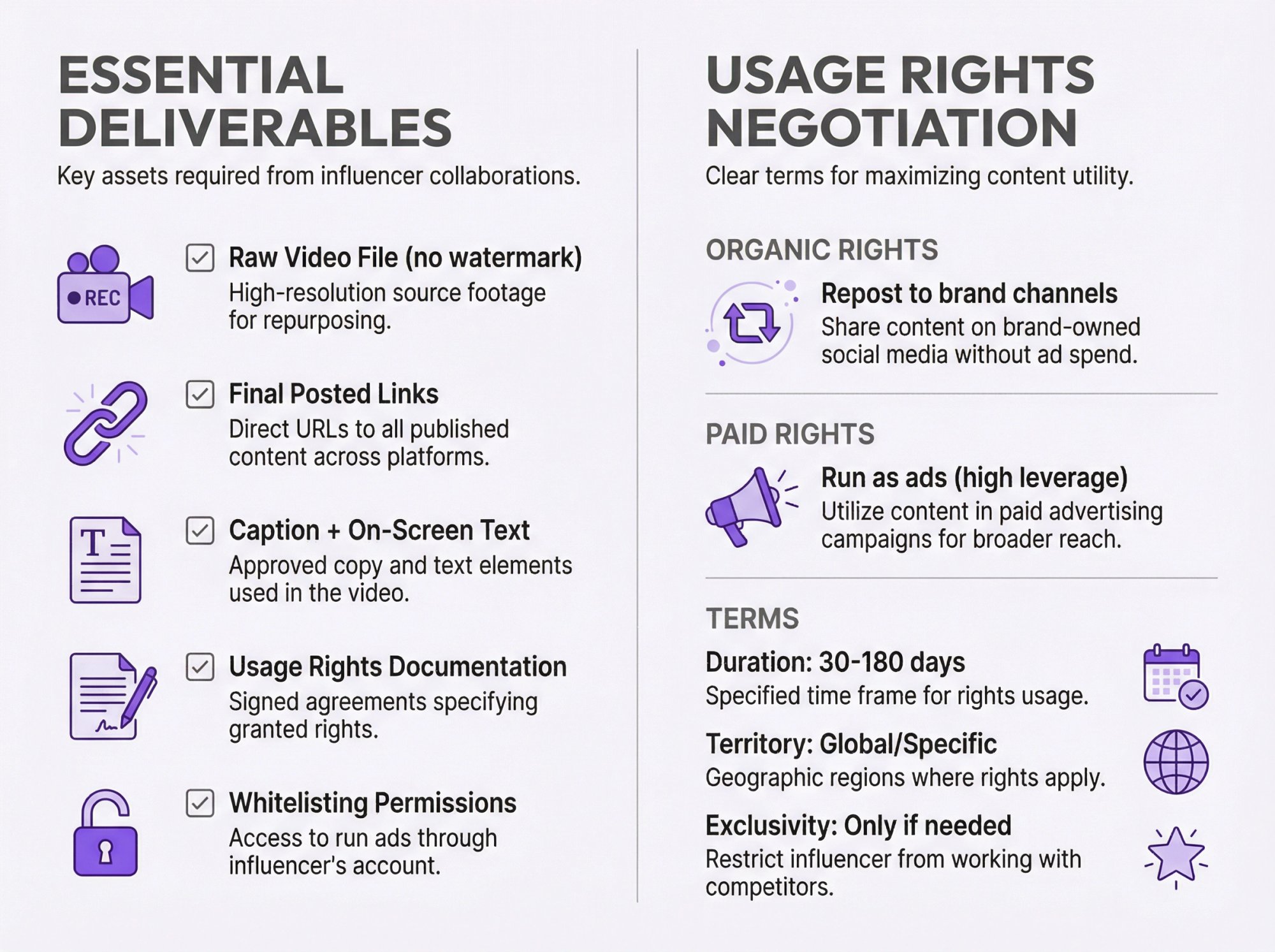
→ Raw video file (no watermark if possible)
→ Final posted link or links
→ Caption plus on-screen text
→ Usage rights terms documented
→ Whitelisting permissions (if you plan to run paid)
What Usage Rights to Negotiate with Influencers
Organic usage rights: Repost to your brand channels
Paid usage rights: Run the content as ads (huge leverage point)
Duration: 30, 60, 90, or 180 days
Territory: Global versus specific countries
Exclusivity: Category exclusivity costs money. Only buy it if you truly need it.
Your optimization upside often comes from turning creator posts into ads, so negotiate paid usage rights upfront. Don't leave it as an afterthought.
How to Amplify Influencer Content with Paid Ads
Organic reach is spiky and unpredictable. Paid amplification makes learning systematic.
How to Use TikTok Spark Ads for Influencer Content
Spark Ads let you run paid campaigns using organic TikTok posts (from creators or your brand), keeping the native social proof intact.
TikTok's official Spark Ads docs explain:
• Creators provide an authorization code from the TikTok app (via "Ad Settings" then "Generate Code")
• You cannot edit a post caption after it's authorized as an ad, so finalize everything first
• A private video can become public when used in a campaign (you can constrain this with "ads only mode" in some setups)
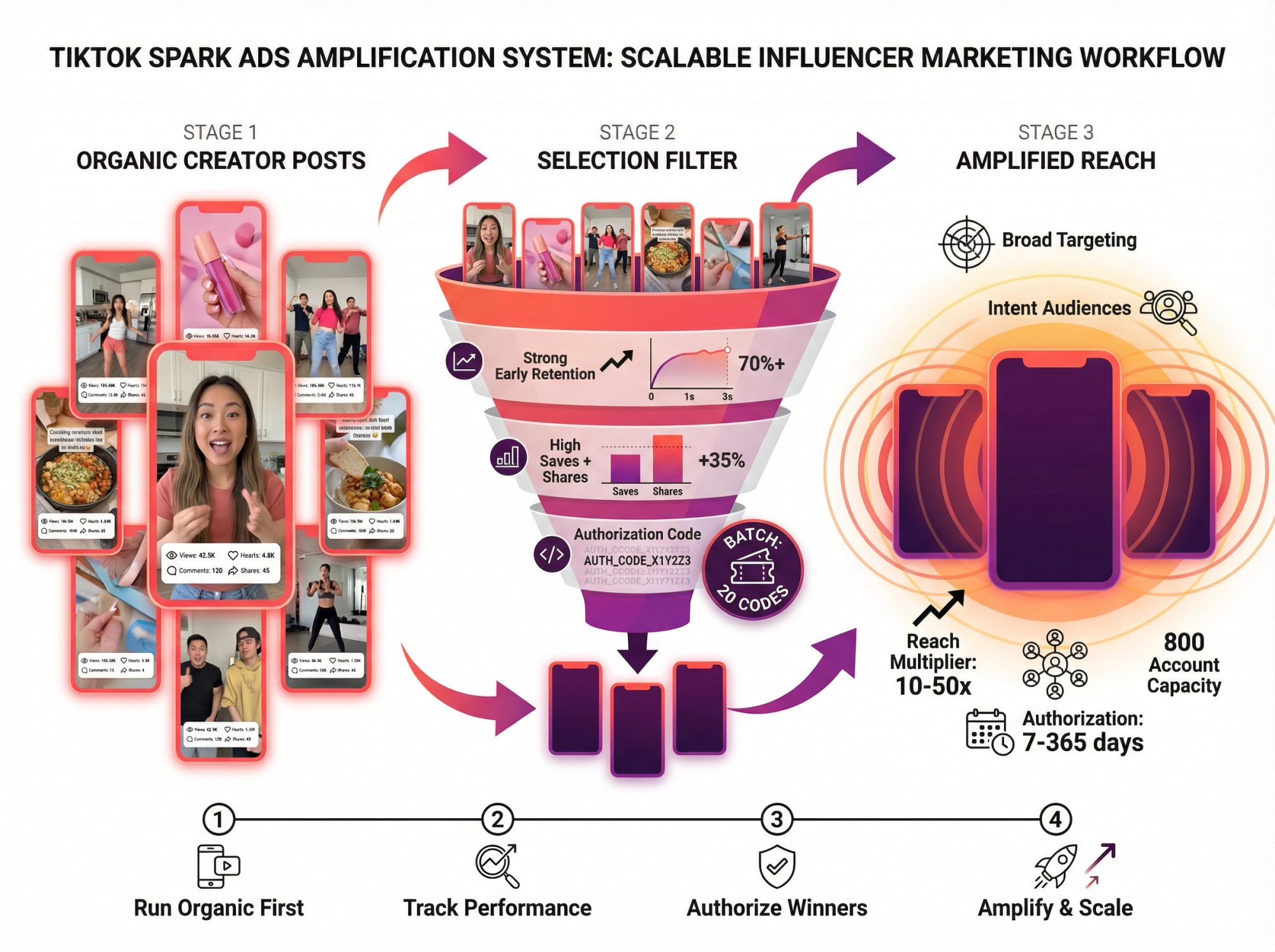
• Smart+ Spark Ads setup supports authorization durations like 7, 30, 60, or 365 days
• You can batch authorize up to 20 video codes at once
TikTok Business Center Permissions for Agencies
TikTok says each account can be linked to up to 800 business centers as an ad delivery asset. Each business center can link up to 800 TikTok accounts. You can request permissions like "existing posts" (pull) and "publish and manage new videos" (push), with options for "show through ads only."
How to Choose Which Posts to Boost with Spark Ads
① Run creator posts organically first (or soft boost with small spend)
② Pick posts with strong early retention plus saves and shares
③ Spark Ads those posts with:
• Broad targeting first (learn what resonates)
• Then tighten targeting (intent audiences, lookalikes, retargeting)
④ Duplicate winners into new hooks and new creators
Use Shortimize's tracking features to identify which organic posts have the best performance metrics before investing in Spark Ads amplification.
How to Find Content to Boost with TikTok Content Suite
TikTok's Content Suite surfaces brand-relevant content and lets you sort by metrics, save content, and share access with collaborators. Think of it as TikTok-native scouting for boostable content.
YouTube Paid Promotion Disclosure Requirements
YouTube requires creators to notify them if a video contains paid promotion, via the checkbox: "My video contains paid promotion like a product placement, sponsorship, or endorsement."
YouTube will show viewers a disclosure at the beginning when a creator marks the video as containing paid promotion.
How to Stay Compliant with Influencer Marketing Rules
Optimization includes "don't get your brand dragged."
TikTok Commercial Content Disclosure Rules
TikTok's help center says when posting content that promotes a brand, product, or service, you must turn on the content disclosure setting. It labels posts as "promotional content" or "paid partnership" depending on selection. Turning it on won't affect distribution.
YouTube Disclosure Plus Platform Settings
As noted above, YouTube has paid promotion declarations and disclosure messages that appear to viewers.
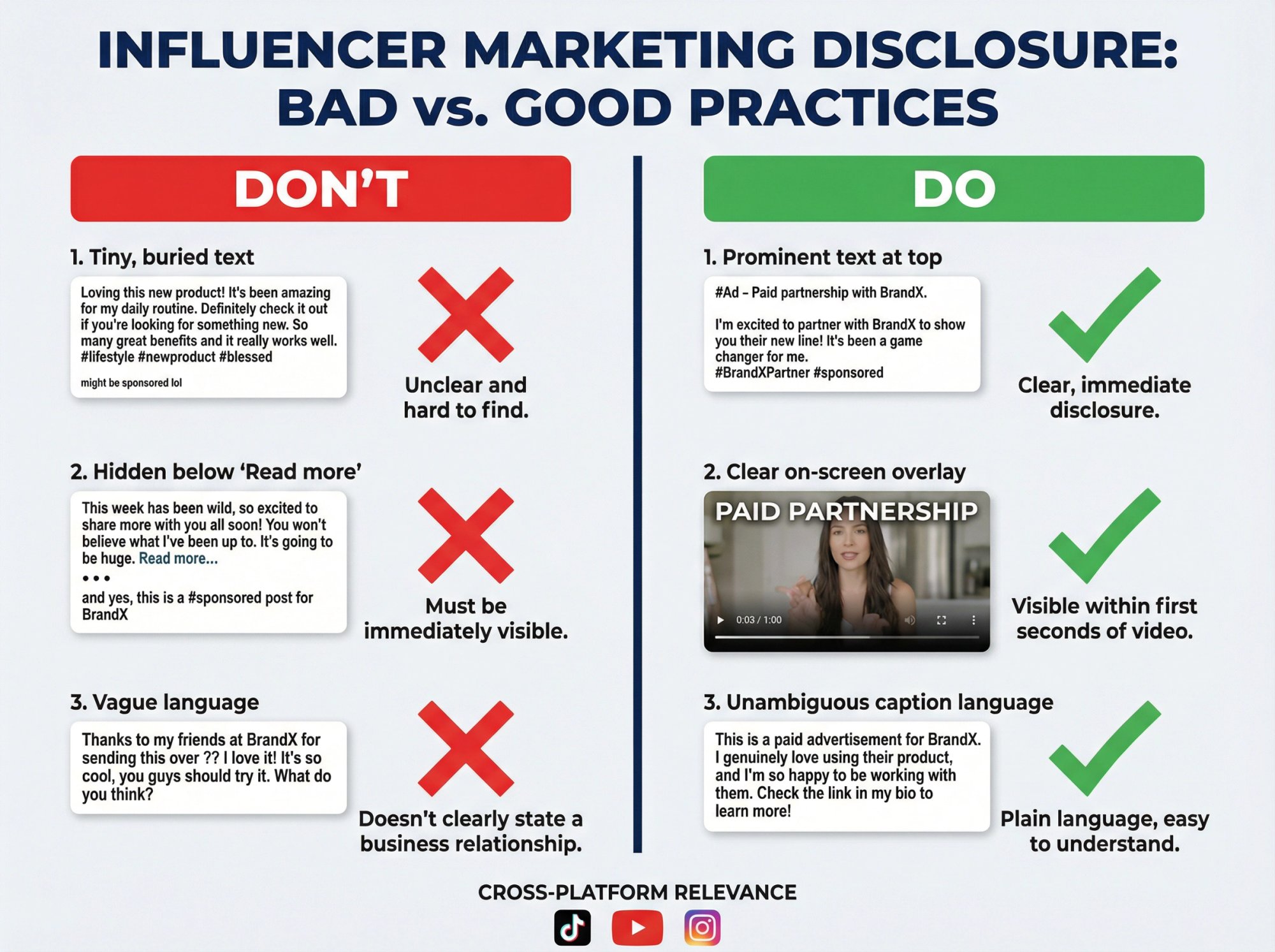
Best Practices for Influencer Disclosure
• Disclosure should be impossible to miss
• Put it early (caption plus on-screen where appropriate)
• Don't hide it under "more" or "show more"
• Don't use vague language
Being clever with disclosures is just being dumb. Transparency builds trust and keeps you compliant.
Week-by-Week Influencer Campaign Optimization Plan
Week 0: How to Set Up Your Influencer Campaign
Goal: Build infrastructure that enables fast learning.
• Define primary KPI plus success threshold
• Tracking: UTMs, landing pages, promo codes
• Creator roster: 10–30 creators, not 2–3 (you need variance to find signal)
• Creative matrix: 3 angles × 3 hooks × 2 CTAs = 18 combinations minimum
• Rights: Paid usage and whitelisting permissions locked in contracts
Week 1: How to Identify Winning Influencer Content
Goal: Find signal fast.
Watch these early indicators:
• Hook rate proxy: 3-second views divided by impressions (or early retention curve)
• Retention curve: Where do people drop off?
• Save and share rate: Strongest intent signal on short-form
• Profile clicks: Indicates curiosity (especially for UGC-style content)
• Click-through plus conversion: If you're running direct response
Kill posts that fail instantly. Don't "wait it out" unless the creator historically gets delayed distribution from the algorithm. Track when competitors post on TikTok to understand timing patterns in your niche.
Week 2: How to Scale Winning Formats, Not Creators
Common mistake: "This creator did well, let's book them again."
Better approach: "This format did well, let's replicate it with five creators."
Actions:
• Spark Ads or paid amplification on the top 10–20% of posts
• Second wave briefs: same angle, new hooks
• Spin-off variants:
Change first two seconds
Change proof type (demo versus testimonial)
Change CTA (soft versus hard)
Learn how to cross-analyze influencers on TikTok, Reels and Shorts for maximum format replication efficiency.
Week 3+: How to Build an Always-On Influencer Engine
Goal: Turn optimization into a compounding system.
• Keep 10–20 creators running monthly
• Upgrade roster quarterly based on performance data
• Maintain a "winning hooks library" and "winning proof library"
• Turn creator content into ads and repost to brand channels
Explore influencer tracking software solutions that can help you maintain this always-on engine systematically.
How to Report on Influencer Campaign Performance
Your reporting should answer three questions:
What worked?
Why did it work?
What do we do next?
The Weekly Influencer Decision Dashboard
Track by creator × post × concept:
| Field | What to Track |
|---|---|
| Post URL | Direct link |
| Platform | TikTok, Reels, Shorts |
| Hook used | Specific opening line or visual |
| Angle | Problem-solution, before-after, etc. |
| CTA | Soft or hard call-to-action |
| Views | Total views |
| Engagement rate | Percentage |
| Saves/shares | Count |
| Clicks (UTM) | Traffic driven |
| Conversions (UTM/code) | Sales or leads |
| CPA / ROAS | If applicable |
| Decision | Kill, iterate, boost, or scale |
| Next action | Specific next step with owner and due date |
Shortimize is useful here because you can track creators over time, export tables, and compare performance across TikTok, Instagram, and YouTube in one place instead of playing spreadsheet whack-a-mole.
We also have an influencer KPI setup guide (published November 2024) that's helpful for building a consistent KPI framework across campaigns.
How to Use Shortimize for Influencer Optimization
This is a practical workflow that maps to the optimization loop:
① Create a campaign collection (one per campaign or month)
② Add every creator account URL (TikTok, Instagram Reels, YouTube Shorts)
③ Shortimize harvests and analyzes the data, pulling posts and videos with advanced metrics plus export capabilities
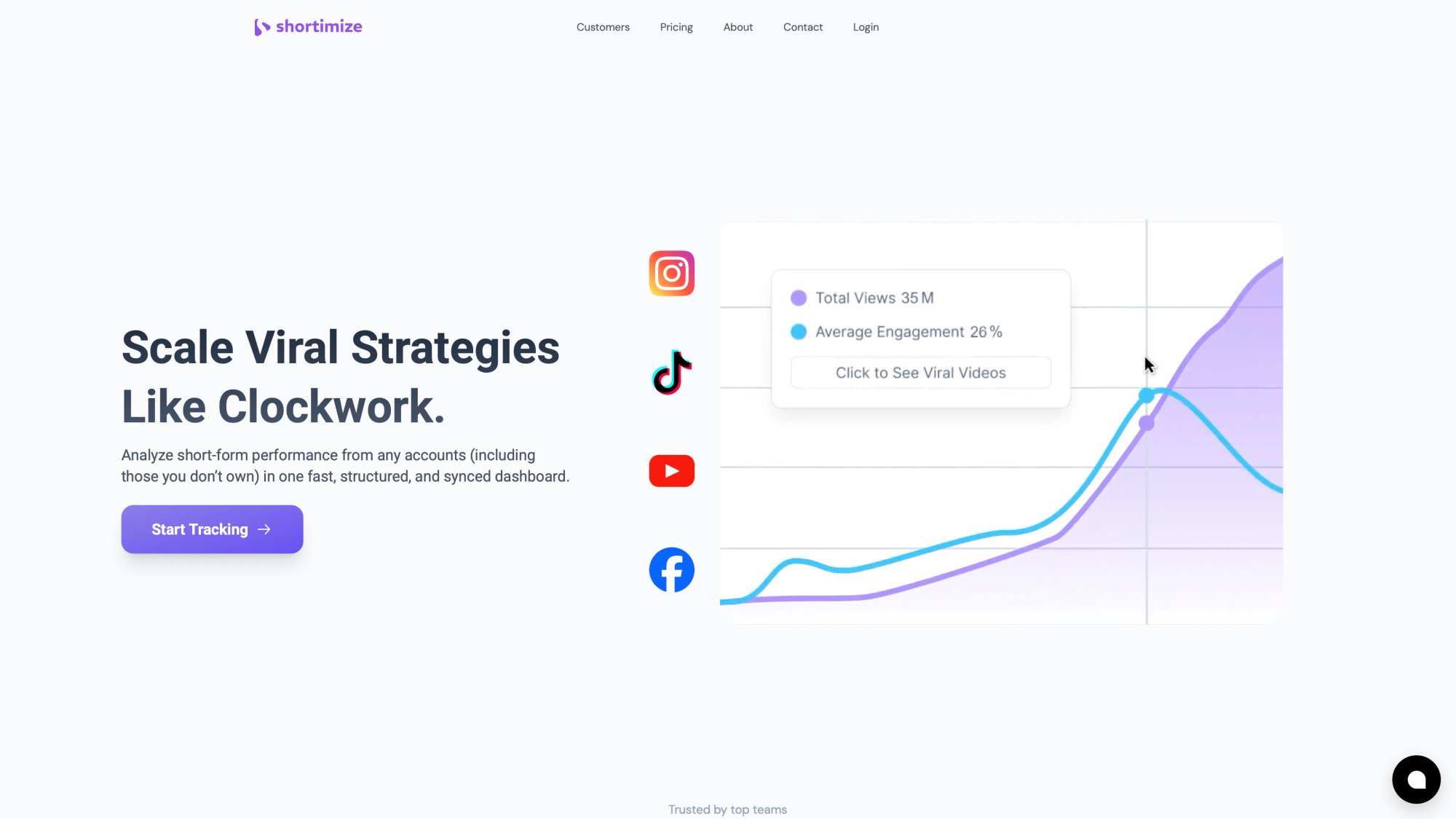
④ Tag winners (top decile posts) and track:
• Repeated hooks
• Repeated formats
• Repeated proof types
⑤ Use those winners to:
• Brief the next creator wave
• Choose what content to Spark Ads or amplify
• Build a "winning format library" for your team
The core benefit: one source of truth for cross-platform influencer performance, so optimization becomes a weekly habit instead of a quarterly post-mortem. Learn more about our features and check out customer success stories to see how teams use Shortimize for systematic influencer optimization.
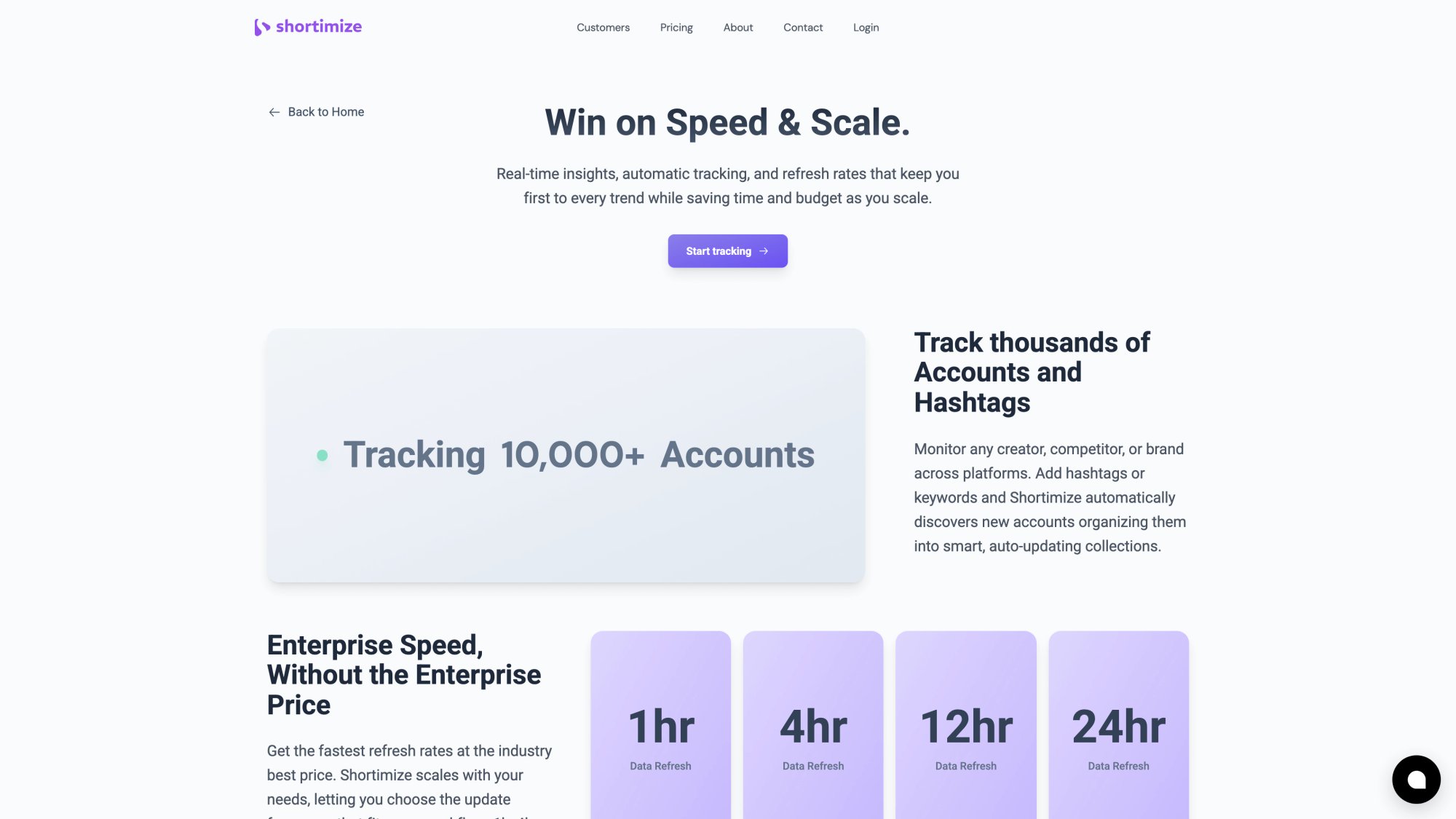
5 Biggest Influencer Marketing Mistakes (And Fixes)
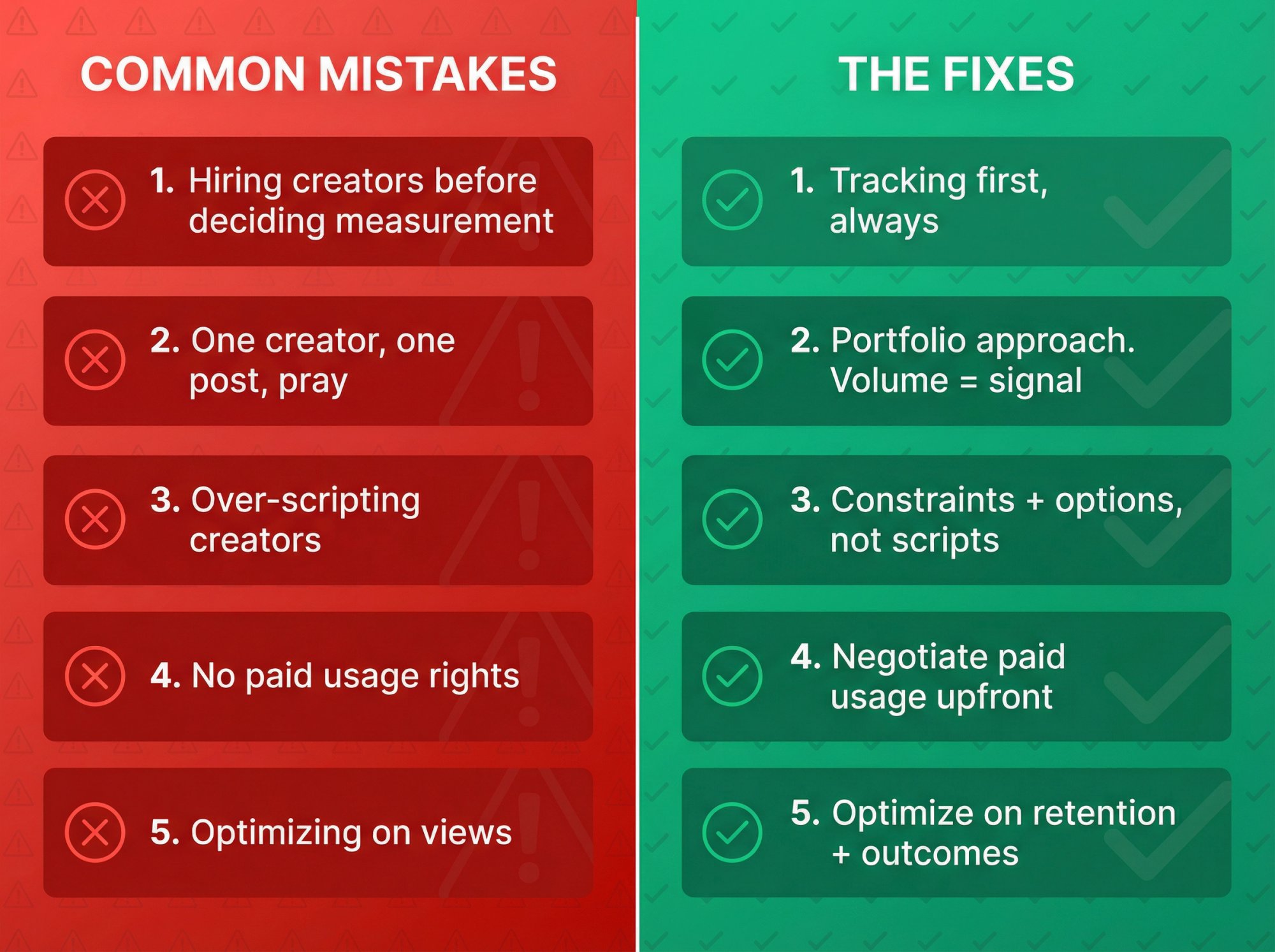
| Mistake | The Fix |
|---|---|
| Hiring creators before deciding measurement | Tracking first, always. |
| One creator, one post, pray | Portfolio approach. You need volume to find signal. |
| Over-scripting creators | Constraints plus options, not scripts. |
| No paid usage rights | Negotiate paid usage and whitelisting from day one. |
| Optimizing on views | Optimize on retention, intent signals, and business outcomes. |
For agencies managing multiple clients, understanding how to spy on your competitors' influencer strategy can give you systematic competitive intelligence without manual surveillance.
What Optimized Influencer Campaigns Look Like
Optimization turns influencer marketing from a cost center into a growth engine. What changes:
| Before Optimization | After Optimization |
|---|---|
| Campaigns feel like shots in the dark | Lower effective CPA/CAC over time as you learn what works |
| Results are inconsistent and hard to predict | Higher hit rate on posts because you're replicating proven formats |
| You can't explain which creators or content actually worked | Repeatable creator content to learnings to scale loop that compounds |
| ROI is muddy at best | Cleaner attribution so you can confidently increase budgets |
The data backs this up. Influencer marketing typically returns $5+ for every $1 spent, but top campaigns achieve much higher returns through systematic optimization.
Also worth knowing: 86% of marketers plan to partner with influencers in 2025, and 69% of consumers trust influencer recommendations over brand-created ads. The opportunity is massive. But only if you optimize.
Explore post-campaign optimization strategies to turn your tracking insights into action for better ROI, and understand the growth impact of influencer tracking in emerging markets if you're scaling globally.