Managing one TikTok affiliate is easy. You know who they are, you see their posts, and you can eyeball whether sales are happening. But the moment you scale to ten, twenty, or a hundred creators? That's when things get messy.
With nearly 30% of affiliate marketers now using TikTok as a sales channel, the real problem isn't finding influencers. It's figuring out which ones are actually driving results. When your affiliate roster grows, you need to know who is generating revenue, what content converts, and how to double down on your best partnerships. This guide breaks down everything you need to track TikTok Shop affiliate performance across multiple creators, from TikTok's built-in analytics to third-party tools and the strategies that separate organized programs from chaotic ones.
Why Is Multi-Creator Affiliate Tracking So Difficult?
A single affiliate relationship is intuitive. You see their content, check your sales, and connect the dots. Scale that to dozens of creators, though, and intuitive tracking becomes your operational bottleneck.

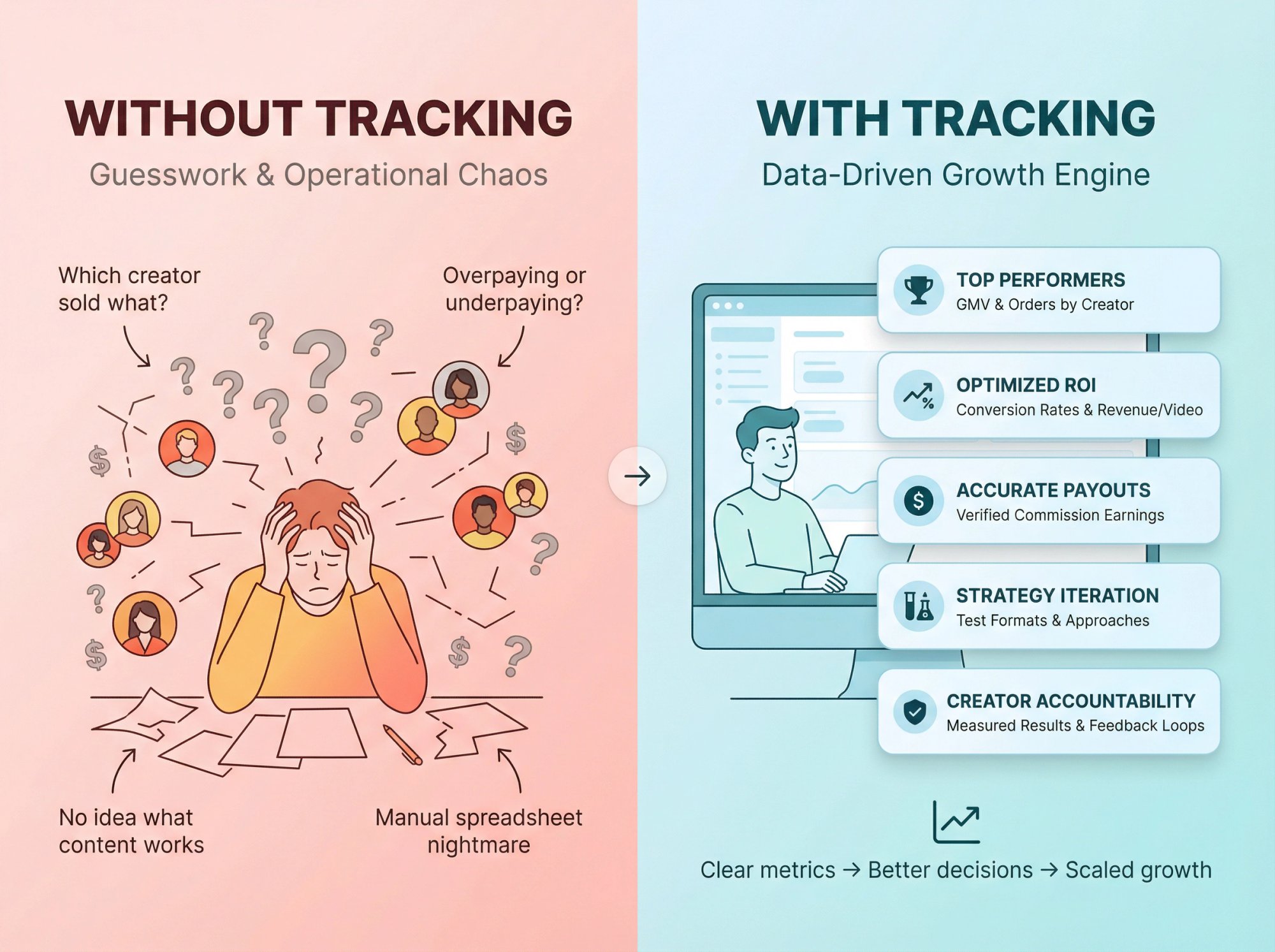
Proper multi-creator tracking solves several problems at once:
Identifying your top performers. Which creators generate the most Gross Merchandise Value (GMV) and orders? TikTok's Affiliate Center analytics help you spot these winners so you can nurture those partnerships. Industry research confirms that tracking GMV and orders per creator is essential for smart affiliate management.
Optimizing your ROI. Comparing conversion rates and revenue per video tells you whose content actually turns views into purchases. Two creators might have similar follower counts, but one could be converting at 3x the rate of the other. Without tracking your TikTok analytics, you'd never know.
Managing payouts accurately. Commission earnings need verification. You want to pay creators what they've earned (and potentially reward your best performers with higher rates) without overpaying for underperformance.
Iterating your strategy. Maybe tutorial videos from Creator A outsell dancing skits from Creator B. Testing different formats and approaches only works if you're measuring results with proper video performance analytics.
Creating accountability. When creators know their results are being measured, it tends to motivate better effort. Data creates a feedback loop that benefits both sides.
The core shift: Tracking transforms an affiliate program from guesswork into a data-driven growth engine. The question isn't whether to track, it's how to do it efficiently as you scale.
What Does TikTok Shop's Built-In Affiliate Analytics Offer?
Before reaching for third-party tools, you should understand what TikTok already gives you. The platform has invested heavily in affiliate analytics, and for many sellers, the native tools are genuinely sufficient.
How to Use the TikTok Affiliate Performance Dashboard
TikTok Shop's Performance tab in Affiliate Center is your bird's-eye view of the entire affiliate program. As of late 2025, this is a relatively new addition that consolidates what used to require multiple screens.
The dashboard displays:
-
GMV (Gross Merchandise Value) across all affiliates
-
Number of orders generated through affiliate content
-
Items sold (helping you understand unit volume, not just dollar amounts)
-
Traffic sent to your shop via affiliate links and product tags
You can filter by date ranges including the last 7 days, 28 days, or custom periods up to 6 months. These metrics match your main Seller Center reports, so there's consistency across your data.
One feature worth exploring: the Show trends toggle. This lets you overlay two metrics (say, traffic and orders) to spot relationships. Did a spike in views actually translate to more sales? Or did engagement go up while conversions stayed flat? That kind of correlation analysis used to require spreadsheet work. For deeper analysis, consider using a dedicated TikTok analytics platform that can provide additional context.

How to View Performance by Creator or Video
From the Performance overview, you can break down results by creator or by specific content. Toggle to see your highest-GMV affiliates, or switch to a video-level view to find which specific TikToks (or livestreams) generated the most orders.
This granularity matters. Sometimes one viral video from a mid-tier creator outperforms an entire month of content from someone with a bigger following. Without per-video tracking, you'd miss that insight entirely. Tools that specialize in social media monitoring can help you catch these outliers faster.
When you need to go deeper than TikTok's dashboard allows, export the data for offline analysis. The 6-month in-app window is useful, but exporting lets you build longer-term trend reports and do more sophisticated comparisons.
What Is the Manage Creators Tool in TikTok Shop?
While the Performance tab shows program-wide metrics, the Manage Creators section focuses on individual affiliates. Think of it as a lightweight CRM for your creator partnerships.
For every creator you've collaborated with, Manage Creators displays their 90-day performance:
| Metric | What It Shows |
|---|---|
| GMV Generated | Total dollar value of sales they drove |
| Items Sold | Number of product units moved |
| Product Videos | How many of your product videos they posted |
| LIVE Videos | Any livestreams featuring your products |
| Refunds | Returns attributed to their sales |
| Estimated Commission | What they've earned (your cost) |
Organizing at scale: When you're managing dozens of creators, custom tags become essential. You can create up to 100 tags (things like "Top Performer," "Beauty Niche," "Q4 Campaign") and then filter creators by those tags. Or filter by metrics directly, showing only creators who generated over $5,000 GMV in the last 90 days, for example.
Beyond tracking, Manage Creators also handles logistics. You can send batch invitations and messages to creators, include product cards in those messages, and even import creators via spreadsheet if you're bringing in a large batch at once.
One limitation to note: Manage Creators shows only the last 90 days. For longer-term analysis, you'll want to export Performance data periodically and aggregate it yourself, or use third-party tools like Shortimize that store historical data and let you track unlimited accounts.
Which Affiliate Metrics Should You Actually Track?
Not every number deserves your attention. When evaluating affiliate performance across creators, focus on metrics tied directly to your business goals (primarily sales and ROI) while keeping supporting metrics in context.
GMV, Orders, and Items Sold
GMV (Gross Merchandise Value): This is your headline number. TikTok's affiliate dashboard highlights GMV per creator because it answers the fundamental question: who drives revenue? Compare GMV across affiliates to rank them by sales contribution.
Orders and Items Sold: GMV alone can mislead. One creator might drive fewer sales but of higher-priced items, while another moves high volume of cheaper products. Tracking item counts helps you understand how revenue happens, not just that it happens.
Click-Through Rate and Conversion Rate
Click-Through Rate (CTR): What percentage of viewers click a product link in the creator's content? TikTok's creator analytics show clicks on product links, and dividing by video views gives you CTR. Higher CTR means the content enticed viewers to check out the product. Using a tool that can analyze TikTok account data makes tracking these patterns across multiple creators much easier.
Conversion Rate: Of those who clicked, how many actually bought? This measures how persuasive the creator's traffic really is. A creator might have modest click-through but stellar conversion if their audience is highly targeted. You might need to calculate this externally by combining view/click data with order counts.
Revenue per Video: How much does each piece of content generate? Measuring revenue per video and per creator gives you a clear picture of efficiency. If one creator averages $500 in sales per video while another averages $50, that's a 10x difference in content value.
Views, Engagement, and Follower Growth
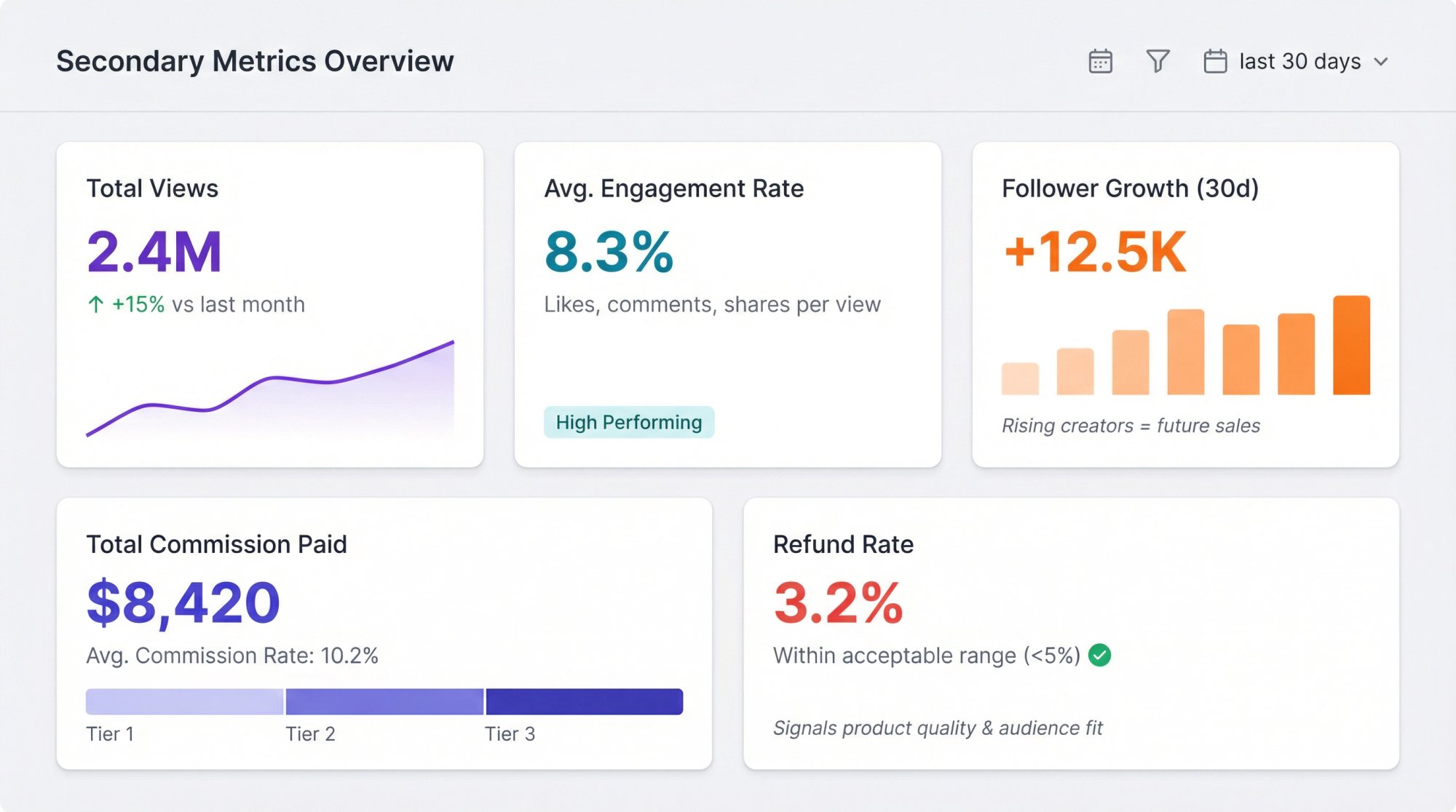
Views: High view counts mean greater exposure, and exposure precedes conversion. A creator might have one breakout video that accounts for a huge chunk of their sales. At Shortimize, we help teams track video views across all affiliate creators in one place, making it easier to spot these outliers.
Engagement Rate: Likes, comments, and shares indicate audience connection. A creator with lower views but extremely high engagement might have a niche audience that converts exceptionally well. Third-party analytics tools can even flag fake followers or bots, helping you verify that engagement is genuine.
Follower Growth: If you're building long-term partnerships, note which affiliates are growing their own followings. A rising tide (their audience) lifts future sales too. Social media monitoring tools can help you track these growth patterns over time.
Commission and Refund Rates
Commission Earned: From your perspective, this is your cost per creator. TikTok shows estimated commission payouts in Manage Creators.
Track this alongside sales to understand your payout ratio. If a creator earned $200 on $2,000 GMV, that's a 10% effective rate. If you're also paying flat fees or bonuses outside TikTok's system, incorporate those for a complete cost picture.
Refunds and Returns: Manage Creators even shows refunds attributed to each creator's sales. A high return rate might signal product quality issues or impulse-buying audiences who regret purchases. Either way, returns directly impact net revenue.
Key insight: Always contextualize metrics. A creator generating $5,000 from one video is far more potent than one needing ten videos for the same result. That efficiency gap matters for future campaign planning.
How Does TikTok Shop Affiliate Attribution Work?
Tracking only works if every sale is correctly attributed to the right creator. Within TikTok's system, this happens automatically when creators use product tags. But there are scenarios where attribution requires more attention.

How Product Tags Track Sales Automatically
When a creator in your affiliate program tags your product in their TikTok video or livestream, any resulting sale is automatically linked to that creator. Viewers can purchase in-app via the product tag, and TikTok records clicks and conversions per creator in real time.
This is the preferred method for a reason: in-app purchases convert significantly better than external links. Always encourage affiliates to use official product tags rather than simply telling audiences to "search for our product."
When to Use Promo Codes for Tracking
Some scenarios call for unique discount codes (like CREATORNAME10 for 10% off). The main use case? Many micro-influencers on TikTok cannot put clickable links in their bio, making UTM-tracked links impractical.
A custom discount code lets buyers enter something at checkout that ties the sale back to a specific creator. You'll need to track code usage in your order system, but it solves the attribution problem for creators who can't use links.
Some affiliate management platforms automate this further with features that generate unique single-use codes for each click, preventing the common problem of codes being shared beyond the intended audience.
Do External Links Work for TikTok Affiliates?
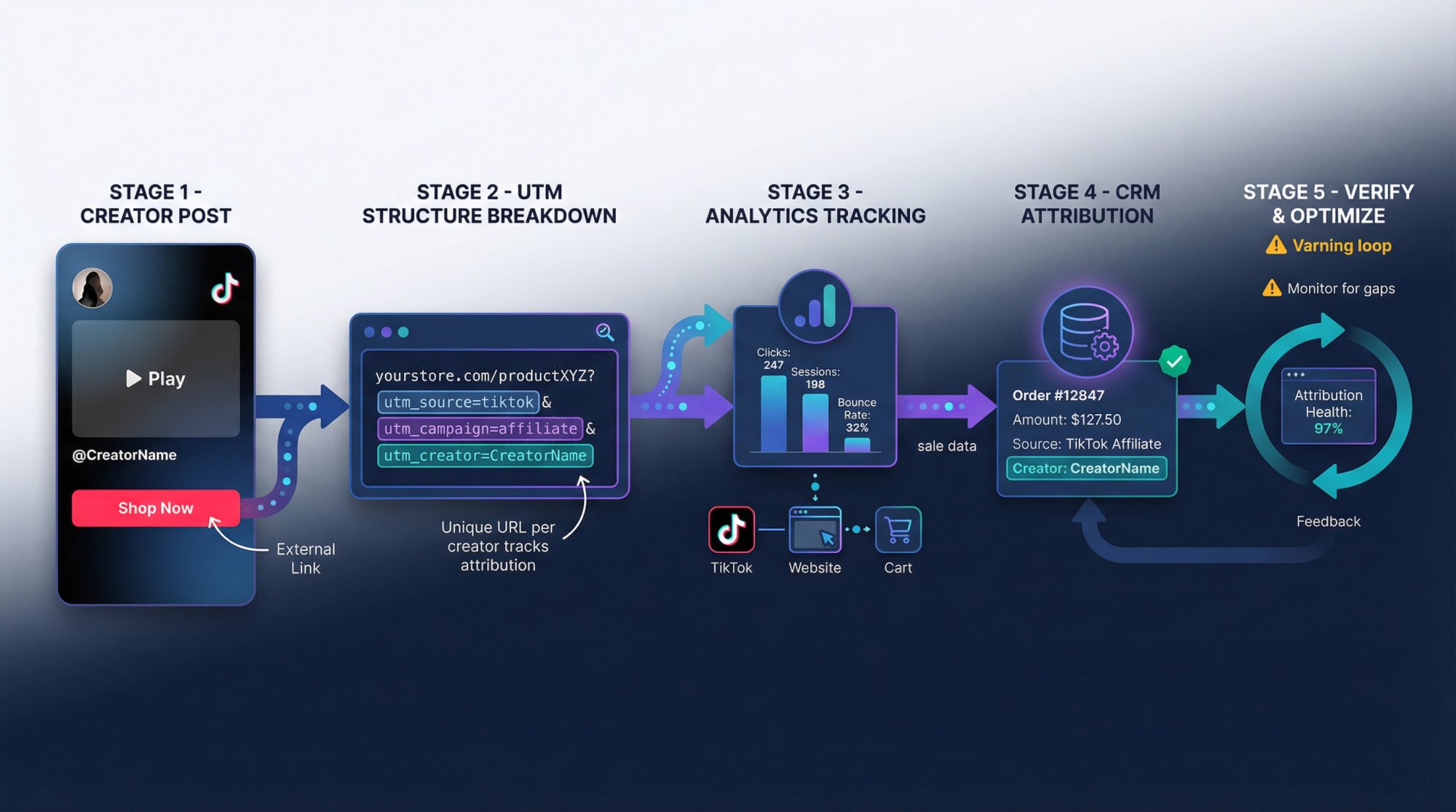
TikTok Shop does allow external affiliate links (to Amazon, your website, etc.), but know this: external links typically convert 2-3x lower than in-app purchases. The friction of leaving TikTok kills conversions.
If you do use external links, every creator needs a unique URL. This could be an affiliate link from your software or at minimum a UTM-tagged URL:
yourstore.com/productXYZ?utm_source=tiktok&utm_campaign=affiliate&utm_creator=CreatorName
Some teams integrate Google Analytics or their CRM to log which affiliate link led to each sale. The point is that no two creators should ever use identical links or codes.
How to Verify Your Attribution Is Working
Periodically check that sales are being attributed correctly. If a known high-performer suddenly shows zero sales in your dashboard, investigate. Maybe they posted without using a product tag, or a technical issue broke attribution.
An untracked sale is a missed learning opportunity (and potentially an unpaid commission, which damages creator relationships). Set up attribution correctly from the start and verify it stays accurate.
When Should You Use Third-Party Tracking Tools?
TikTok's native analytics cover a lot, but there are legitimate reasons to add external tools. The question is whether the added complexity and cost justify the benefits for your program.
Signs Your Program Has Outgrown TikTok's Native Analytics
You probably need third-party help if:
→ You're running affiliate campaigns across multiple platforms (not just TikTok)
→ You need historical data beyond TikTok's 6-month window
→ Manual spreadsheet tracking has become unsustainable
→ You want deeper content analytics (why certain videos outperform others)
→ Paying commissions and managing codes across 50+ creators is eating your time
What Influencer Analytics Platforms Offer
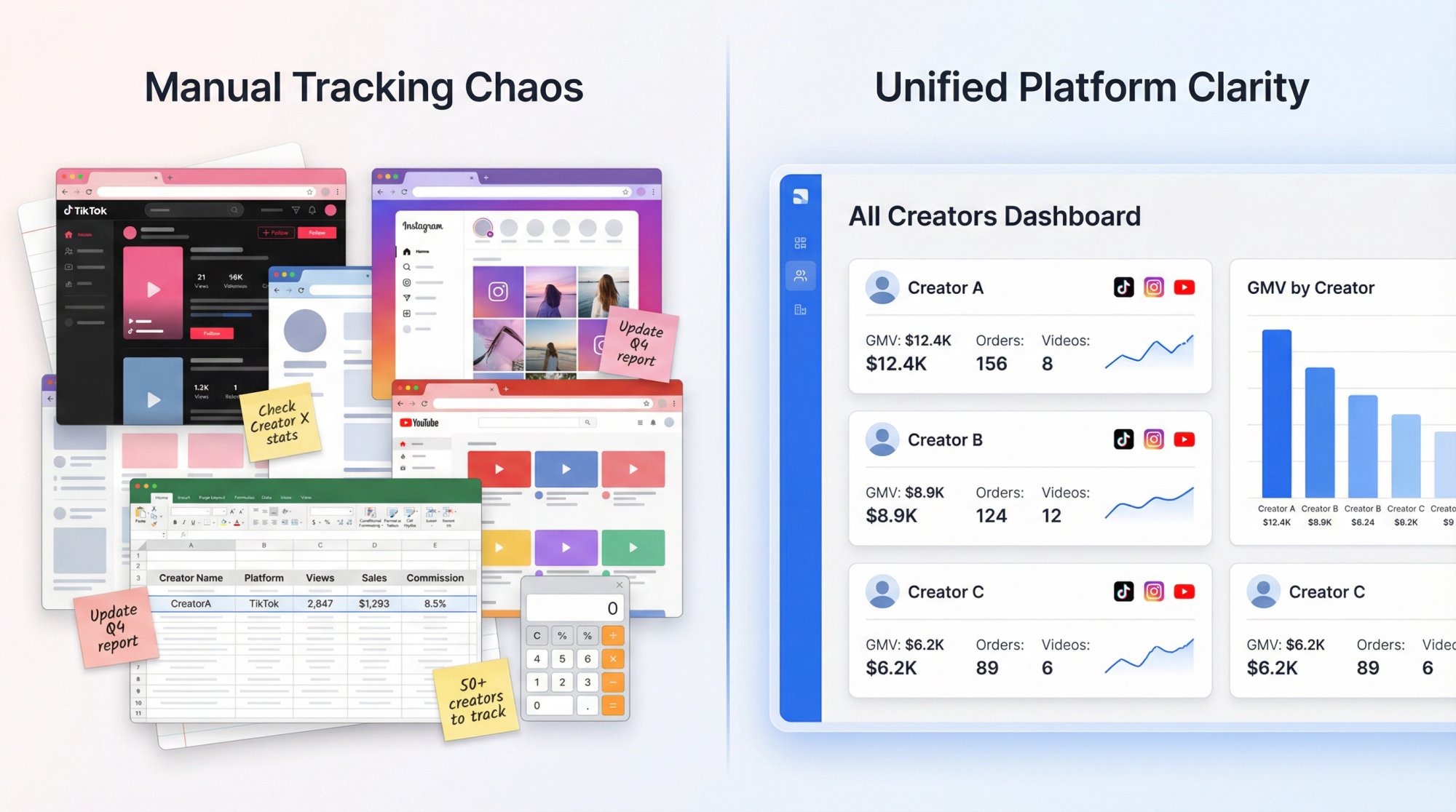
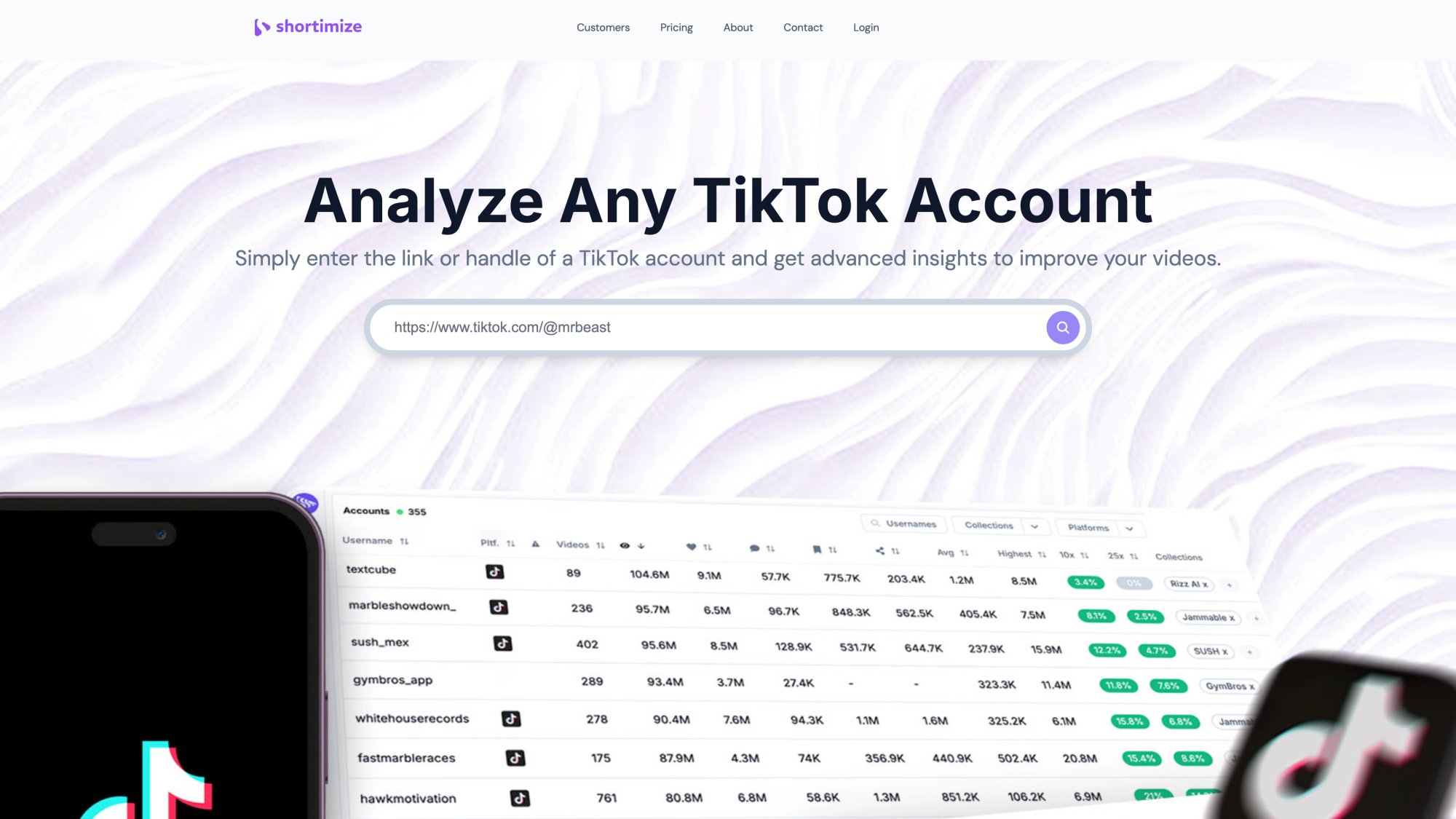
Shortimize focuses specifically on short-form video analytics at scale. You can track all your affiliate TikTok accounts in one dashboard, monitoring video performance, views, engagement, and posting frequency without jumping between platforms. The Collections feature lets you group creators (say, by campaign or product line) and compare their metrics side by side. This helps you understand why certain affiliates outperform others by examining their content patterns.
Shortimize's social media monitoring capabilities can also help you track competitor affiliate programs and discover trending content formats in your niche. Combined with the TikTok account analyzer, you get a complete picture of both your own affiliates and the broader market.
How Affiliate Networks Connect to TikTok Shop
Traditional affiliate networks are bridging into TikTok commerce. CJ Affiliate launched a TikTok integration that lets brands track TikTok Shop commissions alongside other affiliate channels. If you're a retailer already running programs through traditional affiliate networks, this gives you an omnichannel view: Creator X drove 50 sales on TikTok and 20 via their blog.
Enterprise-level tracking solutions can provide capabilities beyond what TikTok offers natively. Other networks like Rakuten or ShareASale may develop similar tie-ins over time.
What Program Management Platforms Can Do
Various platforms can integrate directly with TikTok Shop to manage your affiliate program from an external dashboard. They typically sync your product catalog and commission rates, handle creator intake, and automate link/code generation.
Real results back up the value of proper tracking: brands that set up comprehensive affiliate tracking often see significant increases in influencer-driven revenue. The gains come largely from ensuring every sale is properly attributed rather than lost to untrackable links.
Which Social Media Tools Work for TikTok Tracking?
Several tools let you monitor TikTok metrics including engagement, reach, and link clicks all in one place. Influencer management features help centralize communication, content approval, and reporting on each influencer's post performance.

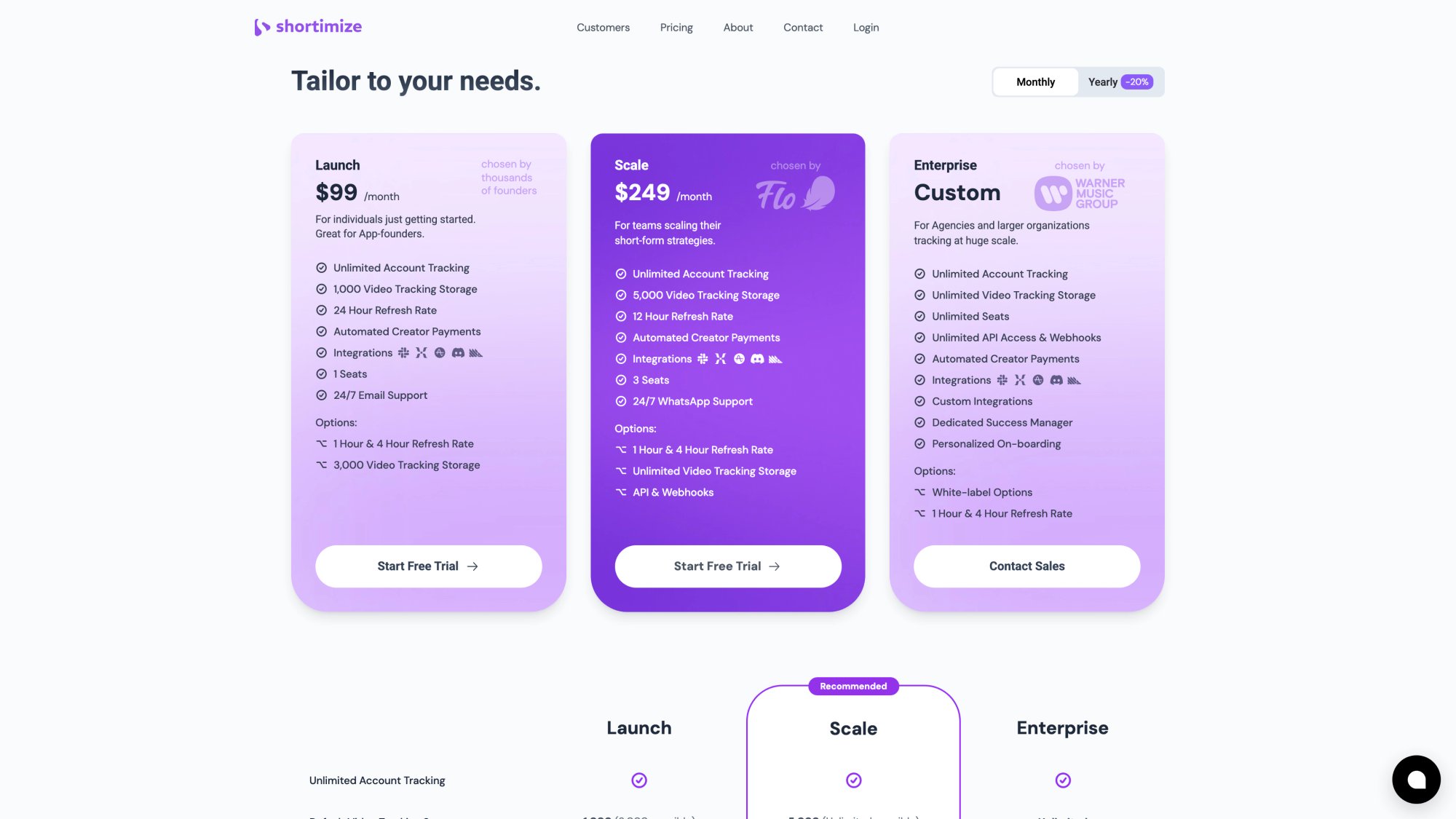
For teams serious about TikTok content analysis, Shortimize offers specialized tools designed specifically for short-form video tracking. Check out our pricing options to find a plan that fits your program size.
Is Third-Party Tracking Worth the Investment?
External tools come with learning curves and subscription costs. Start with a trial and evaluate honestly: will this tool help you drive enough additional sales or save enough time to justify the price?
Many teams begin with native analytics plus spreadsheets, layering in software only when the program scales to a point (usually 50+ creators) where manual tracking becomes genuinely untenable. See how other brands have scaled their programs on our customer success stories page.
How to Compare Affiliate Creators and Make Better Decisions
Data collection is step one. Using that data to actually improve your program is where value gets created.
How to Build an Affiliate Performance Leaderboard
Create a simple ranking: who are your top 5 affiliates by sales this quarter? Who are the bottom 5?
Don't just rank by raw sales. Consider efficiency too. A creator driving $10k from 2 videos is arguably more valuable than one driving $12k from 20 videos. Your goal is to find power partners who consistently over-deliver and invest in those relationships (higher commissions, exclusive early access, etc.).
How to Identify Affiliate Growth Opportunities
For mid-tier performers, dig into why they're not top-tier yet. Maybe they have smaller audiences but highly engaged followers. If Creator A has half the follower count of Creator B but nearly equal sales, imagine what happens if you give Creator A more product samples or co-marketing support.
On the flip side, if a big influencer isn't converting, figure out if it's a content problem (their posts feel inauthentic) or an alignment problem (their audience isn't your target customer). Use a TikTok analytics tool to dig into their content performance and audience engagement patterns.
How to Find Content Types That Drive the Most Sales
Look at which specific videos drove the most orders across your affiliate roster. Are there patterns?
Maybe product demos with before-and-after shots consistently outperform lifestyle content. Maybe a certain hook style leads to more checkouts. If data shows tutorial posts generate 30% higher CTR and conversion, encourage all affiliates to incorporate tutorials. Share these insights so creators can replicate what works. Shortimize's video analytics can help you identify these patterns across your entire creator roster.
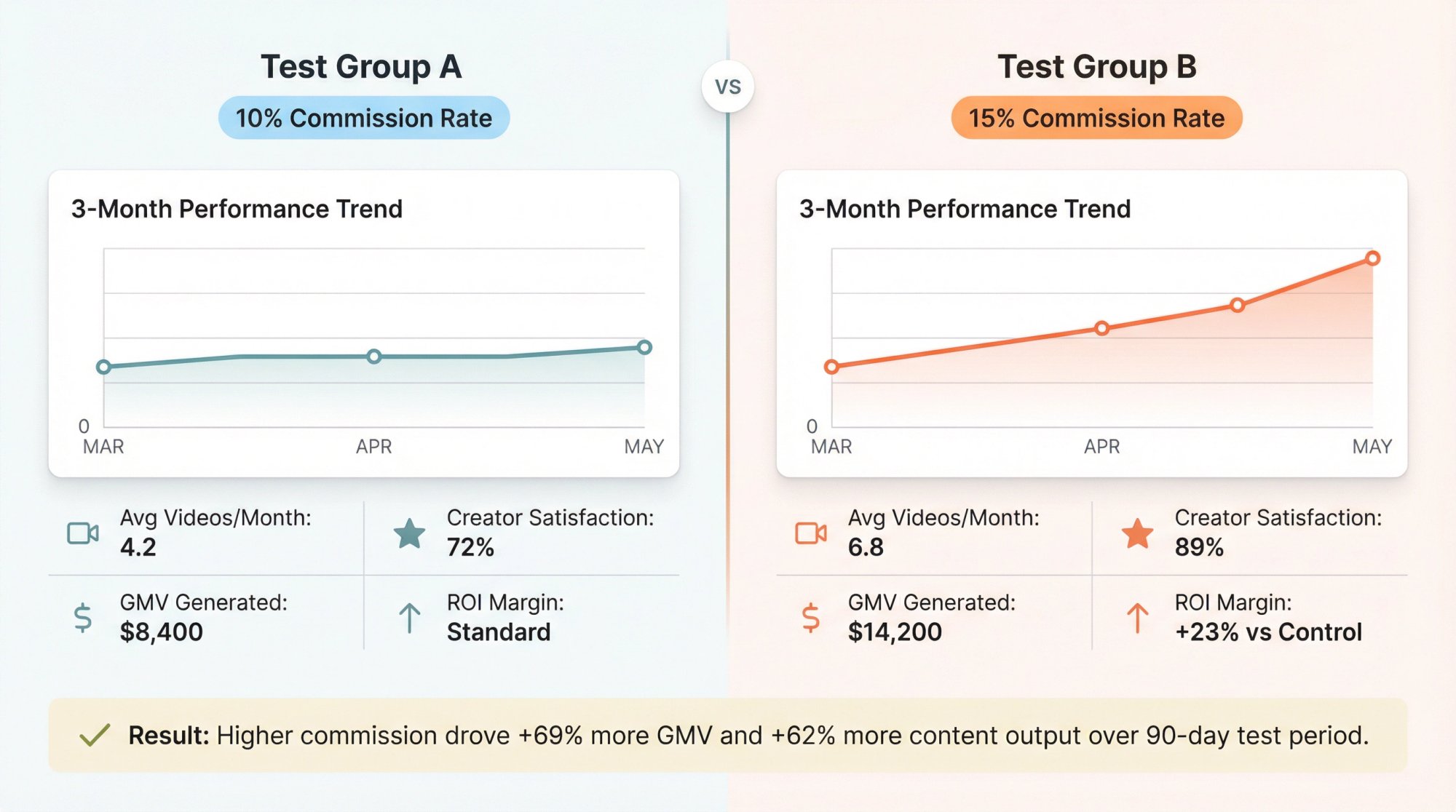
How to Test Different Commission Structures
Data might reveal that incentive adjustments make a real difference. Try offering a higher commission rate to a subset of creators for a defined period. Does their output increase? Does sales volume rise?
Just isolate variables and measure over a fair timeframe. You want to know whether the extra margin you're paying out generates proportionally more revenue.
Why Tracking Trends Matters More Than Snapshots
Don't just take periodic measurements. Watch trajectories.
Is Creator X gaining momentum (sales increasing month over month)? Or did Creator Y spike in March and drop off in April? TikTok's Show trends feature helps visualize this, and exporting data to charts makes multi-month patterns clearer. For more sophisticated trend analysis, social media monitoring platforms offer historical data tracking that goes beyond TikTok's native capabilities.
If someone's performance is declining, reach out. Maybe they need fresh content ideas. If someone's skyrocketing, engage more and see how you can amplify that growth.
Case Study: How Jammable Scaled to 180+ TikTok Affiliates
The AI app Jammable provides a useful case study in scaling with tracking. They partnered with over 180 affiliate TikTok accounts to promote their app through engaging content, tracking each with referral links in bios.
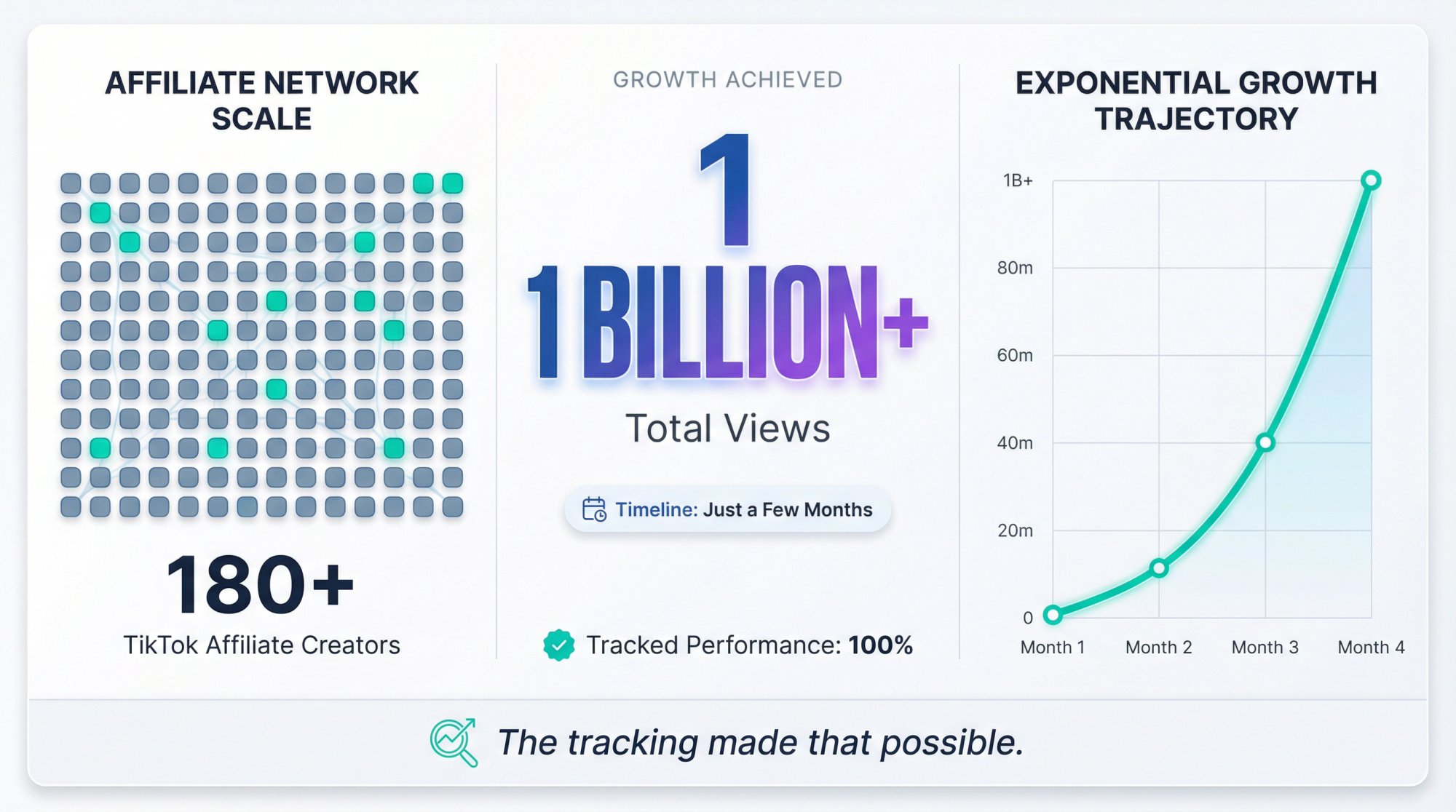
By monitoring which accounts drove sign-ups and doubling down on successful approaches, Jammable accumulated over 1 billion views and a massive user influx in just a few months. They treated affiliates as an extension of their marketing team and carefully observed who was delivering.
The tracking made that possible.
How to Optimize Your Affiliate Program Over Time
Tracking isn't set-and-forget. It's an ongoing cycle of measurement and refinement.
How Often Should You Review Affiliate Performance?
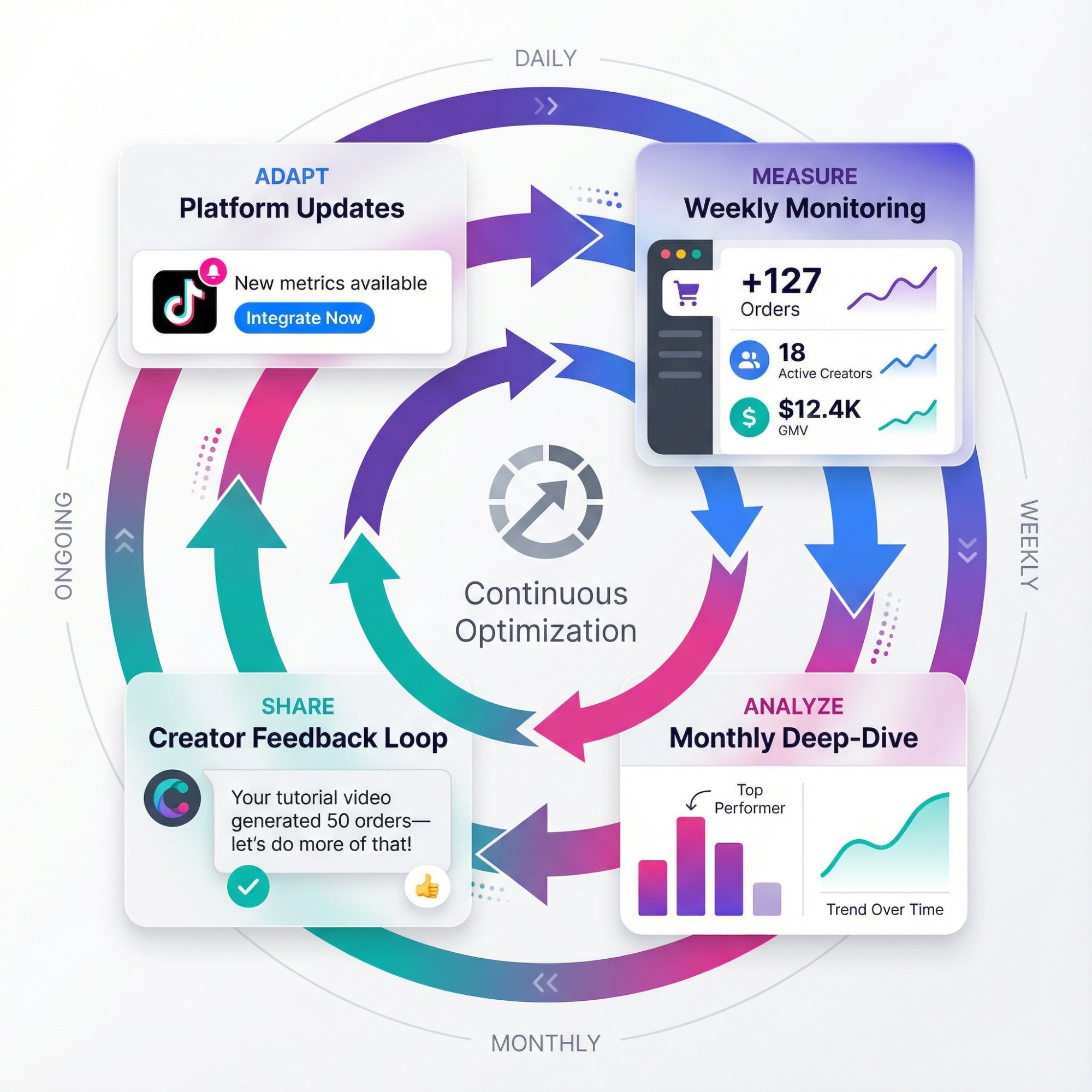
Set a rhythm. Weekly reports catch short-term spikes or problems (a top seller suddenly showing zero sales warrants quick investigation). Monthly deep-dives reveal trends and ROI calculations.
Consistency trains your team to be data-driven in managing influencers. Nothing slips past unnoticed.
How to Share Performance Data with Your Creators
Affiliates respond well to feedback grounded in actual numbers. They have their own TikTok analytics, but you see the sales side.
Tell them: "Your videos generated 50 orders last month. That skincare tutorial was your top-converting content. Let's do more of that." This motivates creators and guides them toward content that actually moves product. You're not just paying them; you're partnering with them.
How to Keep Up with TikTok Shop Feature Updates
TikTok keeps evolving its commerce tools. The Performance tab and Manage Creators features discussed here are relatively new improvements.
Keep an eye on TikTok Shop Academy announcements. If they introduce an affiliate campaign feature or new metrics like repeat customer rate per creator, you'll want to integrate those into your tracking quickly. Early adoption of new tools gives you an edge over competitors who wait.
How to Connect TikTok Data with Your Other Marketing Channels
If you sell across multiple channels (your website, Amazon, etc.), maintain perspective on how TikTok affiliate sales compare. You might find TikTok affiliates drive higher average order values or excel with certain product categories.
Also track whether TikTok brings new customers versus repeat buyers. TikTok Shop analytics include some demographic data. Use it to see if different creators tap distinct audiences or overlap heavily. Cross-platform social media monitoring can help you understand how your TikTok affiliate efforts compare to Instagram Reels or YouTube Shorts campaigns.
How to Spot Affiliate Fraud and Suspicious Activity
As with any affiliate program, monitor for suspicious patterns. Unusually high conversion rates or odd order timing could indicate fake orders or discount code abuse. TikTok handles transactions securely, but some affiliates might try gaming the system.
Make sure your program terms explicitly forbid self-dealing (placing orders through your own affiliate link). Monitor as needed. TikTok's refund data helps here since fraudulent orders often get returned.
FTC Compliance Requirements for TikTok Affiliates
When managing many creators, ensure everyone follows FTC disclosure guidelines. TikTok now requires creators to use the "Paid Partnership" label and hashtags like #ad for affiliate content.
Non-compliance can lead to video takedowns, which disrupts both your tracking and your sales. Reinforce disclosure requirements with affiliates during initial setup and periodically afterward.
From Data to Strategy: Making Tracking Drive Growth
The goal isn't just collecting data. It's turning raw numbers into real strategy.
With diligent tracking, you'll know exactly which creators and content types deserve more investment. You'll spot underperformers before they drain resources. And you'll build a feedback loop: creators produce content, you measure results, you optimize and guide them, which leads to better content and more sales.
Start with TikTok's native analytics. They're more capable than many sellers realize. Add third-party tools like Shortimize when you need deeper content analysis or cross-platform tracking. Establish your metrics, verify your attribution, and then actually use what you learn to make decisions.
Multi-creator affiliate tracking might seem overwhelming at first, but once your system is in place, it becomes a competitive advantage. You're not guessing which partnerships work. You're proving it with data and scaling accordingly.
Want to take your TikTok affiliate tracking further? Start your free trial with Shortimize and see how our TikTok analytics platform can help you track all your affiliate creators in one place.