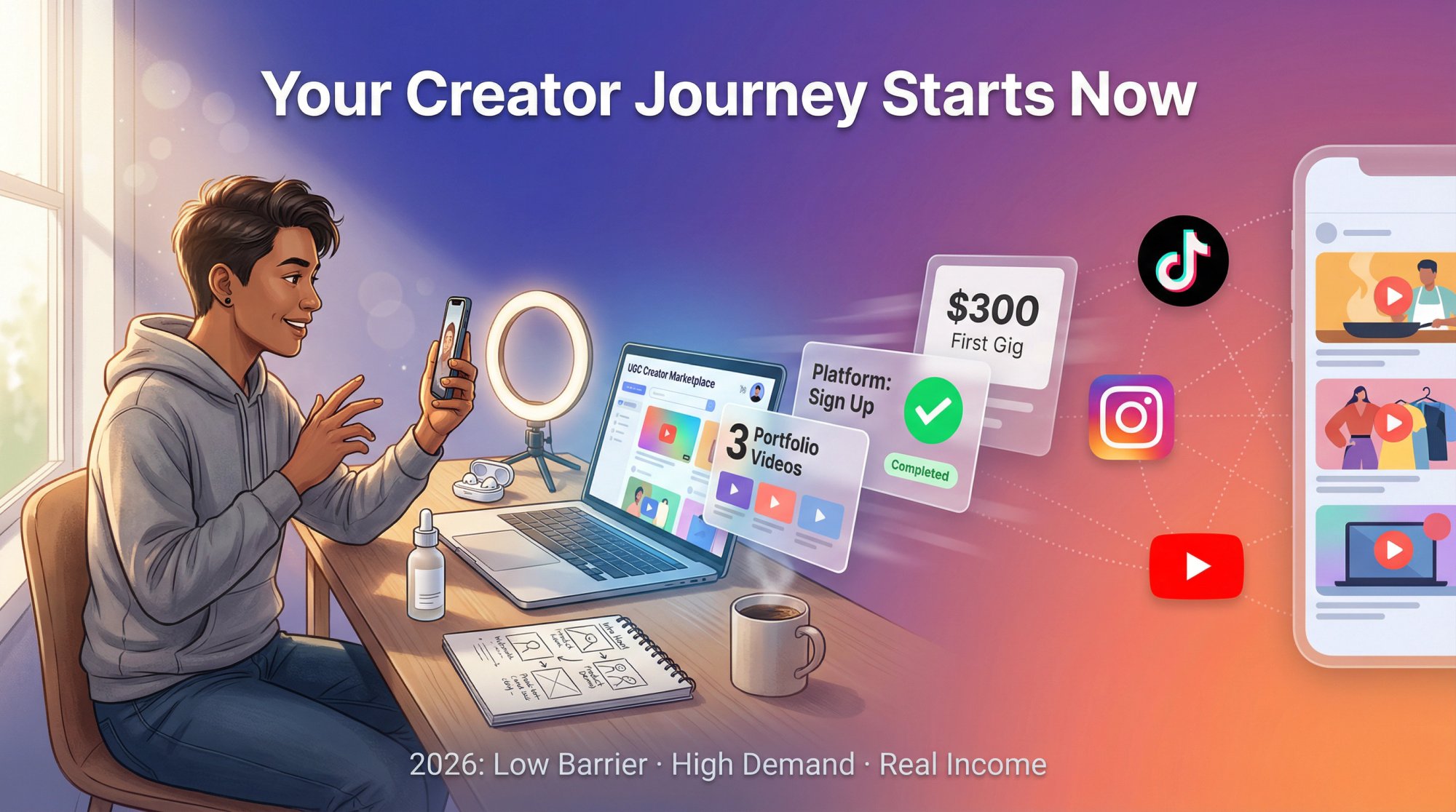
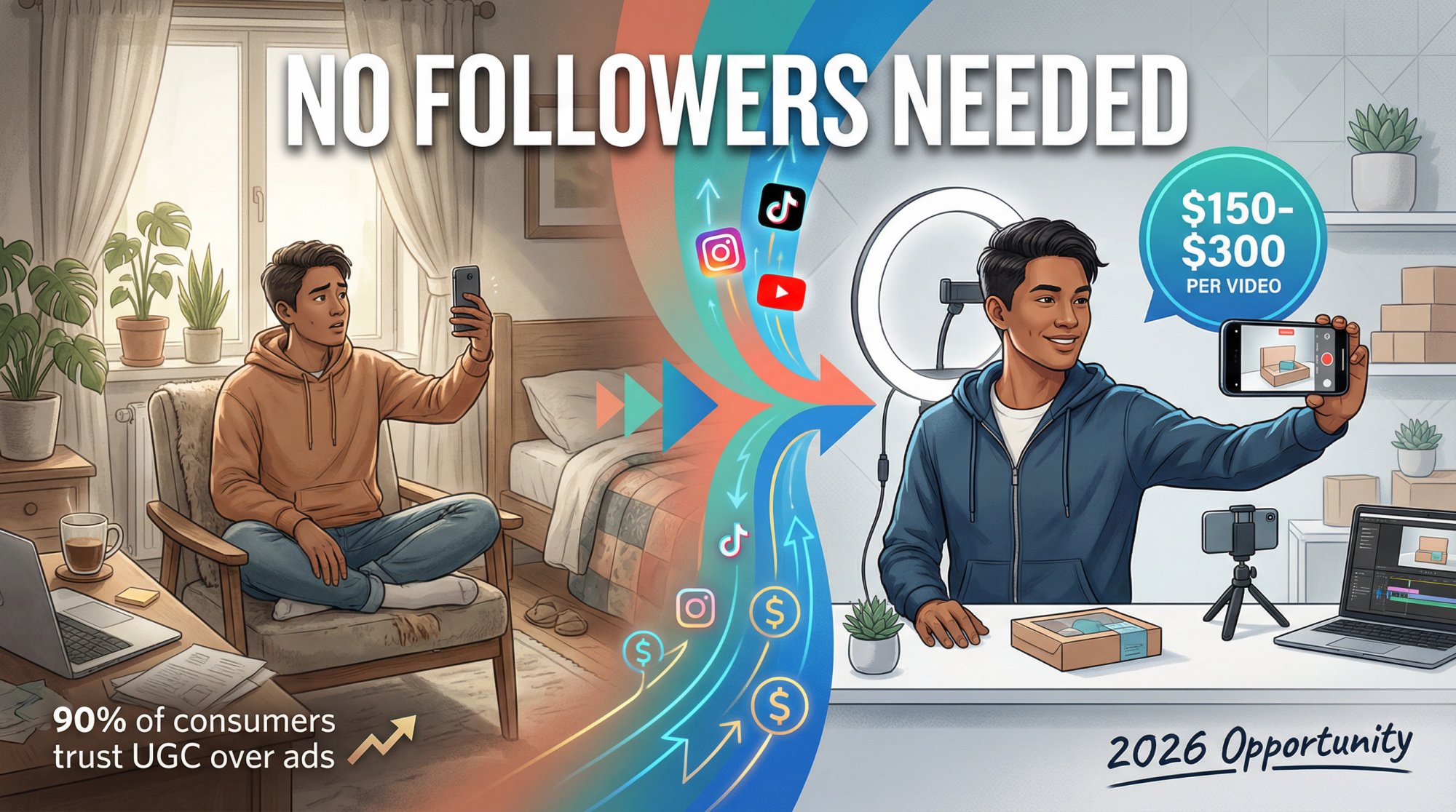
The creator economy just opened a door that changes everything. You don't need a million followers, a verified checkmark, or years building an audience anymore. 90% of consumers say user-generated content influences their buying decisions more than traditional advertising, and brands know it. They're actively hiring people to create authentic short-form video content for them, paying hundreds of dollars per video.
We're talking about UGC creator jobs. Real opportunities where everyday people get paid to film TikToks, Reels, and YouTube Shorts for brands. No massive following required. Just you, your phone, and the ability to make content that feels genuine.
This guide breaks down everything: what UGC creation actually involves, why brands can't get enough of it, how to break in as a beginner, where the money really comes from, and which platforms are worth your time in 2026.
What Is a UGC Creator vs an Influencer?
User-generated content (UGC) is any media created by regular people, not brands. Originally, this meant brands reposting customer reviews and unboxing videos. Now it includes commissioned content from UGC creators who specialize in making marketing materials that look organic.
Here's the crucial difference: UGC creators are hired for their production skills, not their follower count. You might have 200 Instagram followers and still land a $300 gig creating three product videos for a skincare brand. They're not paying for your audience. They're paying for your ability to make content that looks like it came from a real customer.
Why Do Brands Prefer UGC Over Traditional Ads?
The numbers tell the story. 84% of consumers trust brand UGC campaigns more than studio-produced content. When someone scrolls through TikTok and sees what looks like a friend recommending a product, that hits different than a polished commercial.
Brands get multiple advantages:
→ Trust building
UGC feels like peer recommendations instead of sales pitches.
→ Cost efficiency
Instead of one expensive photoshoot, a company can commission dozens of TikToks from real people at a fraction of the cost.
→ Volume and variety
Multiple creators producing content means more diverse perspectives and constant fresh material for social media monitoring, ads, and product pages.
→ Authenticity at scale
Modern consumers can spot a scripted ad instantly. UGC bypasses that skepticism because it genuinely looks user-made.
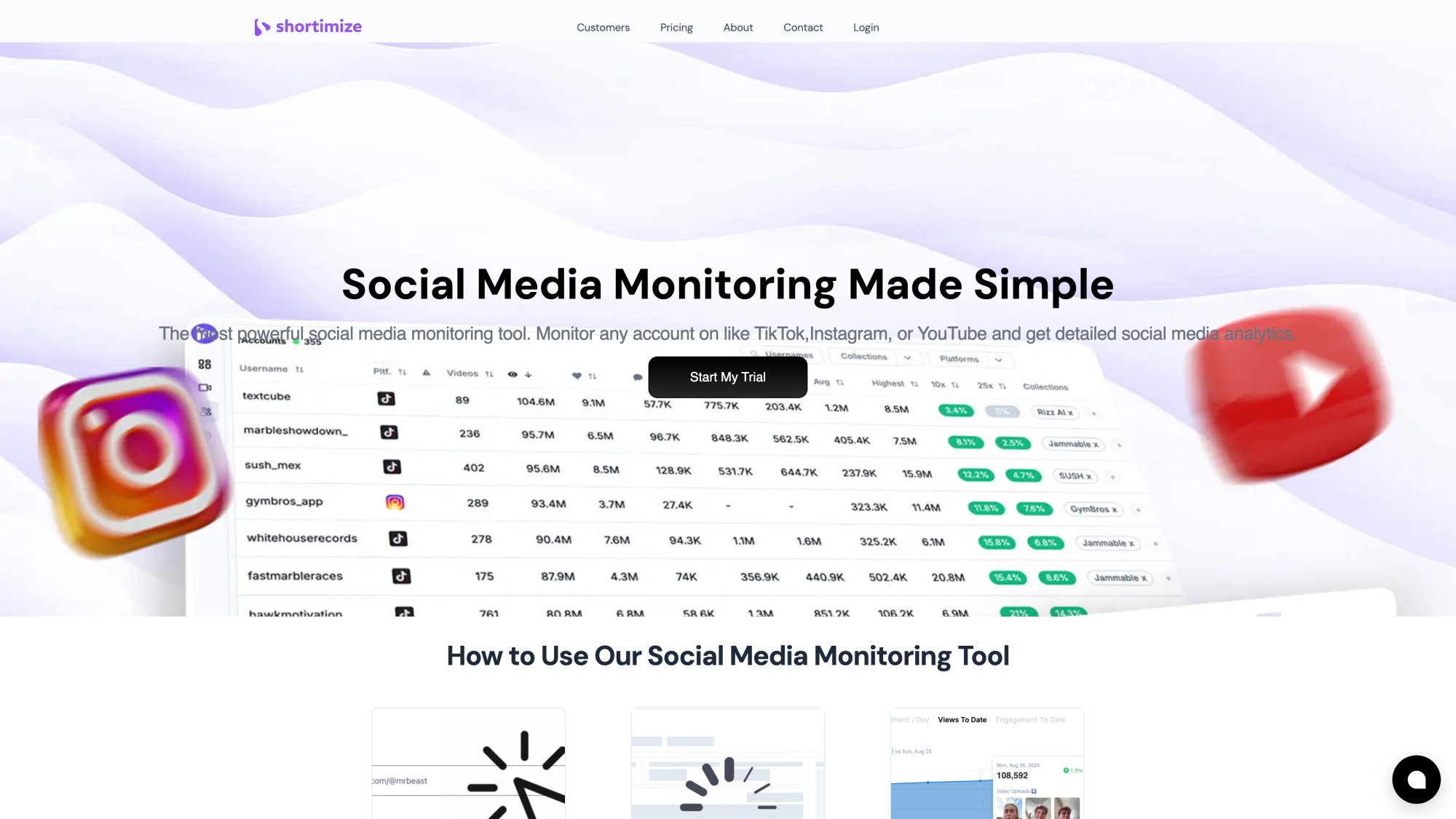
For creators tracking performance across platforms, tools like Shortimize help monitor how UGC content performs. The platform ingests public data from TikTok, Instagram Reels, and YouTube Shorts so you can see what's working in real-time.

What Do UGC Creator Jobs Involve?
The work centers on creating content that looks organic while being paid. Your deliverables might include:
→ Short TikTok or Reels videos (15-60 seconds)
→ Unboxing and product demo videos
→ "Day in the life" vlogs featuring a product
→ Testimonial-style clips
→ How-to tutorials
→ Product photography that feels natural
The critical detail: Brands use your content on their own channels. You're not posting to your personal account. You film it, edit it, send the files, and the brand publishes it wherever they want. Your follower count becomes irrelevant because you're paid for deliverables, not for your influence.
How to Make UGC Content Feel Authentic
The whole point is making content that feels like it came from a real customer, not a marketing department. That means:
• Casual, conversational voiceovers instead of scripted announcements
• Smartphone footage in everyday settings (your kitchen, bedroom, car)
• Intentional "imperfections" so it doesn't scream "advertisement"
• Natural lighting and handheld camera work
Brands typically provide creative briefs outlining what they need. For example: "Create a 30-second TikTok showing our coffee maker in your morning routine, highlighting the one-touch brewing feature." They rely on your personal style to keep it feeling real.
What Does a UGC Creator Actually Do Daily?
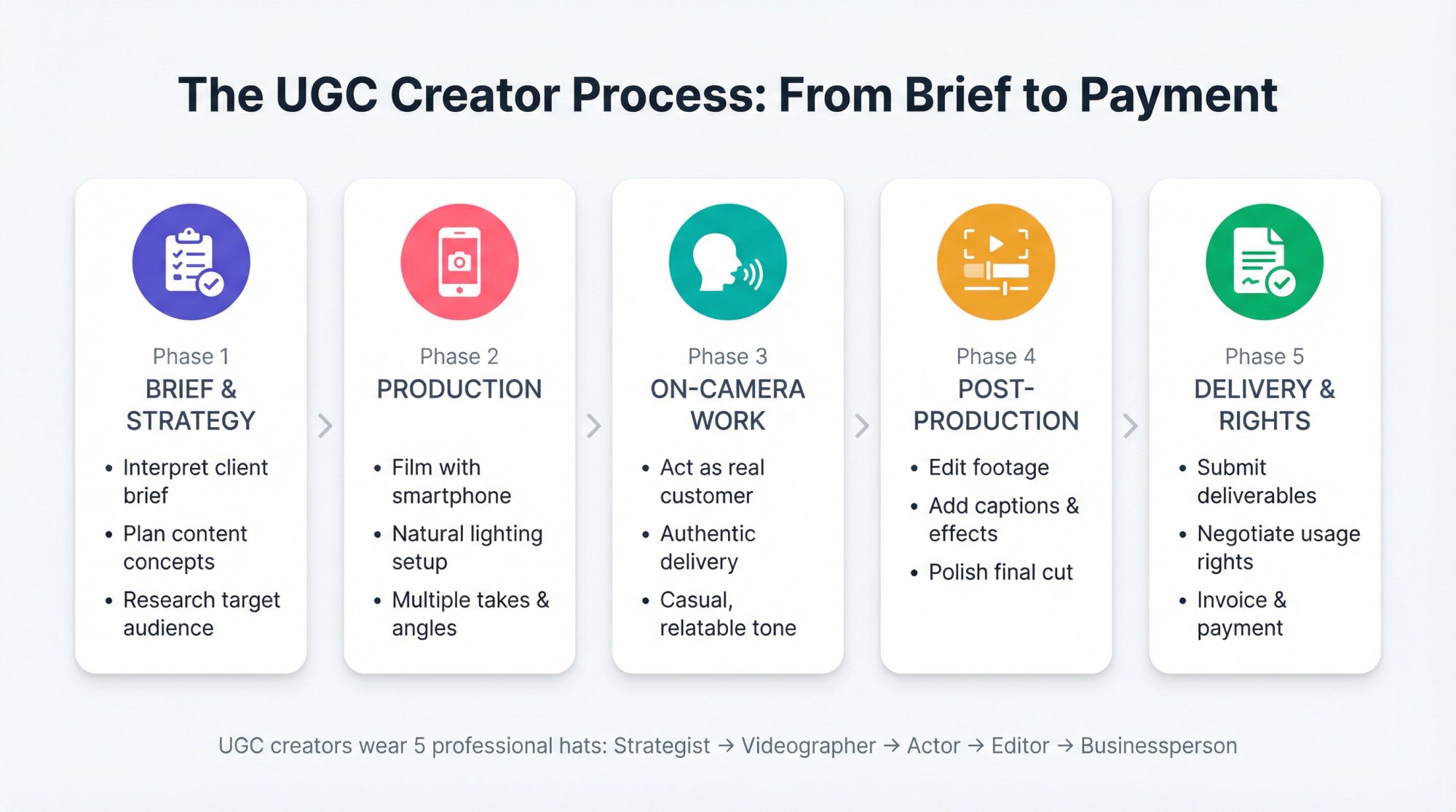
Most UGC work is freelance or contract-based, though some companies now hire in-house content creators. Projects are defined by deliverables: "Create 3 TikTok-style videos and 2 edited photos for $900."
You'll wear multiple hats:
① Strategist (interpreting the brief and planning concepts)
② Videographer (filming the content)
③ Actor (being on camera)
④ Editor (polishing the final deliverables)
⑤ Businessperson (handling contracts, invoicing, usage rights)
The self-driven nature means you control your schedule and workload. But it also demands professionalism: meeting deadlines, incorporating feedback, understanding licensing terms, and delivering quality work consistently.
How Do UGC Usage Rights Work?
When brands pay for UGC, they're usually buying rights to use that content in their marketing. Always clarify:
• Where will the content be used? (Organic social posts, paid ads, website, email campaigns)
• For how long? (3 months, 6 months, unlimited)
• On which platforms? (TikTok only, or across all channels)
Many creators charge base rates for creation plus additional fees for extended usage. A video used in a year-long paid ad campaign provides ongoing value to the brand. You should be compensated accordingly.
How to Become a UGC Creator (Step-by-Step)
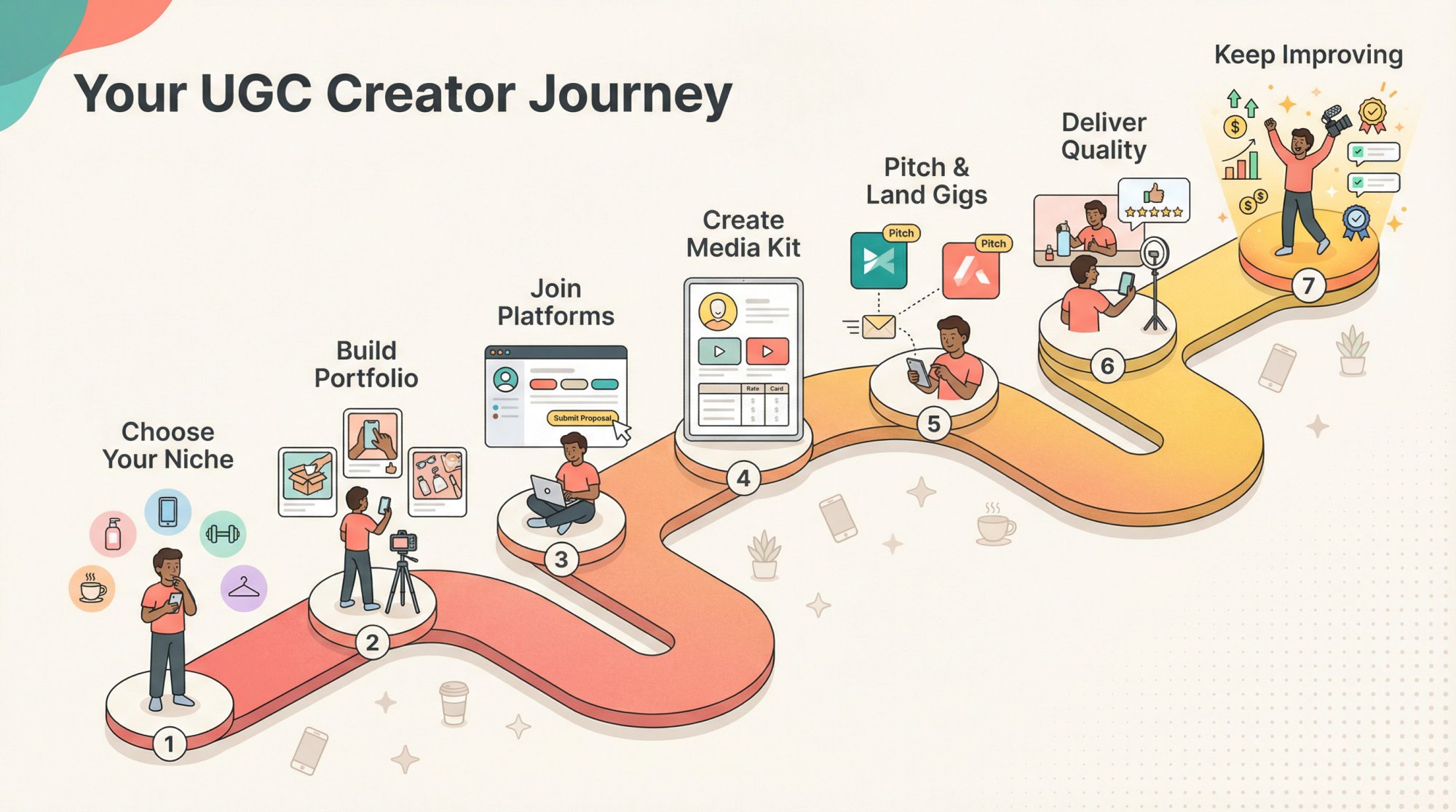
1. How to Choose Your Content Niche
Start where your interests and skills intersect. Love skincare? Tech gadgets? Fitness? Home décor? Choosing a niche helps you:
• Create more authentic content (passion shows through)
• Develop specialized skills (mastering makeup tutorial formats or product photography lighting)
• Build a recognizable style that attracts similar brand partnerships
Play to your strengths. If you're comfortable talking to camera, lean into testimonial videos. If you have a great eye for aesthetics, focus on beautifully composed product shots. UGC creators succeed in every format (from comedy to heartfelt storytelling to crisp product showcases).
2. How to Build Your Portfolio Before Landing Gigs
You need samples of your work. The good news: you don't need permission to start creating UGC-style content.
Pick products you already own and create portfolio pieces:
• Film a 20-second TikTok reviewing your favorite sneakers
• Shoot an unboxing video of a gadget you recently bought
• Create Instagram-worthy photos of your morning coffee routine with visible branding
Treat these like real client projects. They should represent the quality and style you'll offer paying brands.
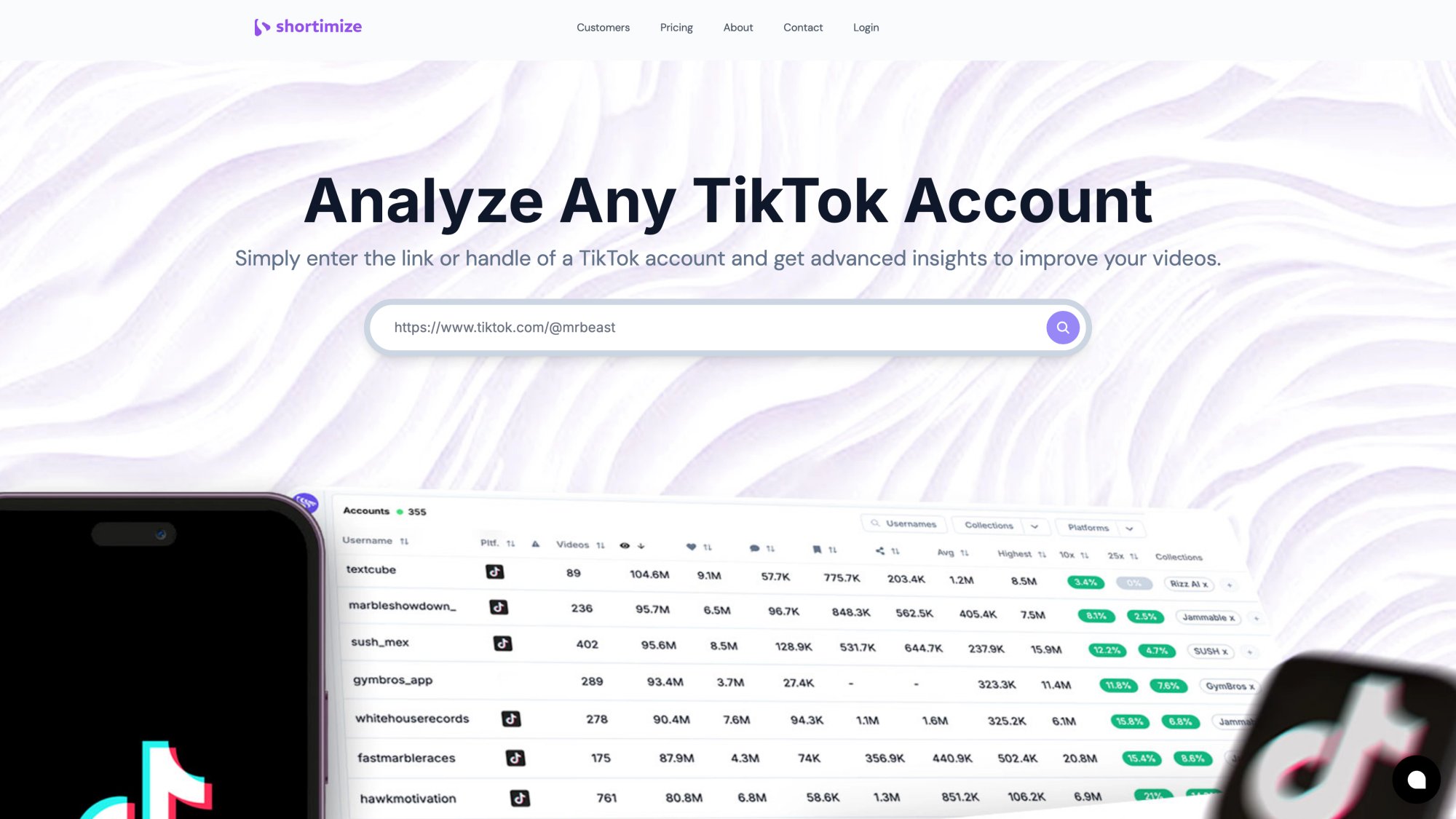
Pro tip: Use a tool like Shortimize to analyze top-performing TikTok accounts in your niche. Track which TikToks, Reels, or Shorts are getting the most engagement for brands or competitors. This sparks ideas and shows you what actually works.
Compile your samples in a digital portfolio (Google Drive, Dropbox, or a simple website). Many creators just create a folder with 5-10 of their best videos and photos to share when applying for gigs.
Brands increasingly want creators willing to appear on camera and humanize their brand. If that's your strength, make sure your portfolio showcases your personality and on-camera presence.
3. Which UGC Creator Platforms Should You Join?
The fastest path to gigs in 2026 is through dedicated marketplaces where brands and creators connect. Popular platforms include dedicated UGC marketplaces and general freelance sites.
When evaluating platforms, consider:
• Set your rates for different deliverables (photo sets, 15-second videos, 60-second videos)
• Browse available campaigns and submit proposals
• Get approached directly by brands searching for creators
Also consider traditional freelance platforms where many businesses post UGC content creation jobs without caring about follower counts. Your profile should clearly state you offer UGC video production services.
4. Do You Need a Media Kit as a UGC Creator?
A media kit is basically a one-page PDF or slide deck about you and your services:
• Brief bio and your content specialty
• Sample work (3-5 of your best pieces)
• Types of content you create
• Your base rates or packages
• Contact information
While not strictly required (marketplace profiles often include this info), having a polished media kit sets you apart when pitching brands directly.
5. How to Pitch and Land Your First UGC Gig
Once your portfolio and profiles are ready, actively seek work:
On platforms: Browse campaigns and submit personalized proposals. Mention the specific brand and how you'd approach their content needs. Highlight relevant examples from your portfolio.
Direct outreach: Don't wait for brands to find you. Email or DM smaller brands on Instagram or TikTok: "Hi! I'm a UGC creator specializing in [niche]. I'd love to create content for [product]. Here's my portfolio: [link]"
It's a numbers game initially. Some creators send 50 pitches before landing their first paid gig. Keep casting a wide net.
6. How to Deliver Quality and Build Testimonials
Your first few projects are crucial for reputation building:
• Understand the brief completely (ask questions if anything's unclear)
• Deliver on time or early
• Be open to feedback and reasonable revision requests
• Communicate professionally throughout
After completing a project, ask the brand for a brief testimonial or review. Positive feedback on your profile helps you land future jobs exponentially faster.
Save the content you created (if allowed) to showcase as real client work in your portfolio.
7. How to Keep Improving as a UGC Creator
The UGC landscape evolves constantly. Stay sharp:
• Watch trending content formats (reaction videos, trending audio, popular transitions)
• Improve technical skills (video editing, lighting, sound quality)
• Track performance when possible (ask brands how your content performed, or monitor public metrics)
• Refine your approach based on what's working
If you made an Instagram Reel for a brand's account, you could use Shortimize to analyze Instagram Reels performance and see the real-time impact of your content. Data-driven creators become more valuable over time.
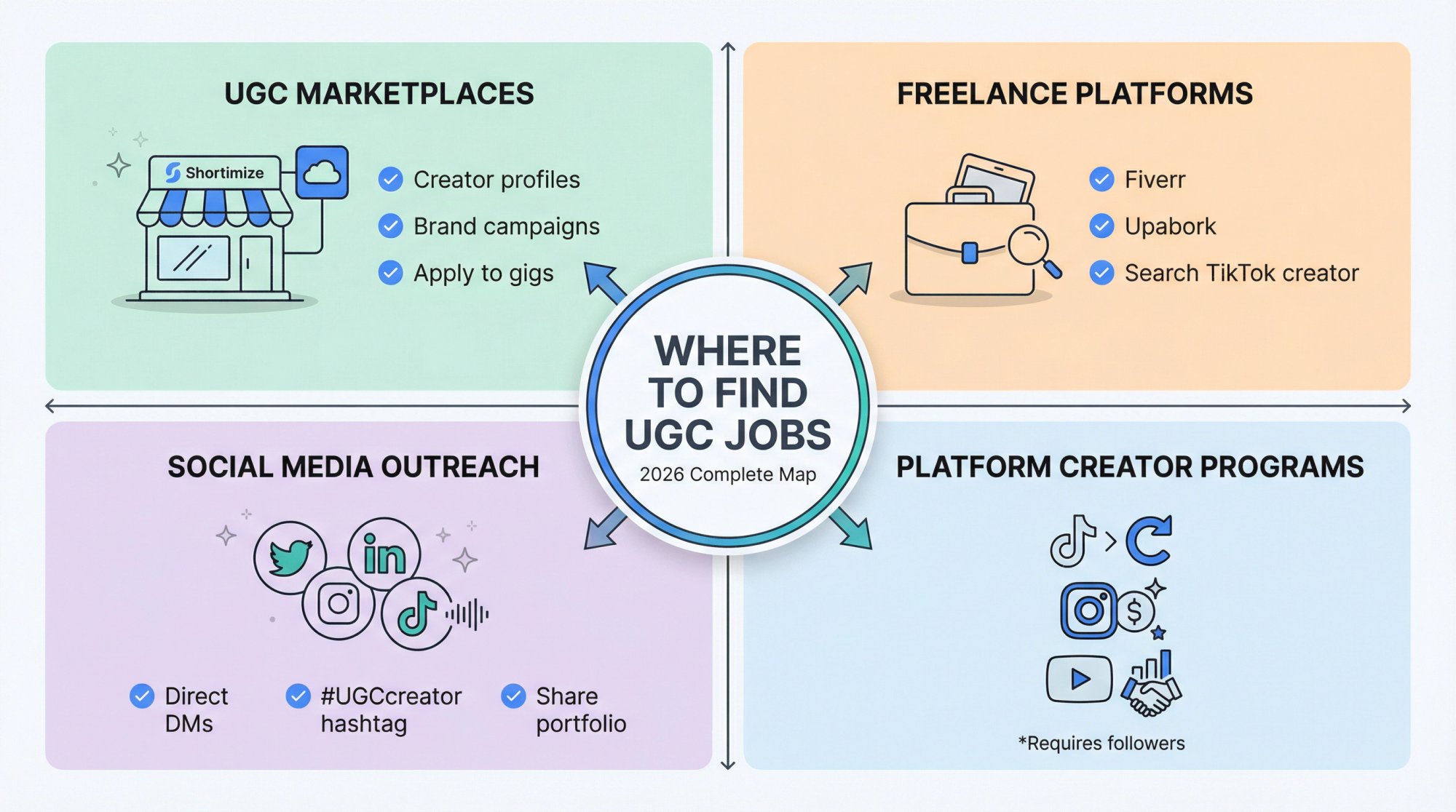
Where to Find UGC Creator Jobs in 2026
The demand surge has created multiple channels for finding work. Here's where to focus your energy:
Best UGC Marketplaces for Finding Work
These platforms specifically connect brands with UGC creators (and micro-influencers). You create a profile, then either apply to opportunities or get approached by brands.
While many platforms exist, the key is choosing 2-3 that align with your niche. Don't spread yourself too thin across every marketplace. Build strong profiles where you meet the requirements and can showcase your best work.
How to Find UGC Jobs on Freelance Platforms
General freelance platforms are goldmines for UGC work.
On these platforms, search for "TikTok video creator" or "UGC content creation." Many businesses post jobs for short videos and social content without caring about influencer marketing followers. Make your profile clearly state you offer UGC services.
General rule: Include "UGC" in your gig titles and proposals so clients understand your specialty.
How to Find UGC Jobs on Social Media
A lot of UGC creators find work through Twitter, LinkedIn, Instagram, and TikTok itself.
Try posting TikToks showcasing your work with hashtags like #UGCcreator. The format "Brands, work with me! Here's what I can create for you" actually attracts inbound inquiries when it gains traction.
LinkedIn is underrated. Connect with marketing people at brands or agencies and mention your UGC services. Share samples.
Join online communities: private Facebook groups, subreddits, Discord servers for content creators. Job leads get shared there, and building relationships with other creators leads to referrals.
Do Platform Creator Marketplaces Work for UGC?
TikTok Creator Marketplace, Instagram's Creator Marketplace, and YouTube BrandConnect exist but typically require certain follower counts. They were designed for influencer marketing, not pure UGC creation.
But, TikTok's Creative Challenge feature has started letting regular users earn money creating ads for brands directly on the platform. This is basically UGC creation at scale.
If you're totally new without followers, focus on dedicated UGC platforms and freelance avenues where follower count isn't a factor.
How Much Money Can UGC Creators Make?
UGC creation can be genuinely lucrative, but earnings vary widely based on experience, content complexity, and usage rights.
What Are Current UGC Creator Rates?
Short-form UGC videos (15-60 seconds) typically fetch $150 to $300 each. Several sources peg $200 as the common benchmark per video. This is often for one video or a small photo set with basic usage rights included. Understanding what makes content go viral can help you command higher rates for proven performance.
How Much Should You Charge as a UGC Creator?
| Experience Level | Rate Per Video | What You Offer |
|---|---|---|
| Entry-level | $50-$100 | Simple vertical videos, minimal editing, building portfolio |
| Mid-level | $150-$500 | Strong production value, niche expertise, proven quality |
| Experienced | $500+ | Mini-commercial quality, advanced editing, specialized skills |
Entry-level creators (just starting out) usually charge $50-$100 per video for simple vertical videos with minimal editing. This helps you build your portfolio and get testimonials.
Mid-level creators (stronger production value, niche expertise) report rates in the $150-$500 per video range.
Experienced, highly skilled creators can command $500+ per video before licensing fees. If you can film, star in, and edit mini-commercial quality clips, those rates become justified.

Should You Offer UGC Package Deals?
Many creators offer package deals that lower the per-piece cost when brands order more content:
| Package Size | Total Price | Per-Video Rate |
|---|---|---|
| 1 video | $300 | $300 |
| 3 videos | $800 | ~$267 |
| 8 videos | $2,200 | ~$275 |
The trade-off: bundle deals guarantee more work upfront, but you charge slightly less per item. For beginners, accepting bundles makes sense. You get more experience and the brand gets better value.
How Do Usage Rights Affect UGC Pricing?
Here's where money multiplies: how the brand uses your content drastically affects pricing.
If a brand wants to run your video in paid advertisements or use it on their website for a year, you should charge extra. That content provides ongoing value.
Common practice:
• Base rate includes organic social media posting rights
• Additional fees for whitelisting (running ads through your account or with your endorsement)
• Extended usage fees for longer timeframes
Always discuss this with clients. Some brands unfamiliar with UGC assume the flat price includes unlimited usage. It's on you to clarify.
Simple structure: "Price: $200 for creation + $150 for 6-month usage rights across social media and paid ads."
What Other Factors Affect UGC Pricing?
Content complexity affects rates:
• Longer videos requiring heavy editing, special effects, or scripting (higher fees)
• Rush projects (24-hour turnaround) (add rush fees)
• Multiple revision rounds (charge for extensive revisions beyond one round)
Scope considerations:
• Do you need to purchase props? Factor that into pricing.
• Is the product being shipped to you, or do you need to buy it?
Usually brands provide the product, but confirm.
How Much Money Can You Make as a UGC Creator?
Side hustle level: A few hundred dollars monthly from occasional gigs.
Part-time: $1,000-$3,000 monthly with consistent marketplace activity.
Full-time: Some established UGC creators report $5,000-$10,000+ per month once they build a steady roster of clients. Success often depends on understanding platform-specific best practices and consistently delivering high-performing content.
With efficiency, you could create 2-3 quality videos daily. At $200 per video, that's $400-$600 daily potential. Do the math on monthly income.
As you gain experience, continuously reassess your rates and charge for the value you deliver.
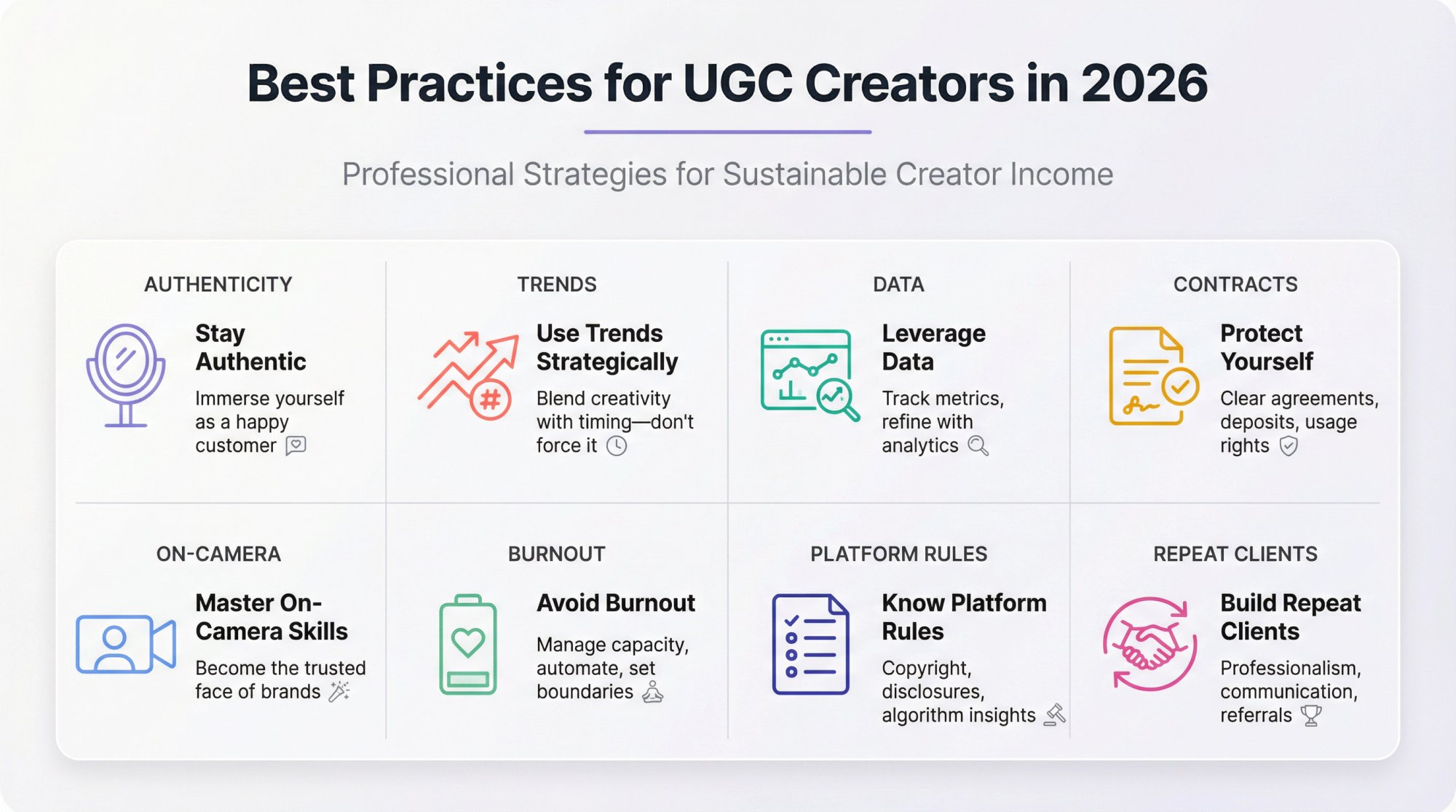
Best Practices for UGC Creators in 2026
Breaking in is one thing. Standing out and building sustainable income is another. Here's how to succeed:
How to Stay Authentic in Paid UGC Content
Getting paid to create "authentic" content can feel like a paradox. The trick: immerse yourself in the role of a happy customer.
If a brand's product genuinely fits your lifestyle or interests, lean into that. Your content will feel more real.
If it doesn't naturally fit, find a relatable angle or story that makes the content less ad-like.
Don't be afraid to show your face and personality. The 2026 trend is shifting away from completely faceless content. Brands realize that having a human face and voice (even if not famous) increases relatability.
Put yourself in the viewer's shoes: what kind of content would you not skip in your feed?
How to Use Trends Without Looking Forced
Know current social media trends, especially on TikTok, Instagram Reels, and YouTube Shorts:
• Trending audio and sounds
• Popular formats (Get Ready With Me, challenges, memes)
• Viral editing styles and transitions
Use these when appropriate. Brands appreciate when you incorporate trends that fit their product naturally.
But don't force it. A timeless, genuinely enthusiastic product review can outperform a gimmicky trend that feels irrelevant.
Blend creativity with strategy: If you're showcasing a cooking gadget, maybe the trending quick-cut recipe format works perfectly. Keep an idea folder of trend-inspired concepts for different niches.
How to Use Data to Improve Your UGC Content
Treat UGC creation with analytical rigor:
• Notice which content performed best from the brand's perspective
• Use feedback to refine your style
• Track social metrics on posts you created (if they're public)
Knowing what works in your niche gives you an edge. For instance, understanding video length sweet spots across TikTok, Reels, and Shorts helps you create more engaging content that viewers actually complete.
When pitching new clients, cite trends or stats: "Videos under 30 seconds on TikTok have higher completion rates, so I'll keep our content under that for better results." Brands see you as a knowledgeable partner, not just a content factory.
Tools like Shortimize help you identify median view counts and engagement rates for similar content across platforms. Use that data to aim higher than the benchmark.
How to Protect Yourself With Clear Agreements
Always clarify project terms before creating:
• Deliverables (how many pieces, what format)
• Timeline and deadlines
• Payment amount and schedule
• Usage rights and licensing
Many creators use simple contracts or detailed emails spelling this out. For smaller marketplace gigs, the platform's terms may suffice. For larger projects, use a basic freelance contract.
Consider requiring a deposit (50% upfront is common) for direct clients outside platforms. It shows the client is serious.
Using reputable platforms with escrow can mitigate payment issues. If doing direct deals, contracts and deposits are essential.
Don't do work without a contract or upfront payment.
How to Improve Your On-Camera Skills for UGC
Even if you didn't start as a camera-facing personality, practice helps.
More brands are hiring UGC creators to become a sort of "in-house face of the brand". Some companies bring on popular UGC creators full-time to produce content as hybrid content creator and social media manager roles.
If that appeals to you, being comfortable on camera is crucial:
• Practice speaking clearly and confidently
• Convey genuine energy and emotion
• Learn basic acting to express feelings on cue
The more versatile you are (talking head videos + aesthetic b-roll + product demos), the more gigs you can take.
How to Avoid Burnout as a UGC Creator
Creating content, especially video, is time-intensive:
• Scripting or storyboarding
• Setting up shots and lighting
• Multiple takes
• Editing and adding captions
A single 30-second clip could take 2-3 hours of work.
Learn to estimate your capacity. If you can realistically produce 3 quality videos daily, don't commit to 10 videos due tomorrow.
Stagger projects and build buffer time for edits or reshoots.
Automate what you can: create editing templates, preset export settings, batch similar tasks.
Keep your creativity tank full: watch content for inspiration, take breaks, turn down projects that aren't worth the stress (like very low pay for complex videos).
Maintaining quality is crucial for long-term success. That means not burning out.
What Platform Rules Should UGC Creators Know?
Be mindful of platform rules even though content goes on the brand's page:
• Avoid unlicensed music that could get posts taken down for copyright
• Understand disclosure rules (brands should mark paid content as #ad)
• Know whitelisting implications (using your likeness or posting from your account)
Keep up with algorithm changes and new content formats. Understanding how the YouTube Shorts algorithm works or what makes TikTok content go viral becomes a selling point for your services.
Be the expert brands hire you to be: not just in shooting pretty videos, but in understanding the social media landscape they live in.
How to Get Repeat Clients as a UGC Creator
UGC creation is ultimately a people business.
Professionalism and communication matter:
• Deliver on time
• Be responsive
• Don't ghost clients
Little touches make impressions:
• Deliver an extra photo variant
• Send a friendly note saying you enjoyed the project
• Follow up after delivery to see if they need anything else
Happy clients return with more work and refer colleagues to you. Retention is easier than constant acquisition.
After delivering content, proactively suggest future collaboration: "I'd love to help with any content needs for your spring campaign. Maybe some Instagram Reels?"
As you build a roster of repeat clients plus marketplace gigs, you'll have more predictable income. Some UGC creators even evolve into long-term contractors or get offered in-house roles by brands.
Is Now the Right Time to Start UGC Creation?
2026 is the best time to enter UGC creation. The field is more mature now, with established platforms, clearer pricing standards, and massive brand demand.
Yes, it's more crowded than when #UGCcreator first trended on TikTok a couple years ago. But there's also far more demand. Brands large and small have realized the value of UGC and they're investing in it.
This is a realm where everyday authenticity beats influencer clout. A college student with 200 followers can land a $300 gig creating TikToks for a global brand. A stay-at-home parent can earn solid income reviewing products on camera without becoming a public influencer.
Start by understanding what brands need, build your portfolio to prove you can deliver, and get yourself on platforms where opportunities flow. Keep content real and business practices tight. Authenticity and professionalism are your dual assets.
The potential is vast:
• One-off gigs supplementing your income
• Steady client relationships generating monthly revenue
• Full-time content creation businesses
• Even in-house roles at companies
Whether you aim for a few hundred extra dollars monthly or want to build a six-figure content business, UGC jobs can accommodate.
Social media constantly evolves. The best creators stay curious and adaptable. Experiment with new styles, learn from each campaign, refine your approach based on what works.
You'll work hard behind that "simple" TikTok. But it's creative, fun, and on your own terms.
Consumer trust in UGC is sky-high and brands are hungry for more. There's never been a better time to turn your content creation skills into a paid profession.
Ready to get started? Pick your niche, create those first 3-5 portfolio pieces, and start applying to platforms. Your first paid gig could be days away.