TikTok promises something most social platforms can't: anyone can go viral. You don't need 100,000 followers or a production crew. A single video can reach millions of people overnight, even if you have zero followers. That's not marketing hype. It's how the platform actually works.
But (and this is important) going viral isn't about getting lucky or posting at the "perfect" time. It's about understanding the system. Think of TikTok's algorithm as a prediction engine that's constantly asking: "Will people watch this? Will they engage? Will they share it?" If your video signals "yes" strongly enough, the platform pushes it to exponentially larger audiences.
What you'll learn in this guide:
• A tactical manual for creating viral content (not vague advice)
• How TikTok's algorithm actually decides what to promote
• A testing framework you can hand to your team
• The 30-day sprint that turns viral moments into repeatable results
This isn't theory. It's built on data from 11.4 million TikToks analyzed across the industry, TikTok's own public explanations of how recommendations work, and real patterns we see creators using to hit outlier performance consistently with TikTok analytics tools.
Ready? Let's break down exactly what "going viral" means and how to make it happen systematically.
How Many Views Is Viral on TikTok?
"Viral" isn't just a big number. It's about rapid, explosive reach far beyond your usual audience.
The most common benchmark? Around 1 million views within 24 to 48 hours. That velocity matters. A slow burn to a million over months doesn't count as viral. It's the fever spike of attention that signals the algorithm has pushed your content to broad audiences.
But here's what most people miss: virality exists on a spectrum, and it's relative to your baseline.
For a new creator who usually gets 2,000 views? A video that suddenly pulls in 100,000+ is a massive viral moment, even if it's not millions.
For an established influencer? Their viral threshold might be 3 to 5 million views in a week.
The mega-virals? Those hit 20 to 50 million+ views within a month and become cultural phenomena.
At Shortimize, we define viral as outlier performance versus your baseline. If a video almost doubles your typical view count (or more), it's viral for you. This definition is more useful than chasing arbitrary numbers because it helps you identify repeatable patterns that work in your niche.
Why Most TikToks Don't Go Viral (But Some Explode)
Industry analysis of 11.4 million TikToks from over 150,000 accounts found something critical: most posts do fine, but a few explode. The median views barely move with posting frequency. But the top end (the 90th percentile) jumps dramatically as you post more.
Translation: Posting more doesn't magically make every video better. It gives you more lottery tickets and more chances to learn what works with systematic TikTok tracking.
And the exciting part? Anyone can achieve a viral hit on TikTok. The platform's design gives every upload a fighting chance, thanks to the For You Page (FYP) algorithm that doesn't care if you have 5 followers or 5 million.
How Does the TikTok Algorithm Work?
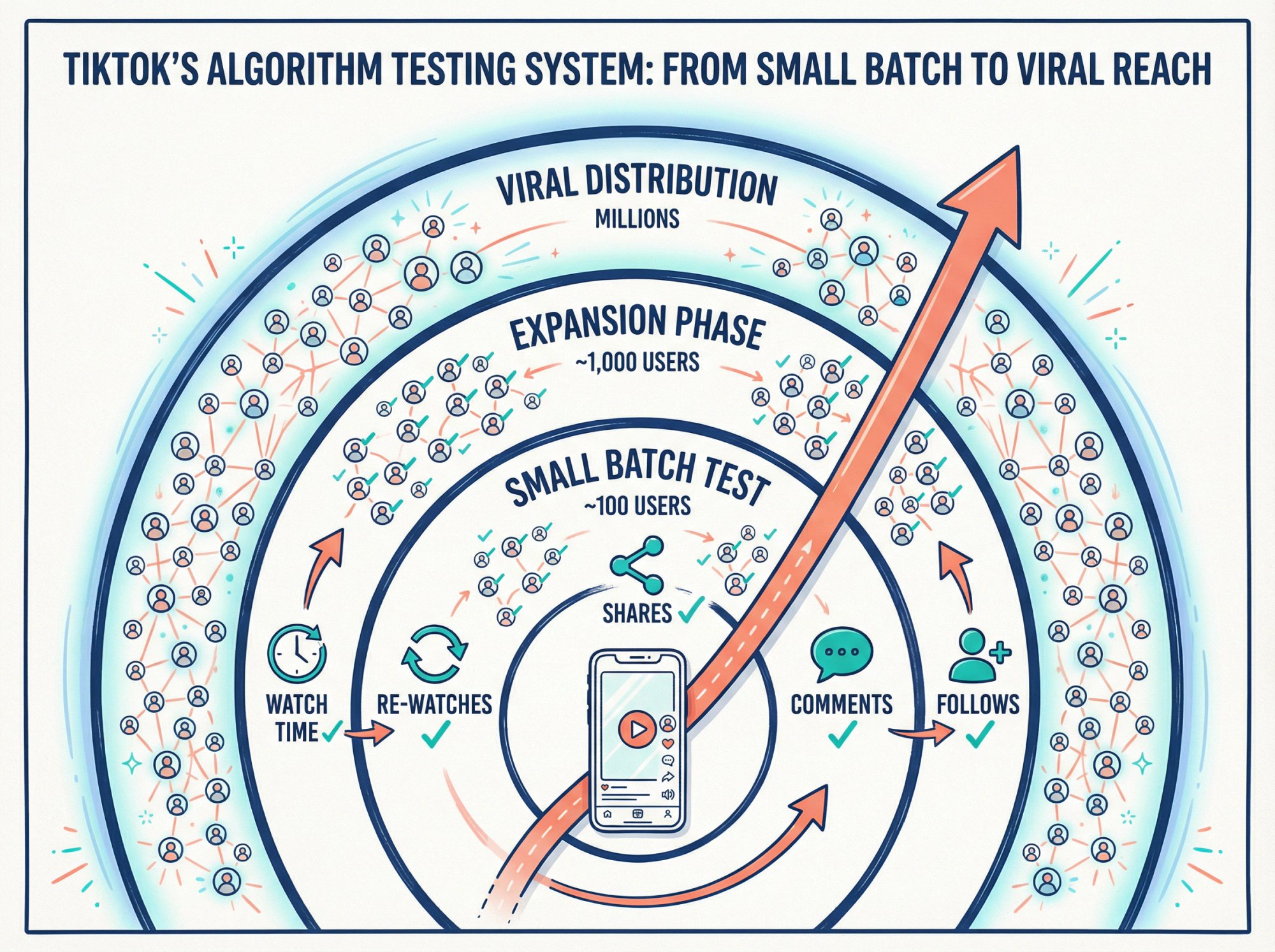
TikTok's algorithm is the secret sauce behind its viral fame. Unlike traditional social feeds (where you mostly see posts from people you follow), TikTok's FYP is an interest-based recommendation engine. It's not social networking in the old sense. It's content discovery at scale.
How TikTok Tests New Videos
Every new video gets shown to a small batch of users first to gauge interest. If those people watch it to the end, hit Like, comment, or share the video, TikTok quickly shows it to a bigger group. Then an even bigger group. And so on.
This iterative "rings" system means strong early engagement can unlock exponential reach. Many creators describe this as waking up to a sudden flood of notifications after the algorithm picked up their video overnight.
What Makes TikTok Videos Go Viral?
TikTok's own explanation from November 2023 breaks down what the algorithm considers. The strongest signals are viewer interactions:
① Watch time and completion rate (crucial)
If viewers drop off early, TikTok halts further distribution. Finishing a longer video is an especially strong signal.
② Re-watches
When someone loops your video or rewatches it immediately, that's gold.
③ Shares
Even more powerful than likes. Sharing means the viewer found your content valuable enough to show someone else.
④ Comments
Active discussion signals engagement and interest.
⑤ Follows generated
If your video makes people want to see more from you, TikTok takes notice.
The algorithm's core truth: Content that people watch all the way and actively engage with tends to go viral. Understanding what is a good engagement rate on TikTok helps you benchmark your performance.
What Does TikTok Reward in 2026?
TikTok launched the Creator Rewards Program in March 2024 and told creators exactly what it values:
① Originality
② Play duration (watch time + finish rate)
③ Search value
④ Audience engagement (likes, comments, shares)
Even if you don't care about monetization, this is a clean proxy for what TikTok wants the platform to feel like: original, watchable, searchable, shareable.
Also: TikTok said the community spends 50% of their time watching videos longer than one minute. That's a massive clue about where attention is going. Don't assume short is always better. Learn more about video length sweet spots across platforms.
How to Optimize for TikTok SEO
The algorithm also looks at video information: captions, hashtags, sounds, and even text on screen. TikTok in 2025 introduced features like topic categories and keyword filtering, which means topic classification matters more than ever.
If your video clearly signals what it's about (via keywords and hashtags) and aligns with a popular interest, it's more likely to find a receptive audience. Master TikTok SEO optimization to maximize discoverability.
How TikTok Personalizes Your For You Page
Every user's FYP is personalized. The algorithm considers a viewer's past behavior (what they watched, liked, shared, accounts followed) to decide which videos to serve them. It also avoids showing too many of the same kind of content (to prevent monotony or spam).
For creators, this means your video will first be shown to people who likely are interested in that topic. Succeed with them, and TikTok widens the net.
How Fast Do Videos Go Viral on TikTok?
Virality is tied to velocity. TikTok watches how your video performs in the first minutes and hours after posting. If within the first hour your video achieves extremely high engagement (an above-normal percentage of viewers are liking, commenting, and watching fully), that's a predictor it could go viral.
Most truly viral TikToks gain the bulk of their views within the first 2 to 3 days, often with a huge spike in the first 24 to 48 hours. If a video doesn't catch fire in that window, it's unlikely to suddenly explode later (though occasional slow-burn virals do happen). Understanding how many views is viral on TikTok helps set realistic expectations.
What Content Won't Go Viral on TikTok
TikTok actively suppresses certain content categories from ever reaching FYP. Videos that violate community guidelines (nudity, dangerous stunts, hate speech, etc.) or even borderline content will be downranked or not recommended at all. In short: if it's not safe or appropriate for a broad audience, it won't go viral.
TikTok also says it won't recommend spam, duplicated content, or content you've already seen. Stay within TikTok's rules to give your videos a fair shot. If you're experiencing issues, learn how to tell if TikTok is suppressing your video.
The algorithm is your friend if you feed it the right signals. It rewards high-retention, engaging content by boosting its reach. Every video you post is essentially auditioning for millions of screens.
What Makes a TikTok Go Viral?
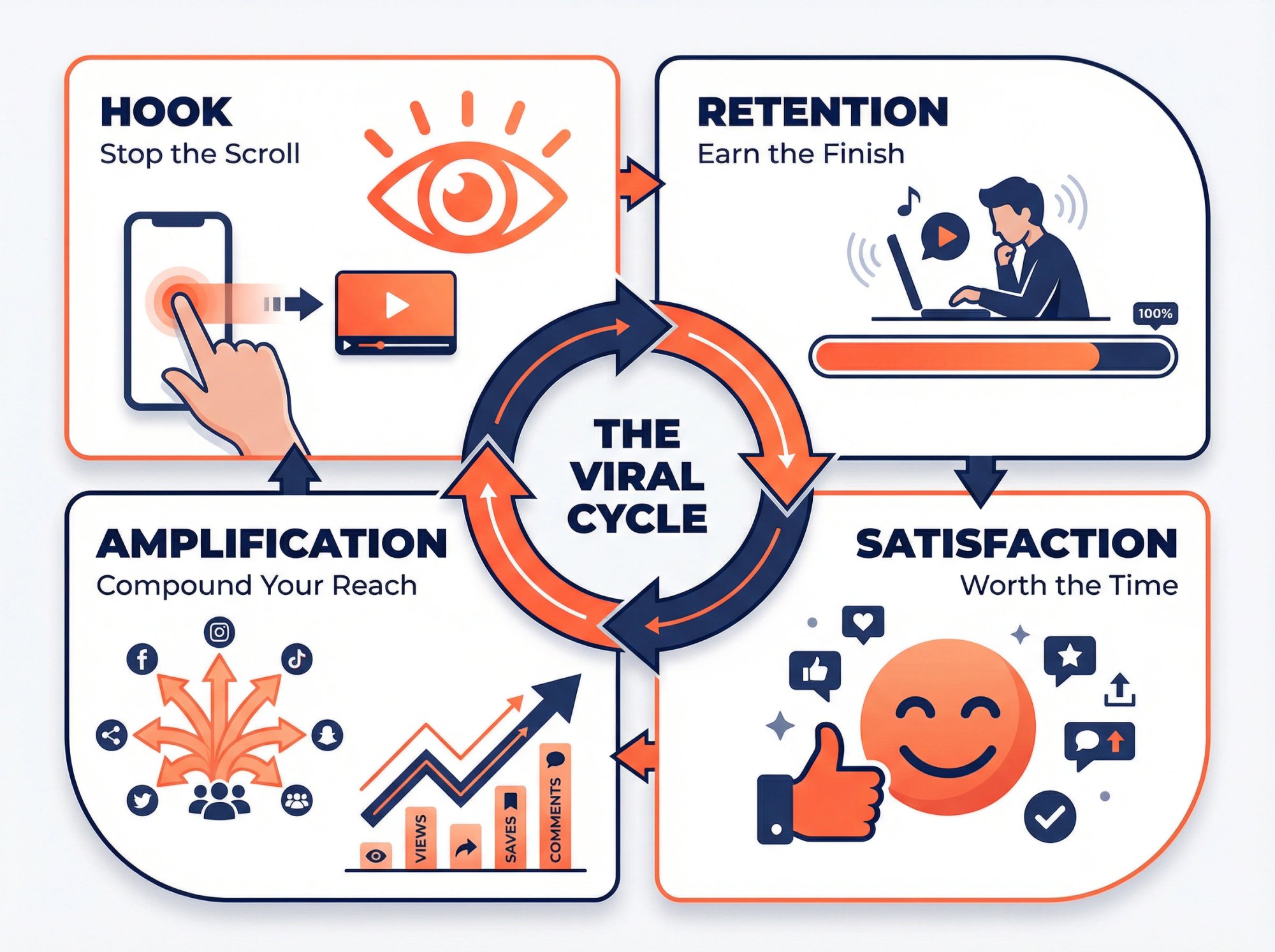
Every viral TikTok is basically:
① Hook (Stop the Scroll)
Can you stop the scroll in the first second? Your hook's job is not to be clever. It's to create an open loop that the viewer needs to close.
② Retention (Keep Them Watching)
Can you earn the finish? TikTok explicitly says that finishing a longer video is a strong signal. Design for "finish energy," not just "intro energy."
③ Satisfaction (Was It Worth It?)
This is the most underrated part. Did they feel like it was worth their time? Clickbait hooks kill satisfaction, and satisfaction is what gets shares.
④ Amplification (Do They Spread It?)
Do they share it, comment, save, follow, or search more? These behaviors compound your reach.
TikTok's transparency tools list why something gets recommended: interactions (watch/like/share/comment/search), accounts you follow, and even what's popular or recent in your region.
So "viral" is just: Stronger signals lead to broader distribution, which means more testing on new audiences, which compounds.
How to Set Goals for Viral Content
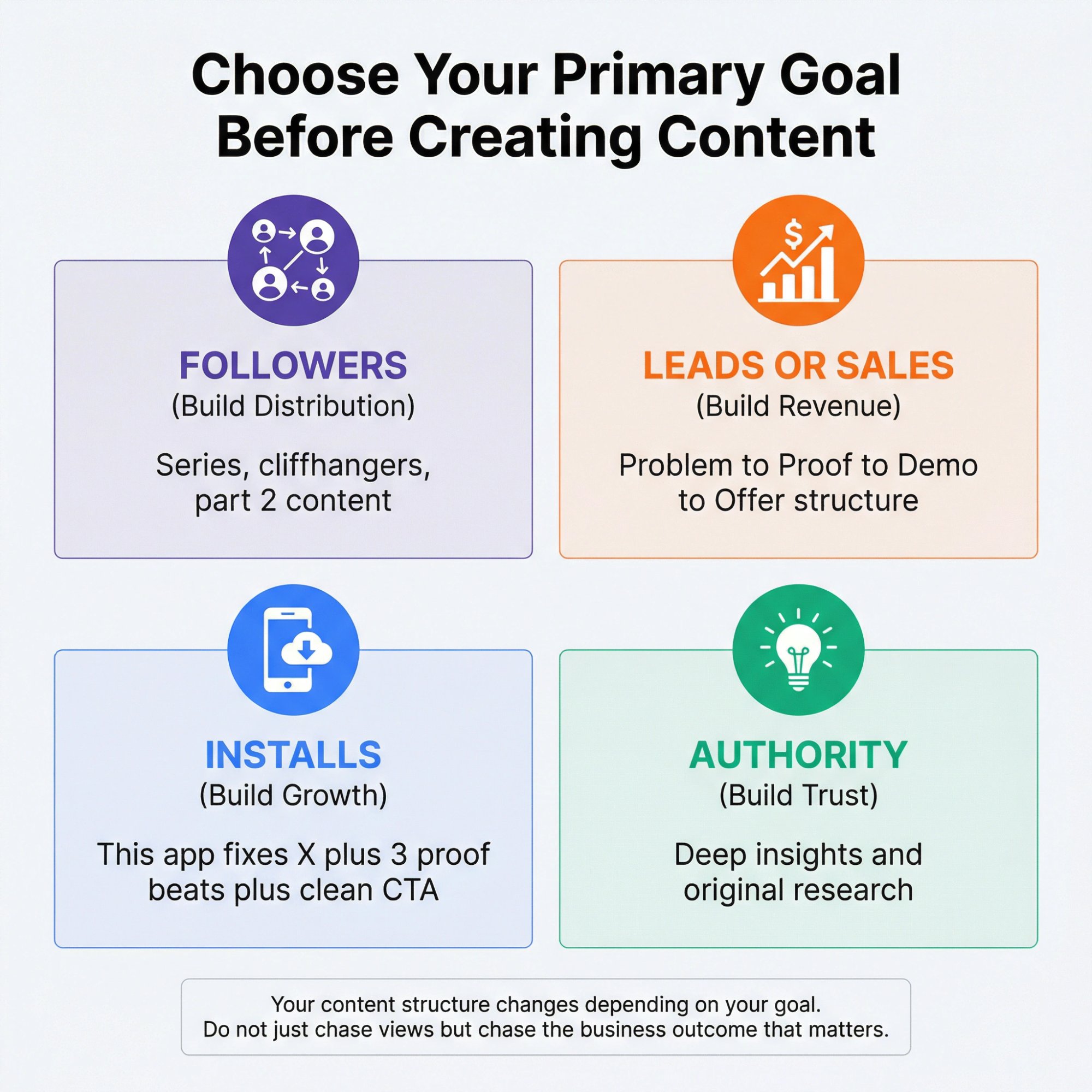
Before you create a single video, choose one primary outcome:
→ Followers (build distribution)
If you want followers, use series, cliffhangers, and "part 2" content.
→ Leads or sales (build revenue)
If you want sales, structure as: problem, proof, demo, offer.
→ Installs (build growth)
If you want installs, try: "this app fixes x" + 3 proof beats + clean CTA.
→ Authority (build trust)
If you want authority, share deep insights and original research.
Your content structure changes depending on this. Don't just chase views. Chase the business outcome that matters.
How to Find Your TikTok Niche
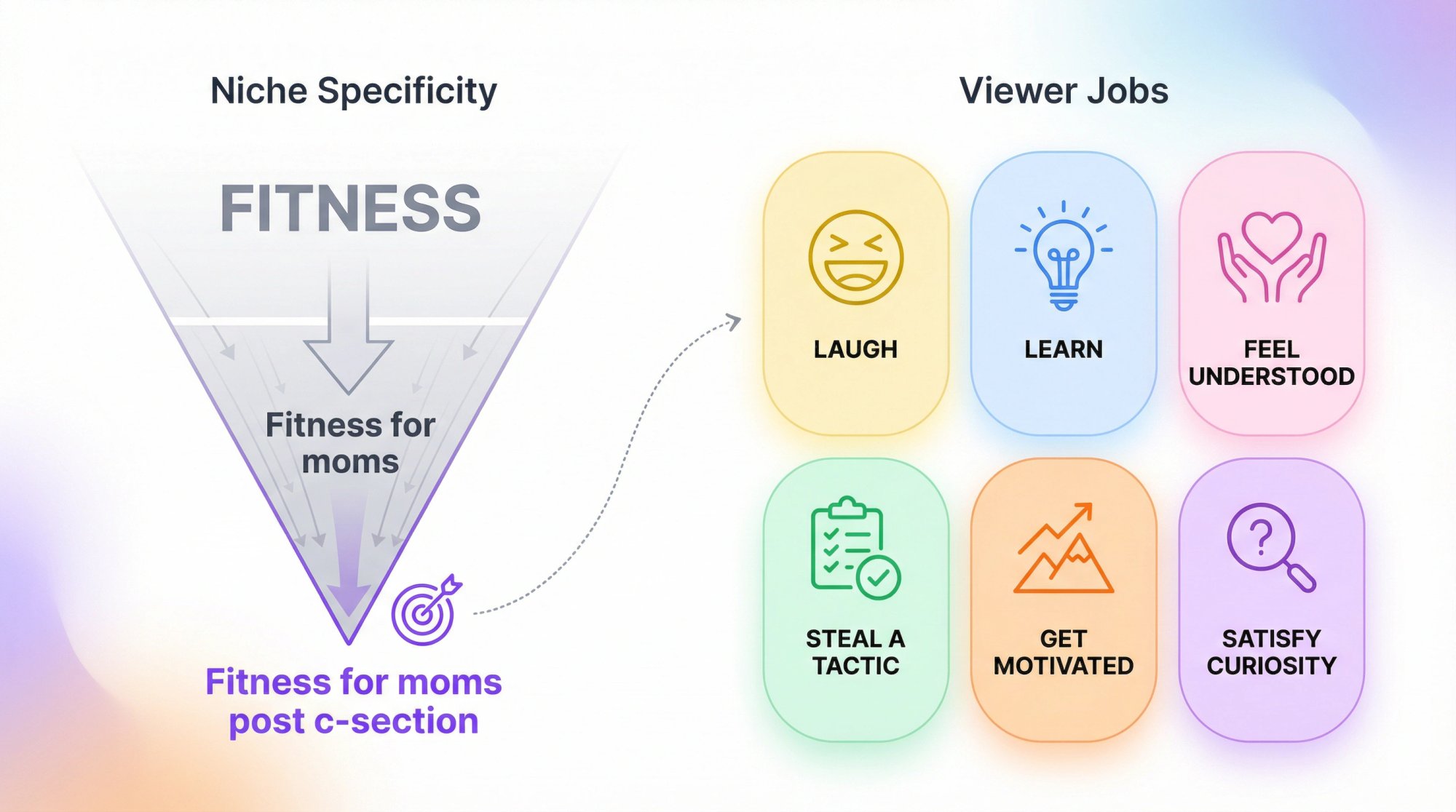
A niche isn't "fitness." It's "fitness for moms post c-section" or "gym for skinny guys who hate bulking." The more specific, the easier it is to stand out.
Then define the viewer job your content will do:
• Laugh
• Learn
• Feel understood
• Steal a tactic
• Get motivated
• Satisfy curiosity
Research from Shortimize's 2026 pattern guide nails the trap: copying a format (like "street interviews") without understanding why it works. The fix is labeling the viewer job. Once you know what emotional or practical job your content performs, you can execute it across different formats.
How to Find Viral Video Ideas for TikTok
The fastest path to viral is: steal the structure, not the content.
You're looking for repeatable patterns in:
• Hook type
• Pacing
• Length
• Visual style
• Topic angle
• Comment behavior (questions, controversy, curiosity)
• "Payoff moment" timing
How to Analyze Viral TikToks in Your Niche
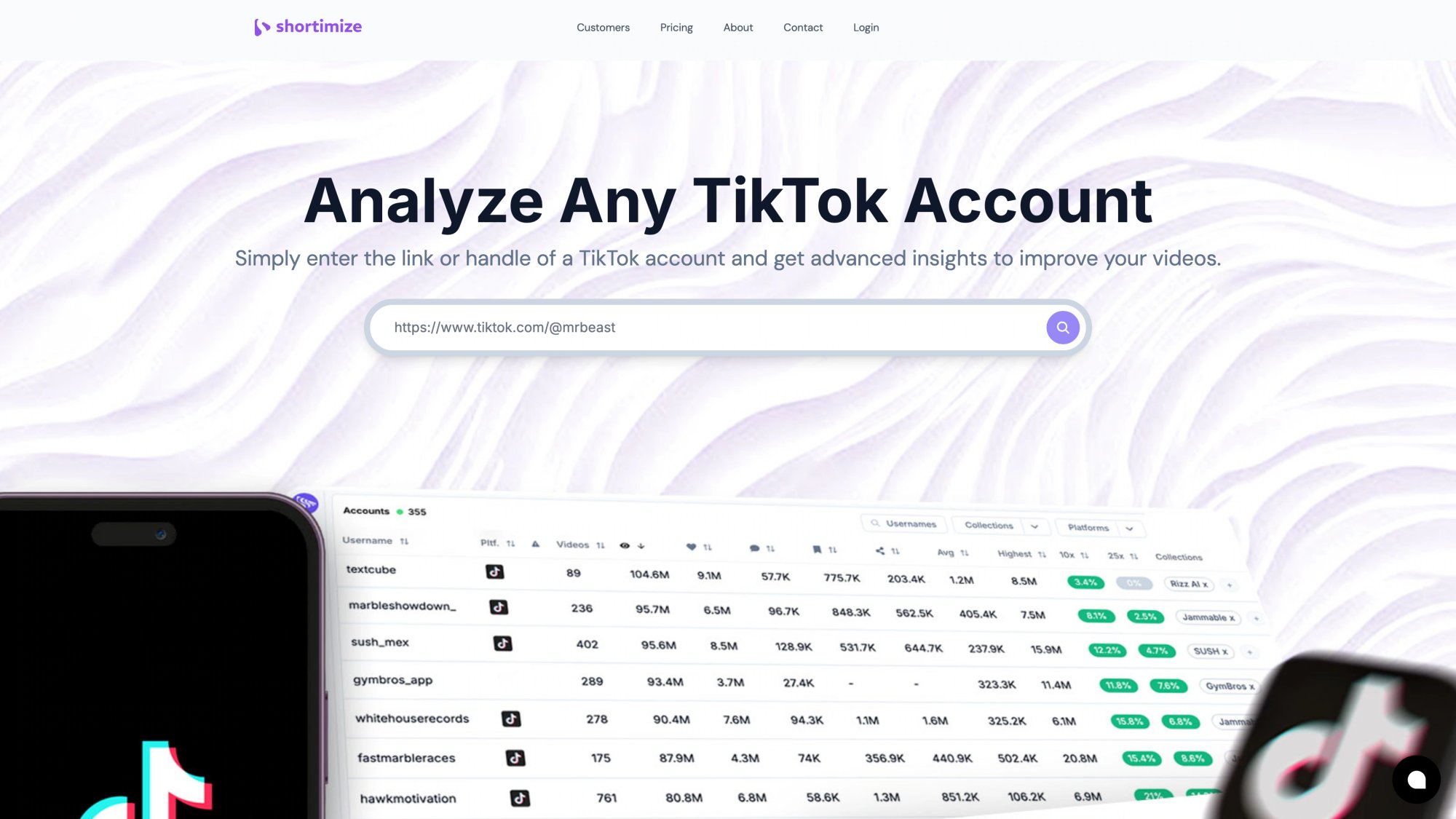
At Shortimize, we've built tools specifically for this. You can analyze any TikTok account and see:
→ Full video list
→ Median + virality metrics (outlier detection)
→ Quick outlier detection
→ Similar accounts and similar videos
A practical workflow:
① Pick 10 competitor accounts in your niche
② Pull each into Shortimize
③ Sort by virality to spot outliers
④ For the top 20 videos: write down the same 8 attributes (hook, topic, structure, etc.)
⑤ Cluster into 3 to 5 "templates" your team can execute weekly
Shortimize's 2026 guide frames this exactly: you want a system that tells you what's working now in your niche, why it's working, and how to spot patterns early. Pattern detection is the hard part. Filming is the easy part.
How to Write TikTok Hooks That Go Viral
Your hook's job is not to be clever. It's to create an open loop that the viewer needs to close. On TikTok, attention is the currency. You have mere seconds to captivate a viewer before they swipe away.
Hook your audience immediately. The first 2 to 3 seconds of your video should instantly grab attention and evoke curiosity.
TikTok Hook Templates That Work
"Contrarian truth"
"Everyone tells you to do x. That's why you're stuck."
"Proof first"
"I did this for 7 days. Here's what happened."
"You're doing it wrong"
"If you do this in the gym, you're wasting your time."
"Hyper-specific promise"
"How to get your first 10k views in a boring niche (without trends)."
"Tiny mystery"
"This setting is why your videos look cheap."
"Social proof"
"I asked 100 people ___. The answers were insane."
"Stakes"
"If you're 25+ and still doing this, stop."
How to Create TikTok Hooks That Stop the Scroll
Start with action or intrigue: Skip the "hey guys" intros. Jump right into a compelling scene or statement. Begin with a bold claim, a surprising visual, or a provocative question.
Pattern interrupt: Sudden camera movement, a quick zoom, a loud sound, or text that poses a burning question can all act as pattern interrupts.
Set stakes or a teaser: Hint at a payoff to come. Phrases like "Wait for it…" or on-screen text like "I can't believe this happened" create an information gap the viewer wants to close by watching till the end.
Rule: Your hook must match the payoff. Clickbait hooks kill satisfaction, and satisfaction is what gets shares.
A strong hook directly feeds the algorithm's needs. It boosts your completion rate (more people will watch fully if they're hooked early) which in turn signals TikTok to push your video wider.
How to Increase TikTok Watch Time
TikTok explicitly says that finishing a longer video is a strong signal. So you design for "finish energy," not "intro energy."
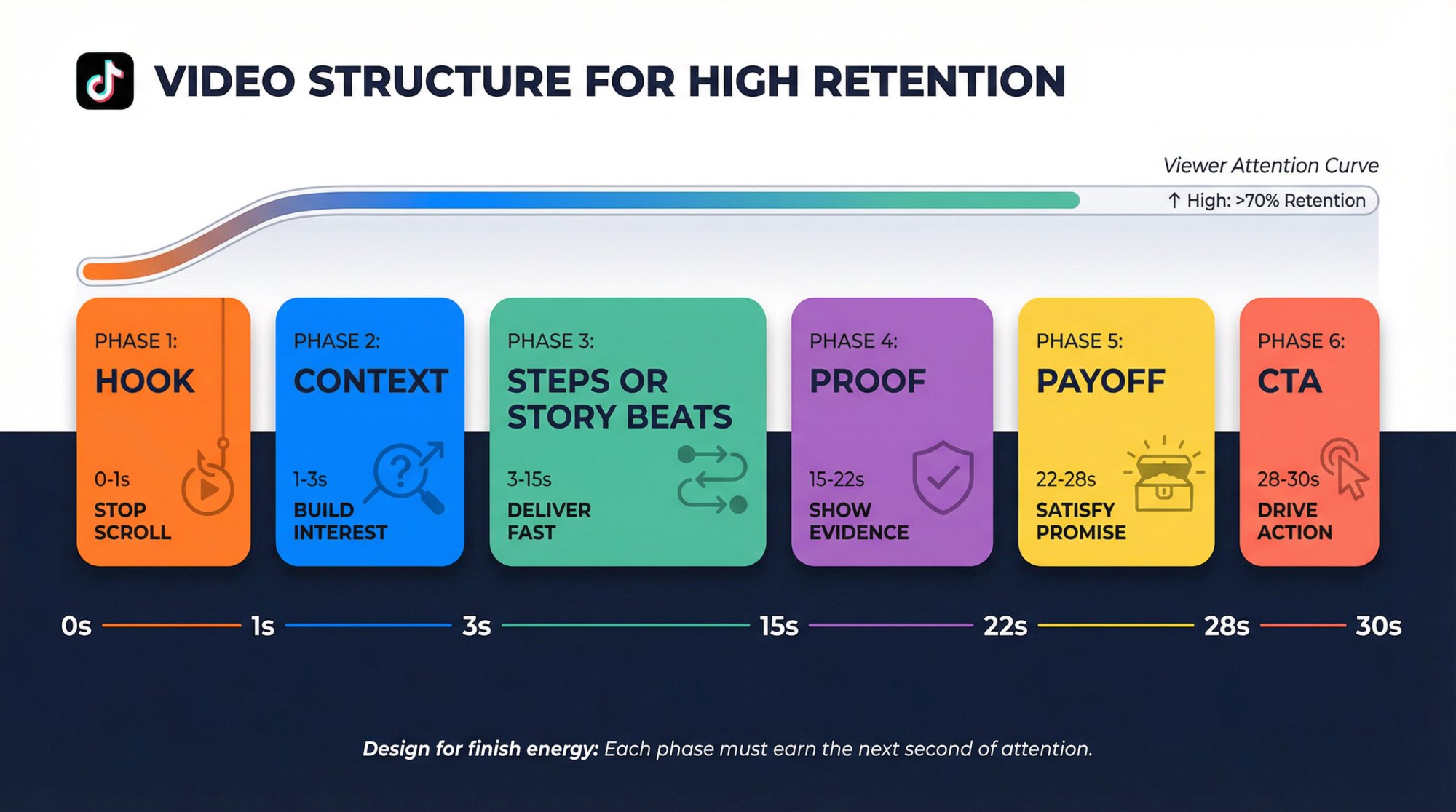
TikTok Video Structure That Keeps Viewers Watching
① Hook (0-1s)
Stop the scroll.
② Context (1-3s)
What is this about? Why should I care?
③ Steps or story beats (fast)
Deliver information quickly.
④ Proof (show, don't tell)
Demonstrate what you're claiming.
⑤ Payoff (the answer or result)
Deliver on the promise.
⑥ CTA that fits (comment, follow, save, share)
Give them a clear next action.
What's the Best Length for Viral TikToks?
When it comes to TikTok virality, short and sweet often wins. Yes, TikTok now allows up to 3-minute or even 10-minute videos, but the reality is that many viral clips are under 30 seconds or at least feel very fast-paced.
Brevity boosts the odds that viewers watch to the end (or even loop the video, giving you that coveted >100% watch time metric). Check out our guide on YouTube Shorts retention rate for cross-platform insights.
TikTok Retention Tricks That Work
| Hack | Why It Works |
|---|---|
| Remove all "hi guys" and "so today I'm gonna…" | Eliminates dead air at start |
| Show the result in the first second (then rewind) | Creates curiosity loop |
| Use pattern interrupts every 1-2 seconds | Keeps visual attention active |
| Deliver micro-payoffs every 3-5 seconds | Rewards continued watching |
| End on a loop (last frame connects to first) | Encourages re-watches |
| Edit out the fluff | Every second must count |
| Use fast cuts and visuals | Changing scenes maintains attention |
| Aim for high retention | More viewers reaching the end = stronger signal |
Remember: there's no hard rule that "all viral videos must be X seconds long," but keeping things concise and engaging dramatically improves your chances. TikTok audiences love content that gets to the point and delivers value or entertainment fast.
Do You Need Professional Quality to Go Viral on TikTok?
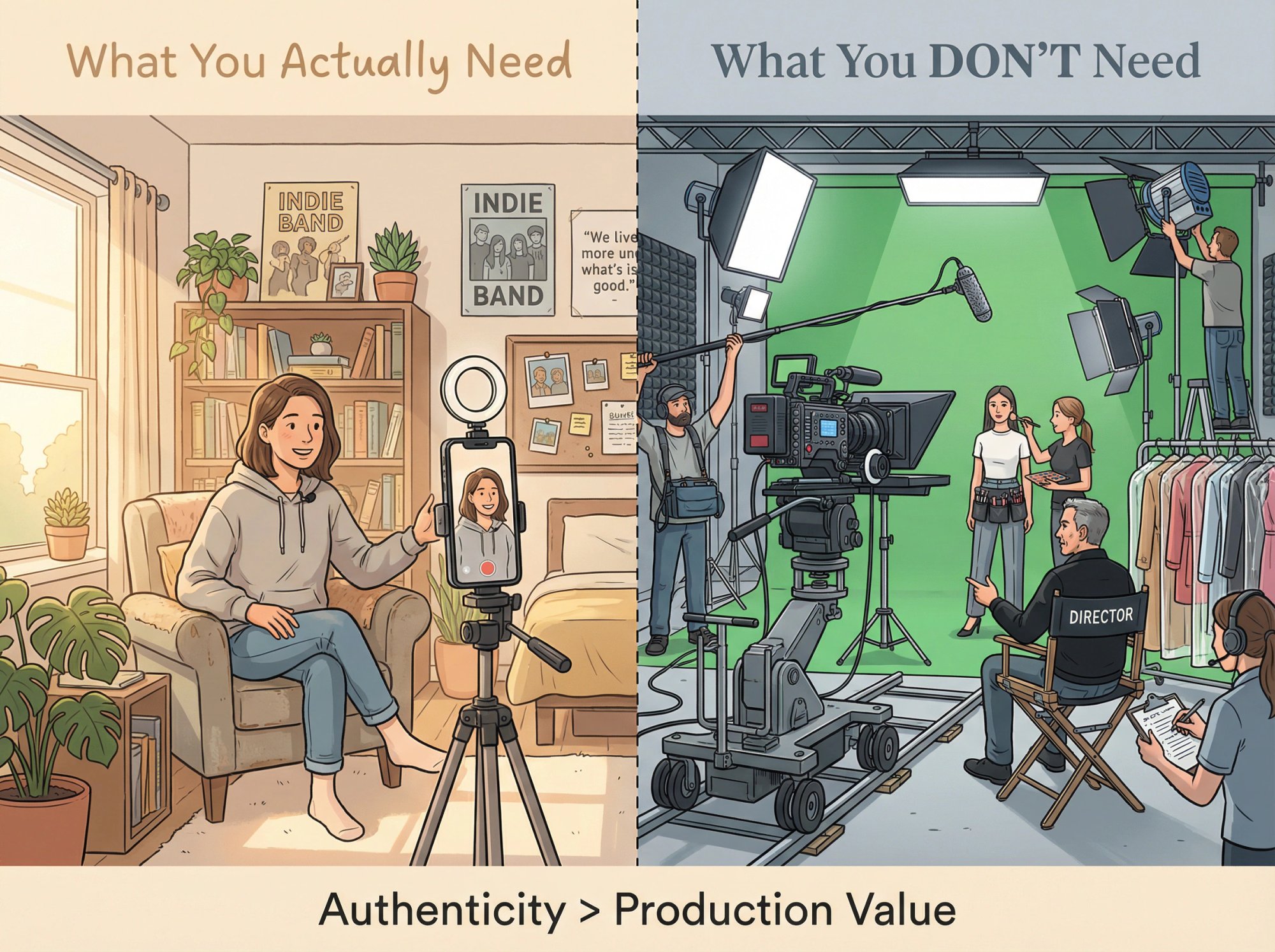
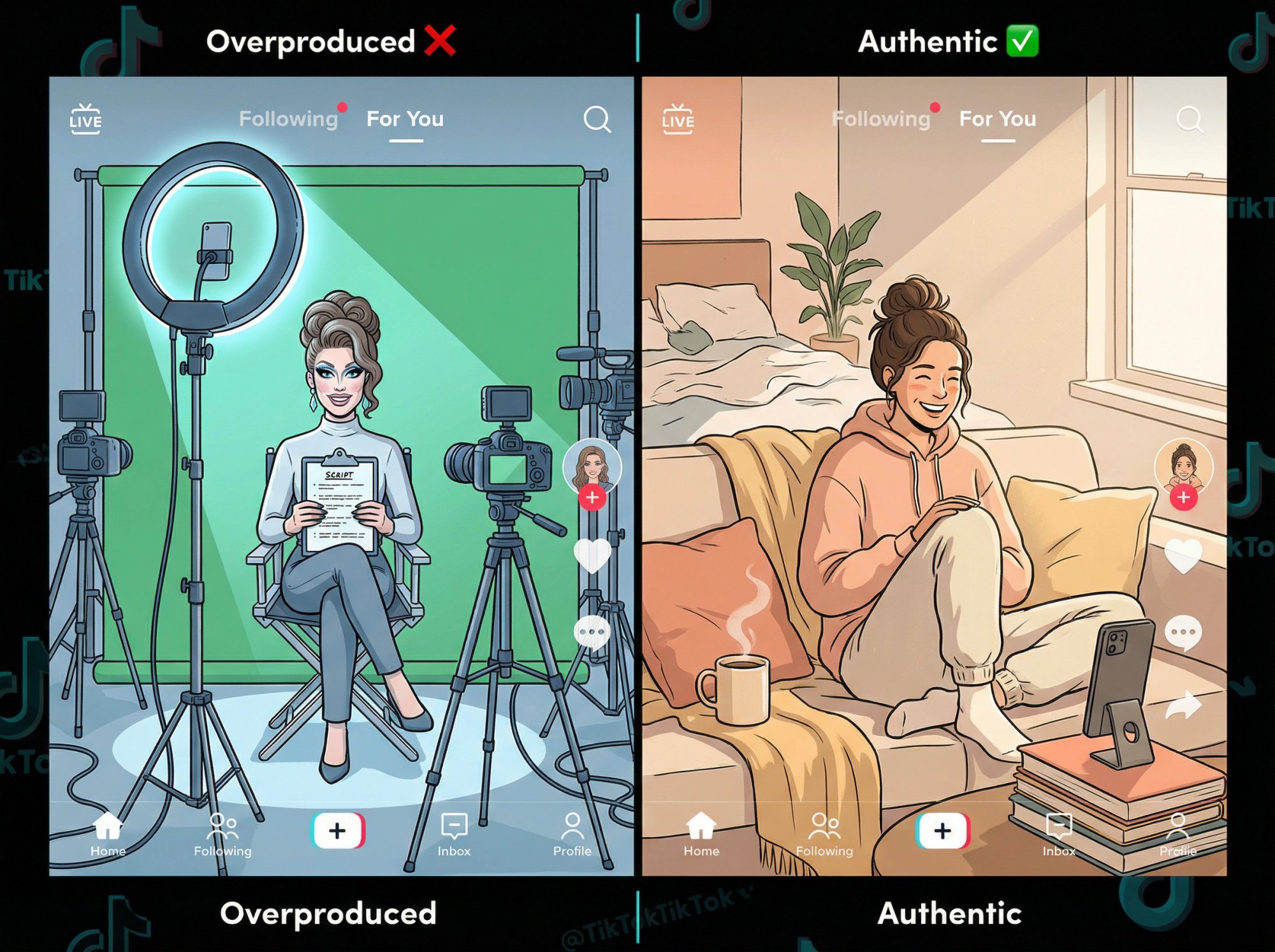
You don't need Hollywood lighting or Instagram-perfect visuals for TikTok. Sometimes a bit of roughness adds to authenticity. Of course, good audio and clear video are important, but content that feels too corporate or ad-like can turn viewers off.
TikTok says it won't recommend spam or duplicated content. It's optimizing the feed experience, which means quality matters, but so does originality.
What Video Quality Do You Need for TikTok?
→ Clear audio (this matters more than 4K)
If you're speaking, your voice must be clear. Use your phone's microphone up close or invest in a basic external mic.
→ Readable lighting
Natural light or a simple ring light can do wonders. Avoid extremely grainy or dark footage.
→ No huge black borders
Keep framing clean and vertical.
→ On-screen text and captions
Use text overlays strategically. Adding text captions for spoken words can boost retention since many people watch with sound off initially.
Don't overproduce. Just don't make it unpleasant.
How to Rank on TikTok Search
TikTok launched creator search insights on March 13, 2024 to show creators what people search for and even highlight content gap topics (high search demand, low content supply).
TikTok also explicitly ties search to performance: "search value" is part of what it rewards in the creator rewards formula.
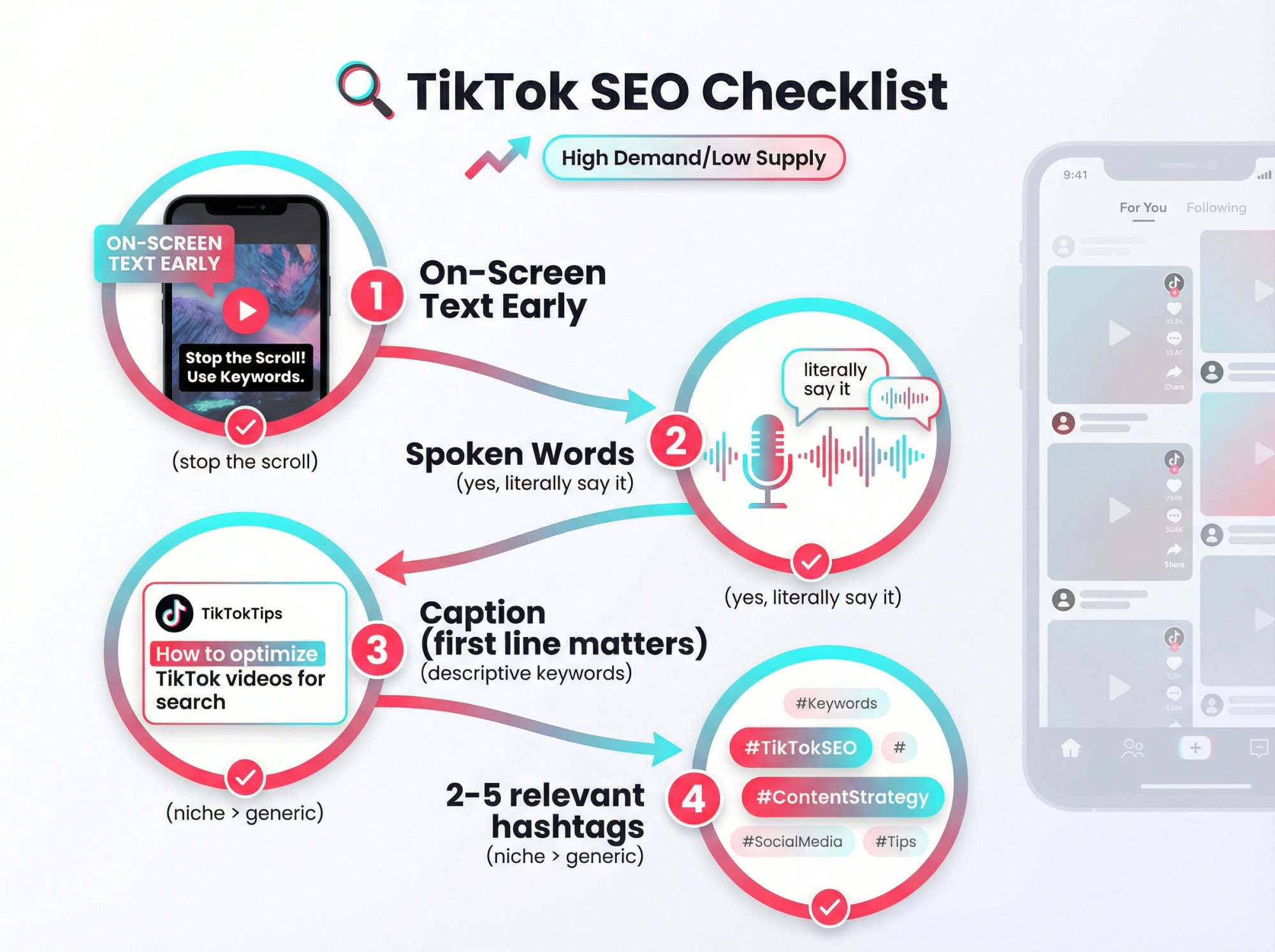
TikTok SEO Checklist
For every video, pick one main keyword phrase (not 10). Then place it in:
• On-screen text early
• Spoken words (yes, literally say it)
• Caption (first line matters)
• 2-5 relevant hashtags (niche > generic)
TikTok's own ads tools include keyword insights (last updated Feb 2025) to surface popular keywords and help build scripts and copy. It's ad-focused, but it reflects what people engage with.
Important: TikTok's caption field (the description) has increased length now. This is an opportunity to include relevant keywords that describe your content. TikTok's algorithm does index text and caption for search and content understanding.
Write clear, descriptive captions that include key terms about the video.
How to Use Trending Sounds on TikTok
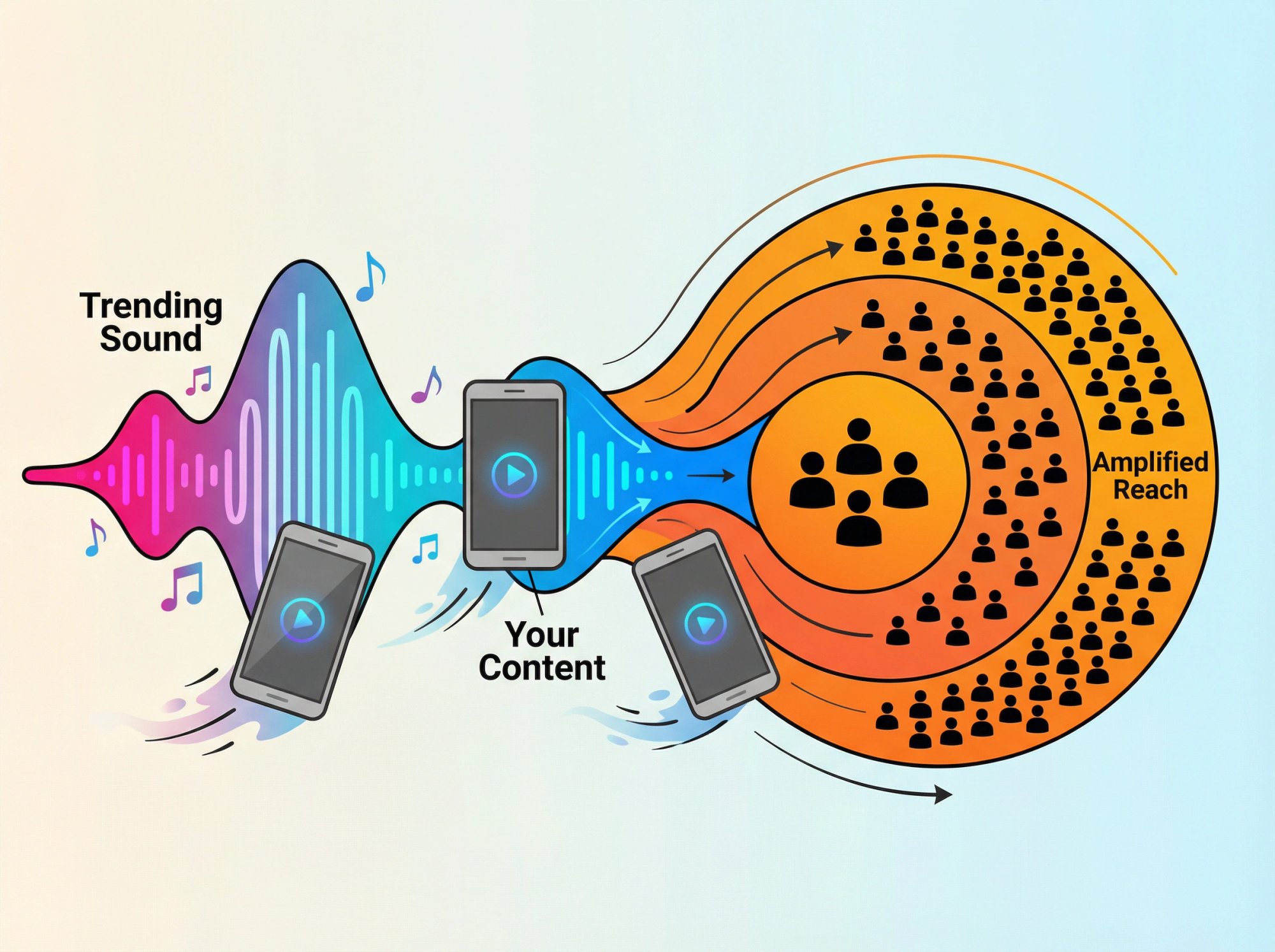
TikTok started as a music-driven app, and sound remains a virality catalyst. Using trending audio can amplify your video's reach because TikTok often groups and promotes content by popular sounds.
How to Find Trending Sounds on TikTok
→ Hop on trending songs: When you use a currently trending song, your video is more likely to get indexed alongside other videos with that song, surfacing it to viewers who have been enjoying similar content. In 2022, for example, 13 of the 14 Billboard #1 hits had viral success on TikTok.
→ Find trending sounds: Check TikTok's Add Sound → TikTok Viral section for a curated list of hot tracks. Also, scroll your FYP and listen for repeat songs. If you keep hearing the same sound, chances are it's trending.
→ Ensure relevance: While a trending sound can boost you, it needs to fit your content. Don't force a popular song onto a video where it feels out of place.
→ Volume and clarity: If your video has talking or narration, keep the music at a low volume. TikTok allows you to adjust sound levels.
→ Original sounds: Don't overlook creating your own sound. Some people have gone viral by recording a catchy phrase or song that others start reusing.
In essence, trending audio is like a current you can ride to boost your video's discovery. It's not mandatory for virality, but it can be a significant accelerant.
How to Use TikTok Hashtags to Go Viral
Just as sounds help categorize content, hashtags are another way TikTok indexes videos and helps users discover what's popular.
Best TikTok Hashtag Strategy
→ Use relevant trending hashtags: Every day, TikTok's Discover page highlights trending hashtags and challenges. If any relate to your content, consider incorporating them. Explore best Reels hashtags for Instagram for cross-platform strategies.
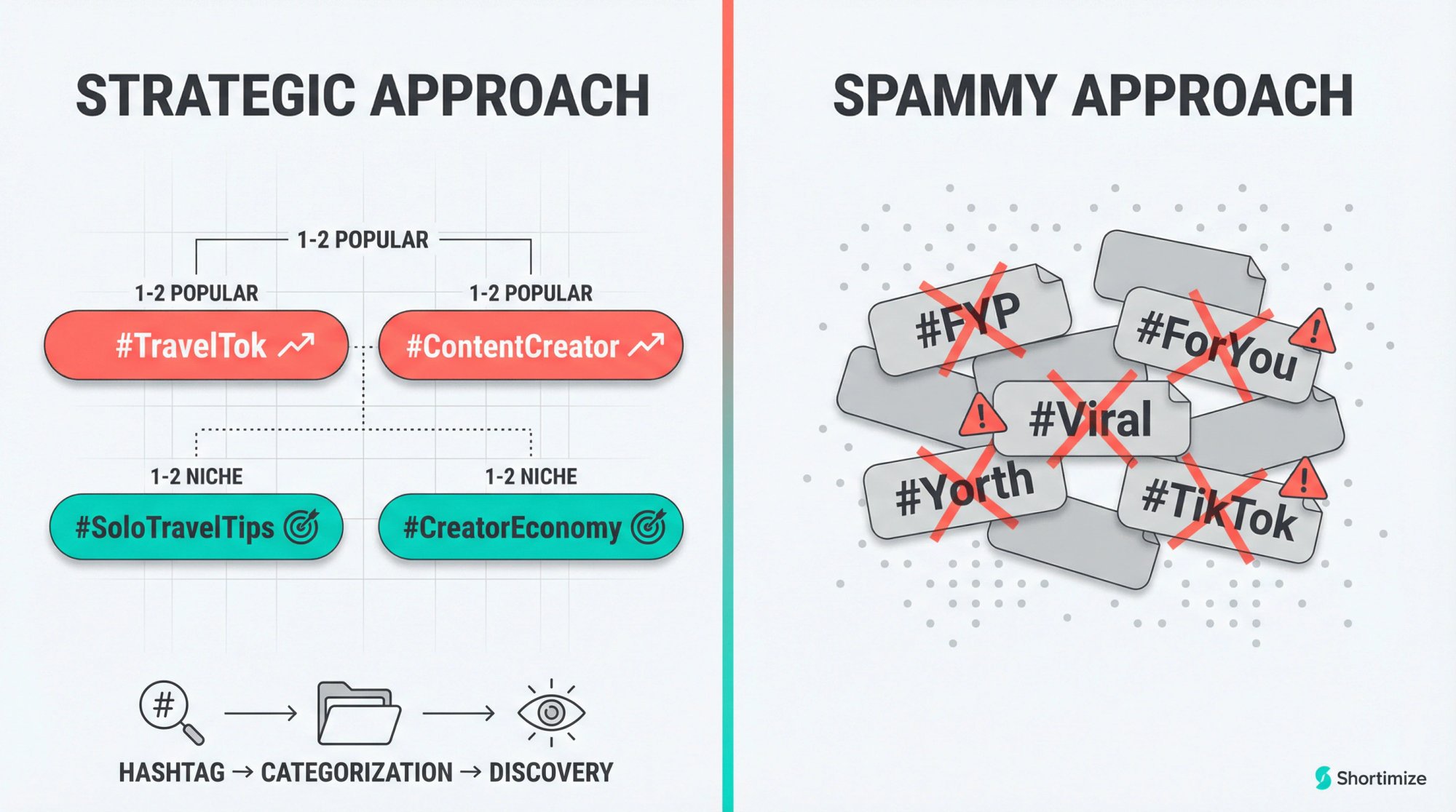
→ Mix popular with niche: The best approach is a balanced mix. Include 1-2 popular tags (like a currently trending tag) and 1-2 specific tags that describe your content's niche.
→ Avoid irrelevant or spammy tags: TikTok's algorithm is smart. Using #FYP, #ForYou, or #viral on every video doesn't guarantee you any favors. Those tags are oversaturated with billions of videos.
→ Hashtag research: You can gauge a hashtag's popularity by searching it on TikTok. It will show how many views content under that tag has.
→ Create your own challenge or tag: Occasionally, creators coin their own hashtag or challenge which catches on. This usually works when the concept is fun and easy for others to replicate.
In summary, hashtags and challenges are discovery tools. They help TikTok categorize your content and they help users stumble upon your videos. Use them thoughtfully.
Should You Follow TikTok Trends?
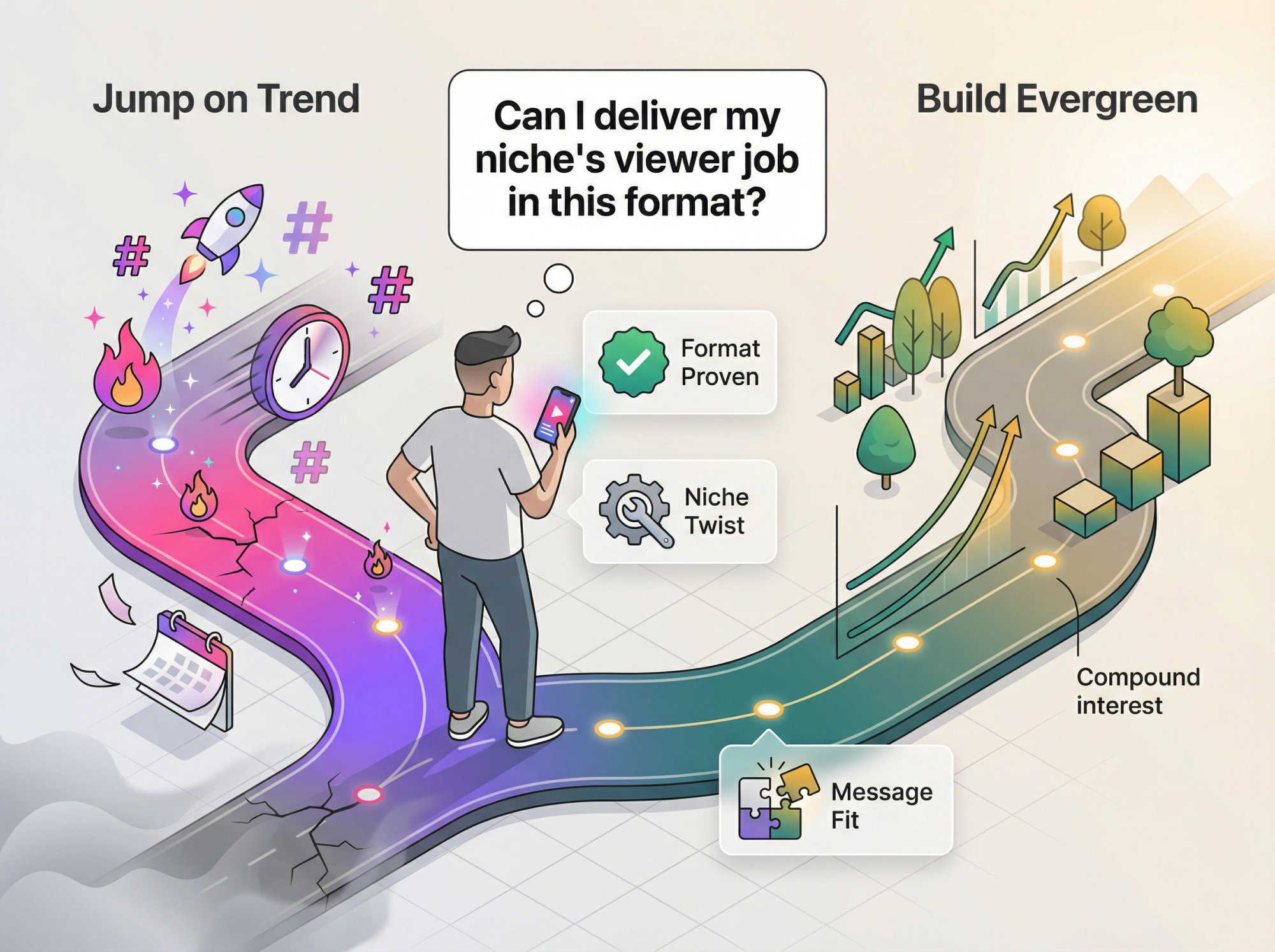
Trends work when:
• The format is already proven to hold attention
• You bring a niche-specific twist
• The trend doesn't fight your message
The fastest trend filter: "Can I deliver my niche's viewer job in this trend format?"
If yes, do it. If no, skip it. Trends decay fast. Evergreen patterns compound.
Important: While dance and challenge trends are one path to virality, they're not the only path. Plenty of creators go viral with original skits, educational content, storytelling, etc. If a trend doesn't fit your style or niche, forcing it can come off as inauthentic.
Why Authenticity Matters on TikTok
If there's one thing that defines TikTok culture, it's authenticity. Some of the platform's biggest stars gained traction not with high-production videos, but with raw, real, and relatable content.
How to Be Authentic on TikTok
→ Show your personality: Don't be afraid to be you. Whether you're goofy, awkward, nerdy, or super enthusiastic about an obscure topic, lean into it.
→ Share real stories and moments: Storytime videos, personal confessions, behind-the-scenes peeks make viewers feel like they know you.
→ Don't over-sanitize or over-produce: Sometimes a bit of roughness adds to authenticity.
→ Relatable > Glamorous: Viral content often taps into everyday relatable experiences. Think of trends like people joking about their procrastination or coffee addiction.
Authenticity isn't just a nice philosophy. It translates to tangible engagement. When people sense a video is coming from a genuine place, they respond with comments like "this is so real" or "literally me 😂" and share it with friends.
How to Create Value on TikTok
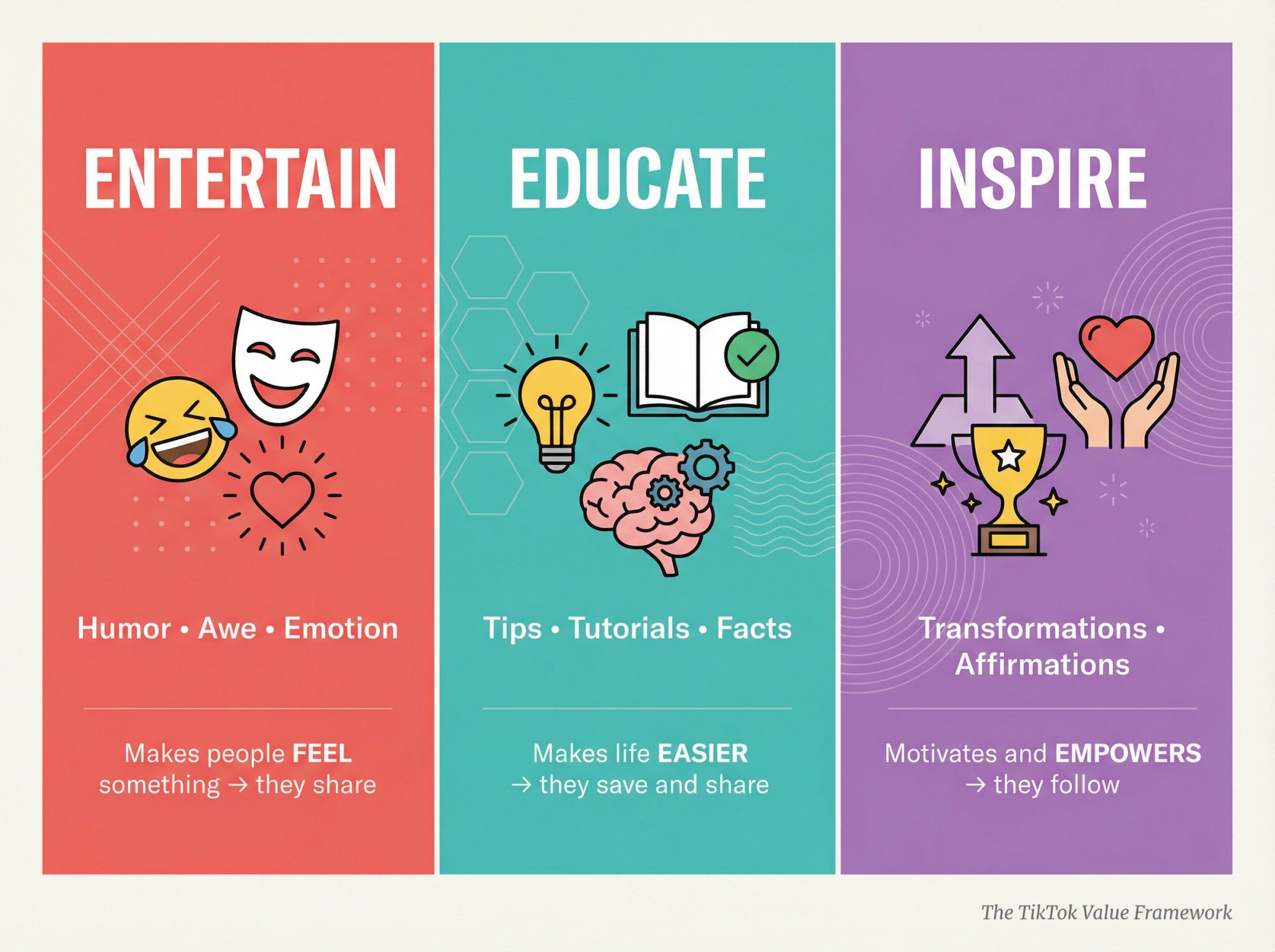
Every viral TikTok either entertains, educates, or inspires. The best do a mix of these. To maximize shareability, aim to provide value to the viewer.
What Makes TikToks Shareable?
| Value Type | What It Looks Like | Why It Works |
|---|---|---|
| Entertain | Humor, awe, emotion | Makes people feel something, so they share |
| Educate | Tips, tutorials, facts | Makes life easier, so they save and share |
| Inspire | Transformations, affirmations | Motivates or empowers, so they follow |
Novelty and creativity: A form of value is simply showing something new or unique. TikTok viewers love novel content.
When planning a TikTok, ask: "What will the viewer get out of this?" If the answer is a strong emotion, a laugh, a useful takeaway, or a dose of inspiration, you're on the right track.
How Often Should You Post on TikTok?
You'll hear "post 3x a day or you're doomed." Reality is more nuanced.
What Research Says About TikTok Posting Frequency
Industry studies of 11.4 million TikToks showed:
→ Moving from 1 post/week to 2-5 posts/week produced up to 17% more views per post
→ Higher frequency increased the ceiling even more (but with diminishing returns)
What TikTok Recommends
According to industry guidance citing TikTok recommendations, the platform suggests posting 1 to 4 times per day for optimal growth.
Best Posting Schedule for TikTok in 2026
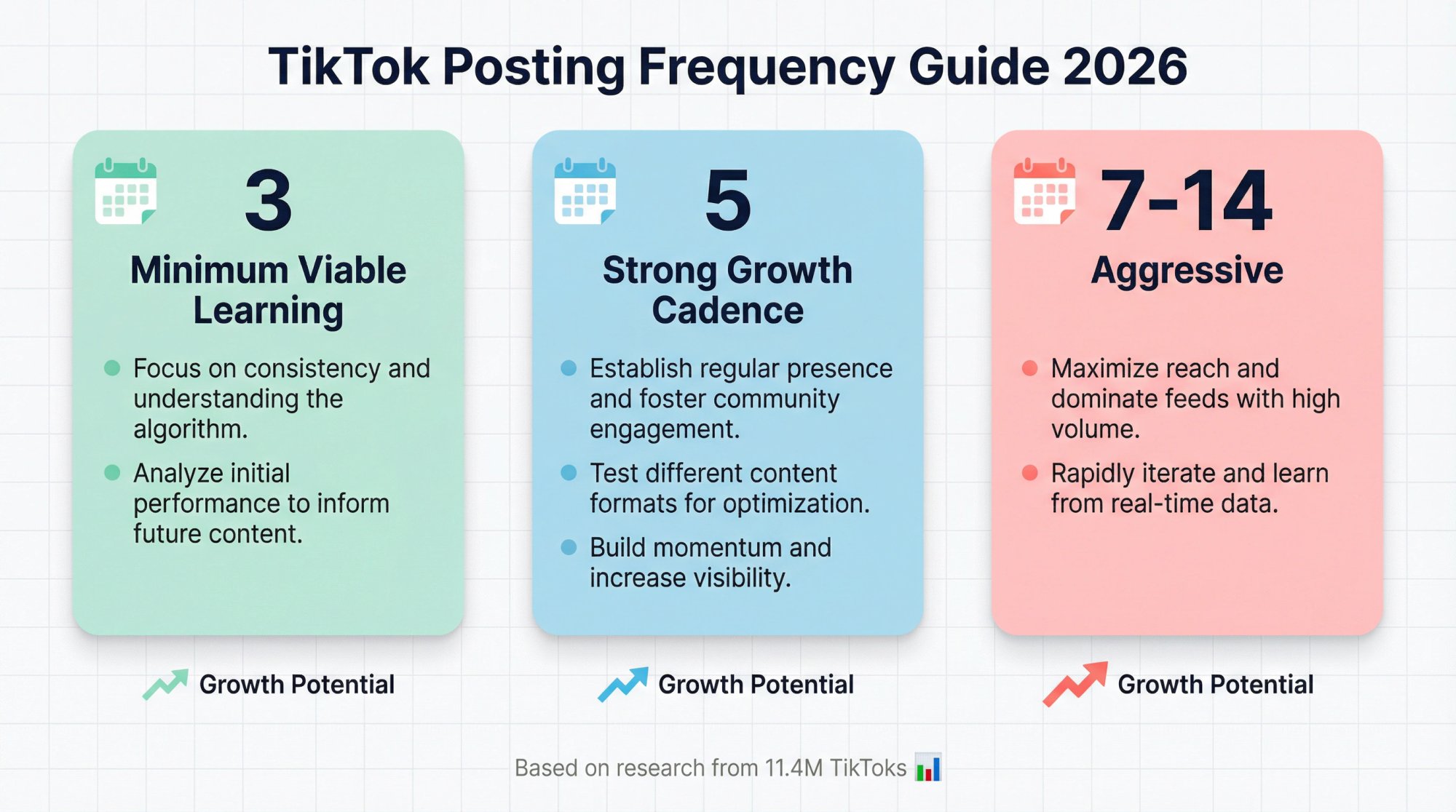
Pick the highest cadence you can sustain without destroying quality:
→ Minimum viable learning: 3 posts/week
→ Strong growth cadence: 5 posts/week (weekdays)
→ Aggressive: 1-2/day (only if you have templates + batching)
Remember: Posting more doesn't raise the floor, it raises the ceiling. TikTok rewards active creators. Consistent posting increases your content's exposure and helps you learn what works with proper social media monitoring.
Best Time to Post on TikTok
Find your best posting times: While TikTok's algorithm doesn't purely sort content by time, timing can still impact initial engagement. General patterns often show evenings (6-10pm) are high activity. Learn more about the best time to post YouTube Shorts for cross-platform strategies.
Leverage trends promptly: Being consistent also means being timely with trends. If you see something trending that fits your style, don't wait a month.
Avoid rapid-fire dumping: It's generally not effective to dump 10 videos in an hour and then nothing for a week. Each video needs some breathing room.
Consistency builds familiarity and gives you more opportunities for a video to take off.
How to Get More Engagement on TikTok
TikTok might seem like a one-to-many broadcast platform, but the creators who go viral repeatedly often excel at engagement and community building.
How to Increase TikTok Comments and Shares
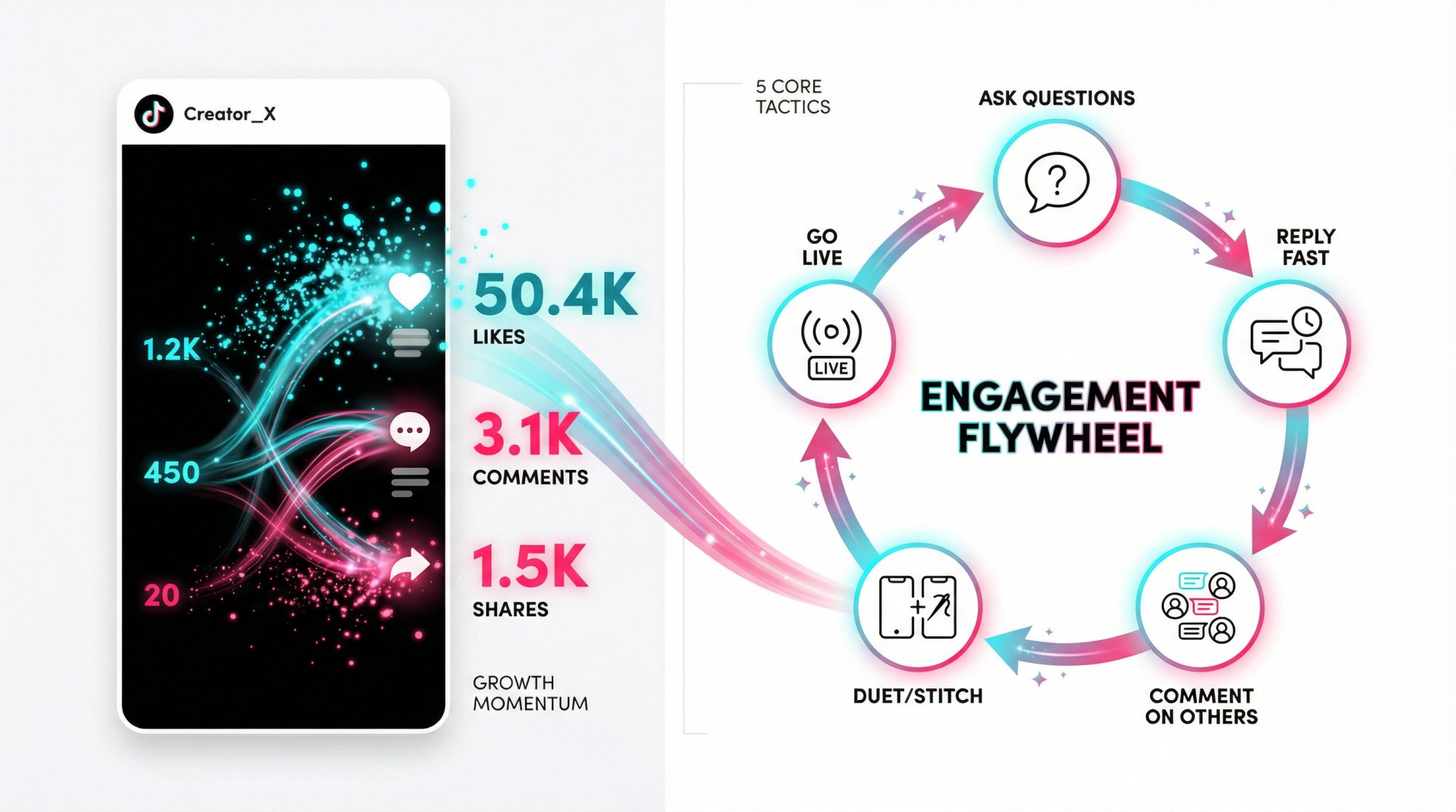
→ Encourage interaction: Use your content and captions to spark comments. End your video with a question or create a little controversy or mystery that people have to weigh in on.
→ Reply to comments: When people do comment, try to respond, especially when your video is newly posted. The TikTok algorithm likely notices comment activity and replies.
→ Engage beyond your own posts: Comment on other people's videos, especially in your niche. Go leave a clever or supportive comment on trending content.
→ Collaborate and duet/stitch: By dueting or stitching another creator's content, you participate in a wider conversation. This often exposes you to that creator's followers.
→ Live streams and Q&As: If you've got some following, going Live on TikTok can deepen the audience connection.
Engagement begets more engagement. TikTok's algorithm not only values the raw metrics (comments, shares) but likely also the velocity and depth of interaction. Don't just aim for viewers. Aim for a community. Understand social media engagement tracking to measure what matters.
TikTok Technical Optimization Tips
TikTok might celebrate raw content, but production basics still matter. Good lighting, clear audio, and easy-to-read text can significantly impact watchability.
How to Optimize TikTok Videos for Views
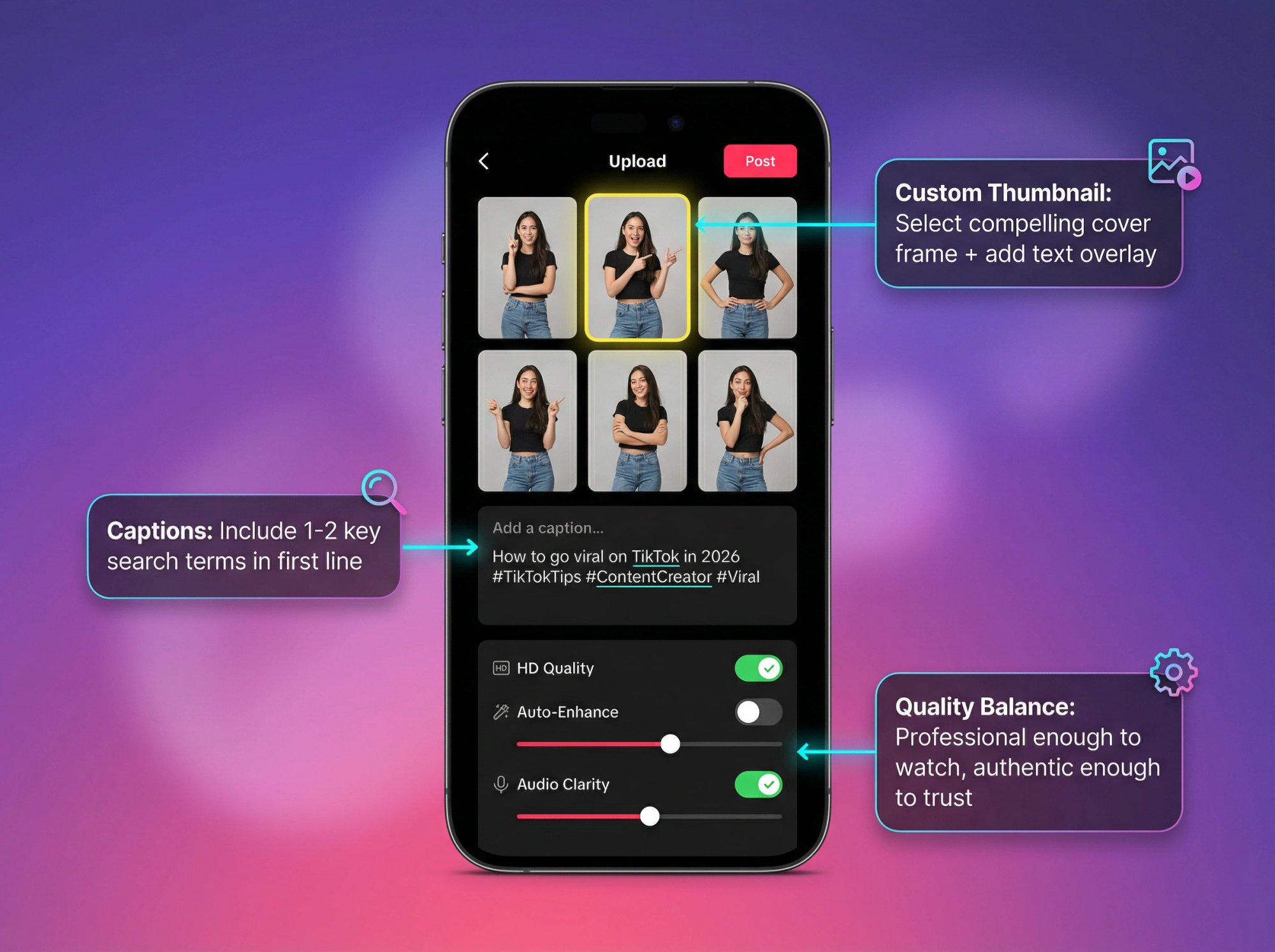
→ Custom thumbnail (cover image): After uploading, TikTok lets you select a cover frame and even add text to it. A good thumbnail with a text label can entice curious clicks.
→ Captions and keywords: Write clear, descriptive captions. Include at least one or two key terms about the video.
→ Quality vs Authenticity balance: Aim for that sweet spot: the video looks and sounds good, but still feels real and in sync with TikTok's casual vibe.
By optimizing these details, you remove potential barriers that would prevent a viewer from enjoying or finding your content.
What TikTok Metrics Should You Track?
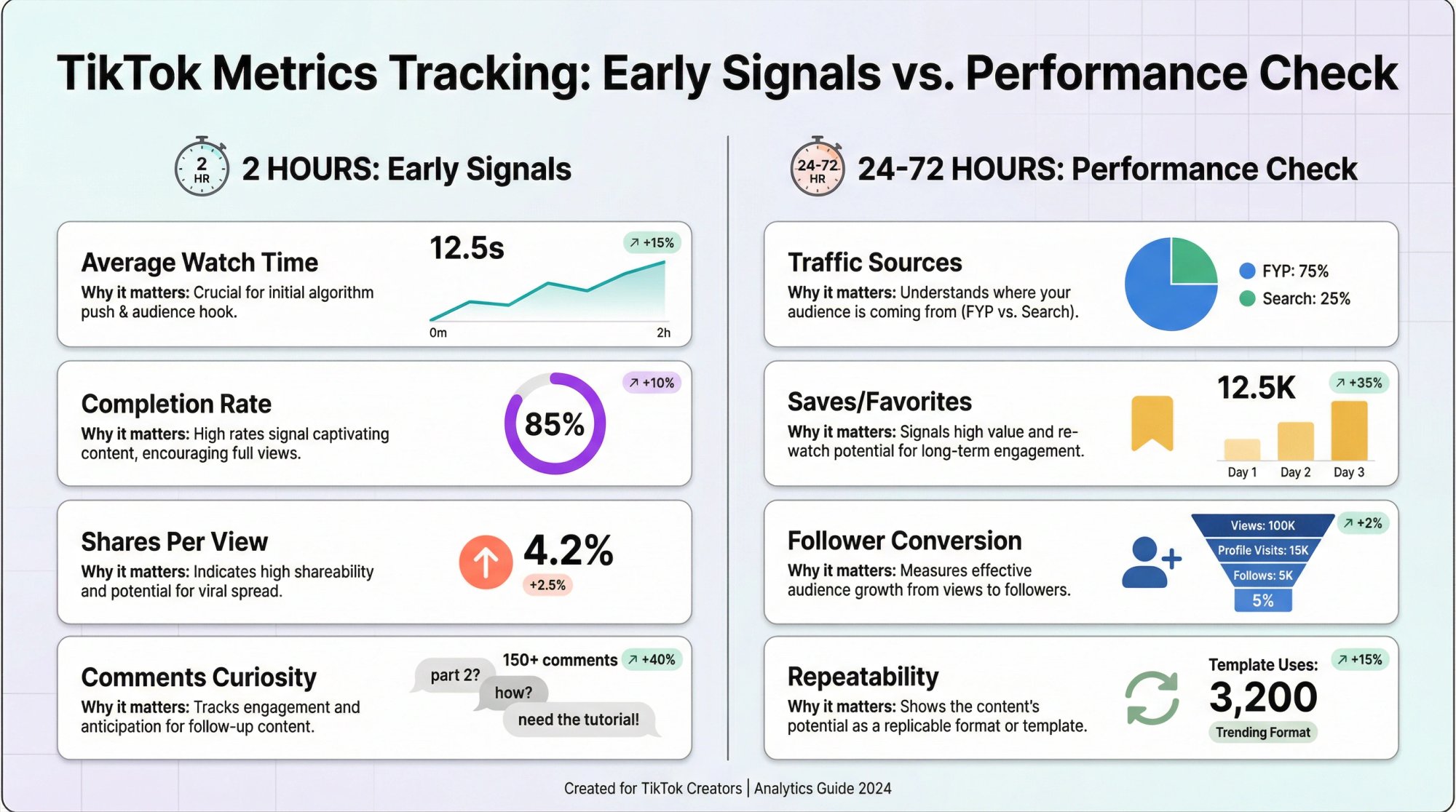
What to Check in the First 2 Hours
| Metric | Why It Matters |
|---|---|
| Average watch time vs your median | Shows if this video is holding attention better than usual |
| Completion rate (especially if <30s) | High completion = strong retention signal |
| Shares per view | Tiny share lift can unlock distribution |
| Comments indicating curiosity | "part 2?", "how?", "where?" = engagement gold |
What to Check After 24-72 Hours
| Metric | Why It Matters |
|---|---|
| Traffic sources (for you vs search) | Shows discovery method |
| Saves / favorites | Indicates perceived value |
| Follower conversion (views to follows) | Measures audience building |
| Repeatability | Can you remake this as 5 more? |
Also: don't get gaslit by platform volatility. In January 2026, multiple outlets reported a For You feed disruption tied to a data center power outage, and users noticed irrelevant or outdated recommendations. Stuff like this happens. Build your measurement around trends, not one-day anomalies.
Track performance with influencer analytics tools to understand what drives results.
How to Learn What Works on TikTok
Going viral isn't usually a one-shot deal. It's a process of learning and improving. The best creators treat TikTok like an experiment lab.
How to Use TikTok Analytics
→ Use TikTok's Analytics: Switch to a free TikTok Creator account to unlock analytics. Check watch time, traffic sources, and engagement metrics after posting.
→ Identify patterns in your hits: After 10 or 20 videos, you might start noticing patterns. Maybe your cooking videos with voiceover do better. Write down these patterns.
→ Iterate and A/B test: Don't be afraid to tweak and repost concepts. Treat each video as a chance to test a hypothesis.
→ Study others in your niche: Use TikTok's search and observe the top videos in your category. This is where Shortimize becomes incredibly useful. Our platform allows you to track and analyze top-performing short-form videos across TikTok in your niche. It automatically flags which videos are outliers (viral hits) and helps you pinpoint patterns.
→ Keep a pulse on trends and updates: Stay informed by following TikTok-related news and TikTok's own announcements. Check out TikTok's 2025 algorithm update for the latest changes.
The motto here is "post, learn, improve, repeat." Virality often comes after refining your craft through this cycle.
Pro tip: Maintain a simple journal or spreadsheet of your videos with key stats (views, likes, topic, what you tried, outcome). Over time, this becomes your personal playbook.
30-Day Plan to Go Viral on TikTok
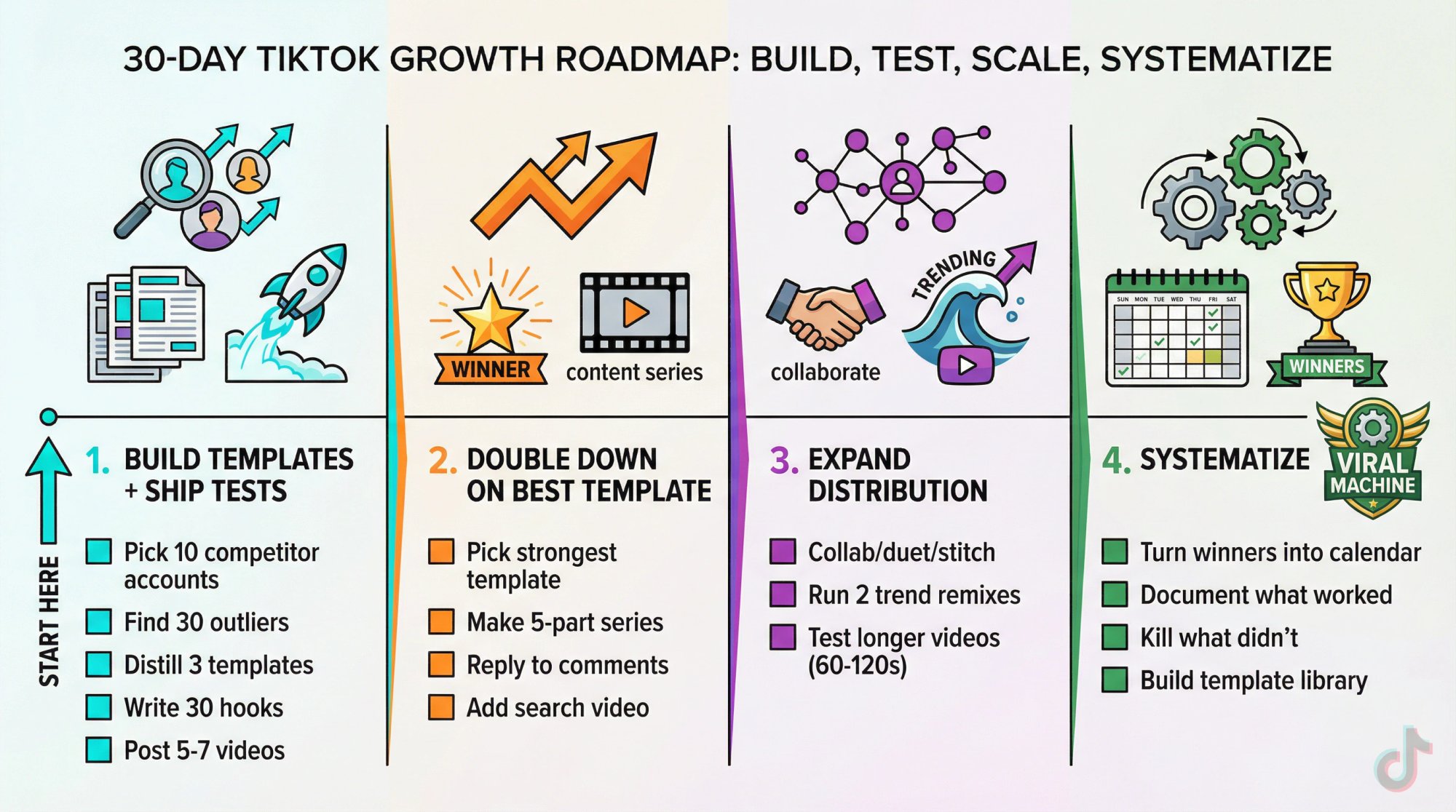
Week 1: Build Templates + Ship Tests
Pick 10 competitor accounts
Find 30 outliers
Distill 3 templates
Write 30 hooks (10 per template)
Post 5-7 videos (don't over-edit; ship)
Week 2: Double Down on the Best Template
Pick 1 template with strongest retention + shares
Make a 5-part series
Reply to top comments with videos
Add one "search" video targeting a high-demand keyword
Week 3: Expand Distribution
Collab/duet/stitch with creators in adjacent niches
Run 2 trend remixes (only if trend fits your viewer job)
Test 2 longer videos (60-120s) if your niche supports it
Remember: TikTok says 50% of time is spent on videos longer than 1 minute
Week 4: Systematize
Turn winners into a content calendar
Document what worked (hooks, pacing, length, topic)
Kill what didn't work
Build a "template library" your team can execute weekly
How Shortimize Helps You Go Viral Faster
If you're serious about repeatable virality, the hardest part isn't filming. It's pattern detection and iteration speed.
This is exactly why we built Shortimize.
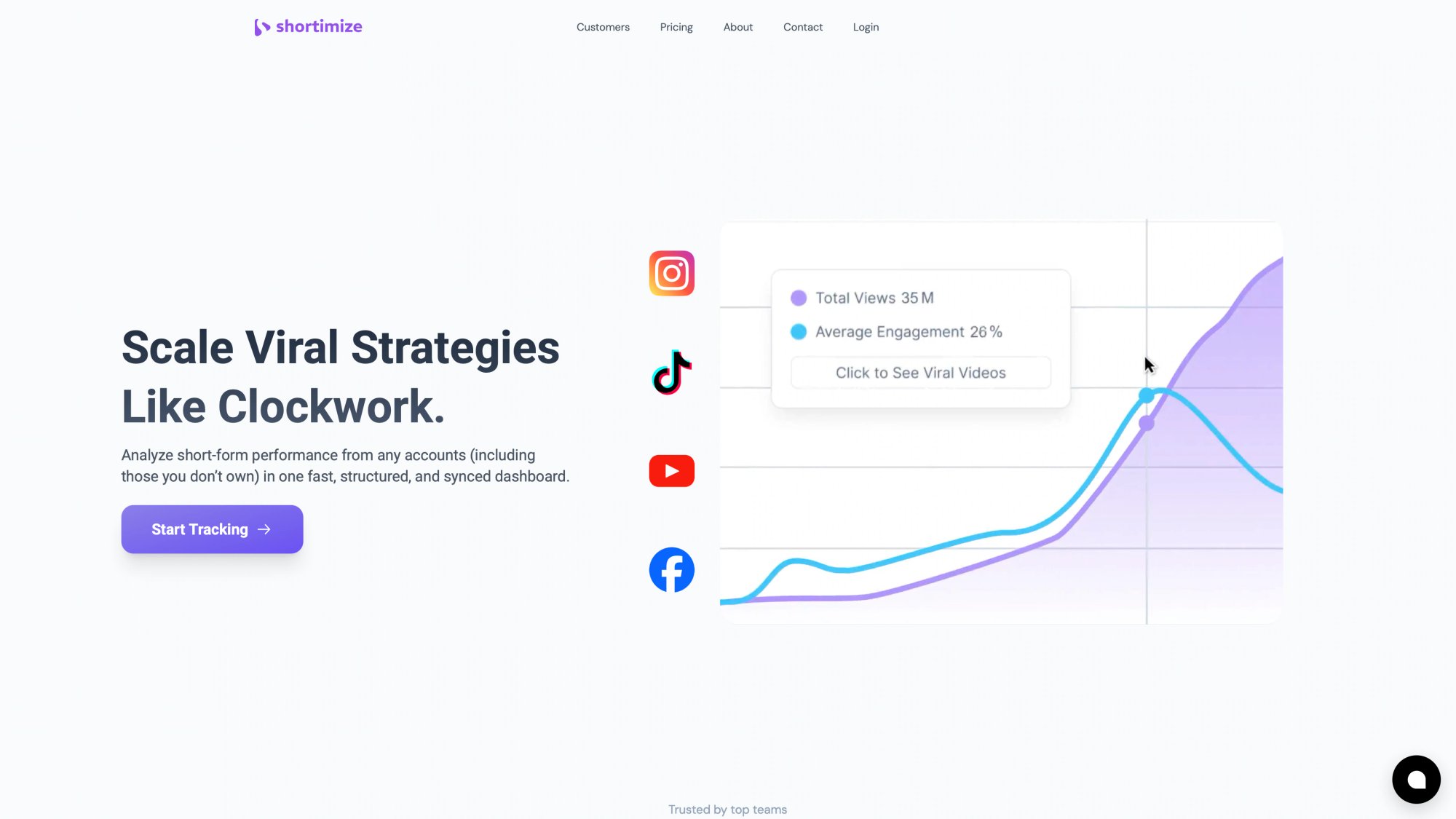
What Shortimize Does
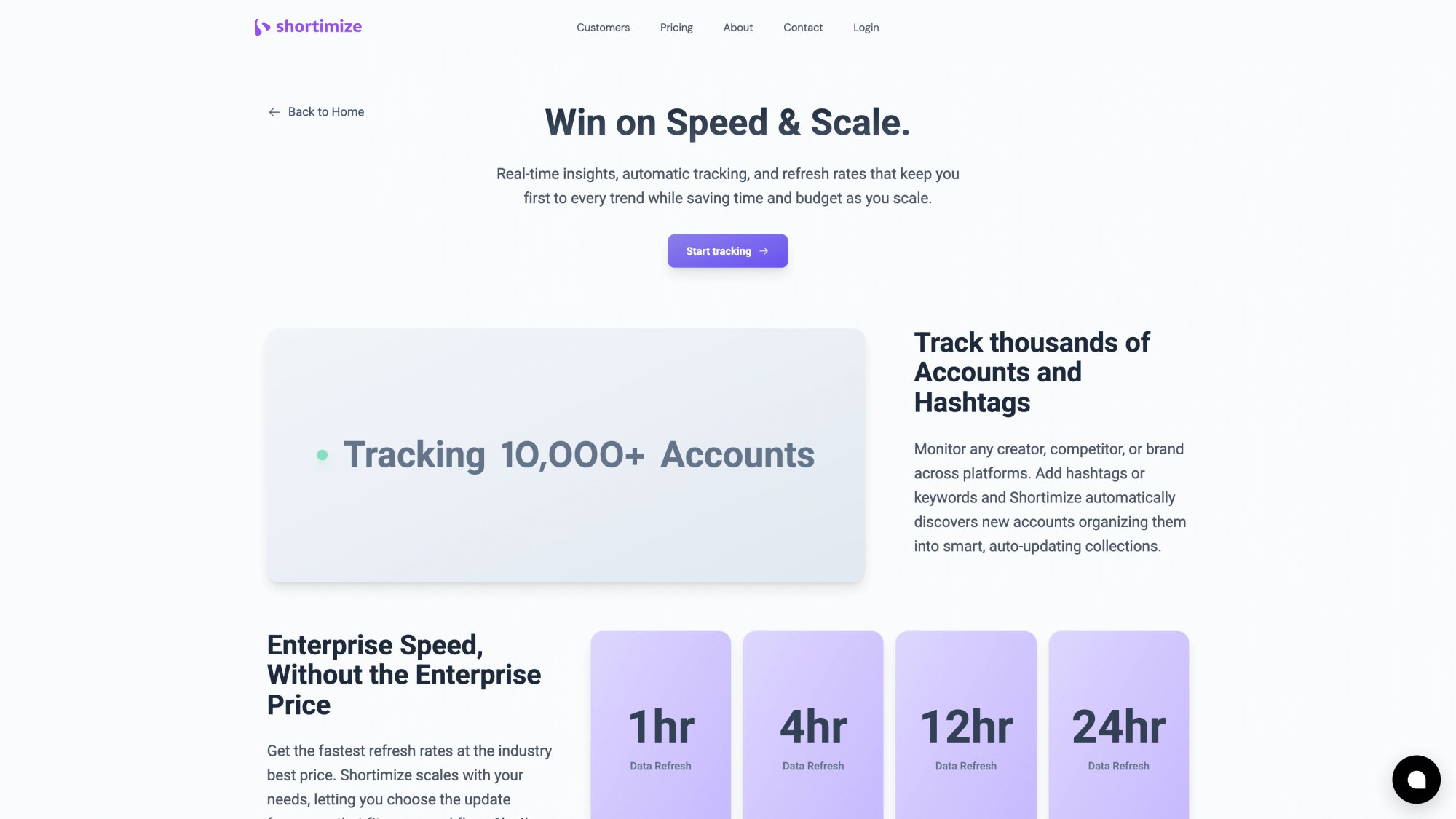
Lets you analyze any account and identify outliers fast
See median + virality metrics for any TikTok account. Spot which videos are performing way above baseline with our TikTok account analyzer.
Helps you discover similar accounts and videos
You're not trapped in one bubble. Find adjacent creators and trending content you might have missed.
Gives you a workflow to track a whole niche over time
See what's rising, what's decaying, what patterns are emerging with comprehensive social media monitoring.
How to Use Shortimize for Pattern Mining
① Create a competitor list (10-50 accounts in your niche)
② Track them over time in Shortimize
③ Every week: export top outliers, tag them by template, and assign remakes to your team
④ Repeat until "viral" becomes normal
The difference between teams that go viral once and teams that go viral consistently is systematic pattern mining. Shortimize turns that from a manual slog into a repeatable workflow. Explore our features to see how we help teams scale.
What to Do After You Go Viral
So one of your videos finally blew up. Congrats! Now what?
How to Capitalize on a Viral TikTok
→ Engage with the influx: A viral video can bring in a flood of new followers and comments. Don't go MIA. Reply to top comments, consider posting a follow-up video.
→ Convert viewers to followers: Encourage follows subtly. Make sure your profile bio is optimized and tells people what to expect if they follow you.
→ Don't wait too long for the next post: After a viral hit, your next few posts might get an algorithmic boost. Continue posting consistently.
→ Leverage opportunities: Viral fame can open doors. Maybe brands start reaching out for partnerships. Be ready to capitalize.
→ Stay grounded: Not every new follower from a viral video will stick around forever, and that's okay. Focus on building relationships with those who did.
Going viral is exhilarating, but sustaining an engaged audience is the real game.
Why Your TikToks Aren't Going Viral
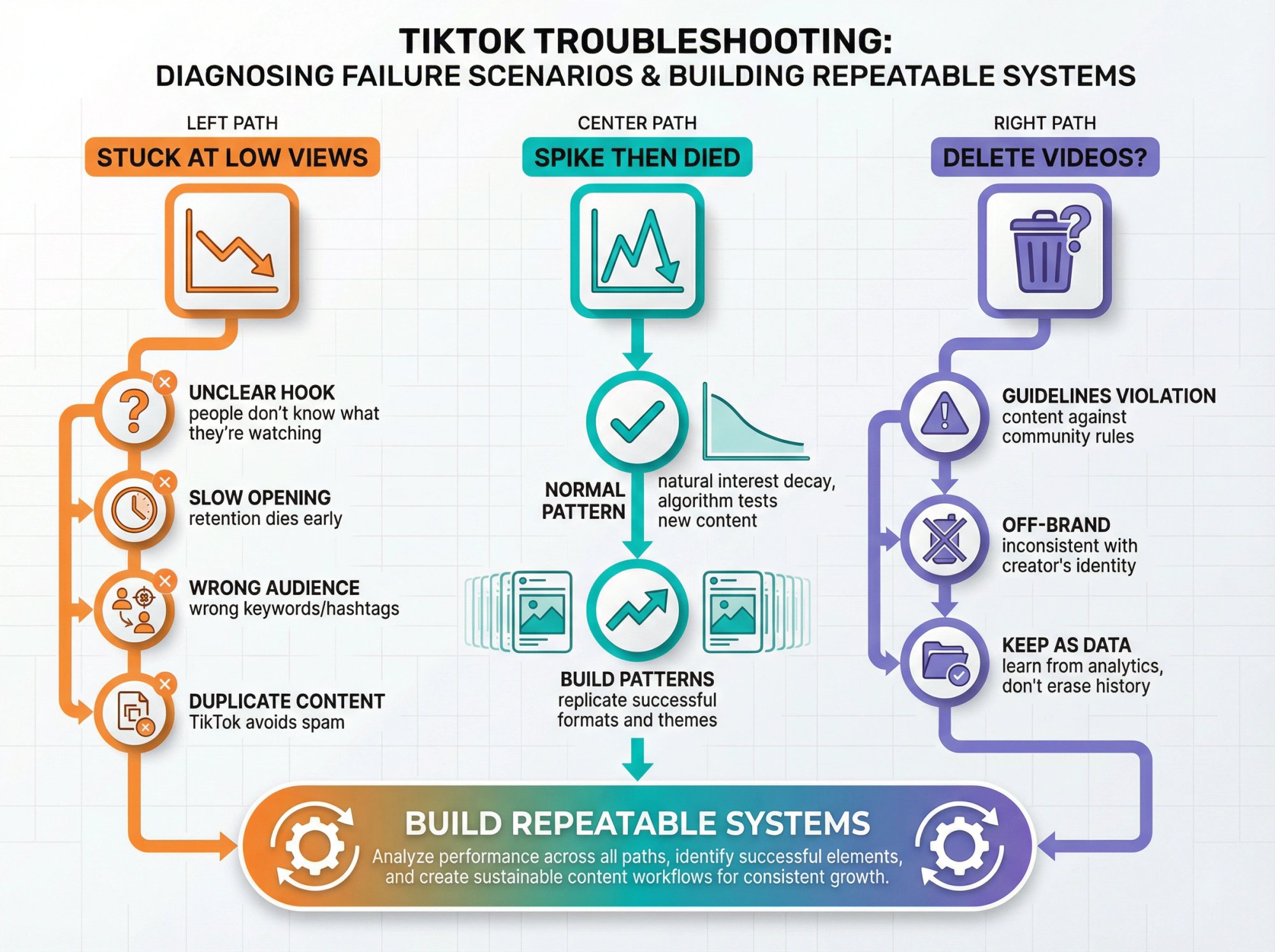
"I'm Stuck at Low Views"
Most common causes:
• Your hook is unclear (people don't know what they're watching)
• Your first 3 seconds are slow (retention dies early)
• Your video is misclassified (wrong keywords/hashtags lead to wrong audience)
• Your content is too similar to what people already saw (TikTok avoids duplicates/spam)
If you're experiencing this, read our guide on why is my TikTok video getting 0 views.
"My Views Spiked Then Died"
Normal. TikTok diversifies recommendations on purpose (it injects variety into feeds). Your job is to build a repeatable pattern, not one-off luck.
"Should I Delete Underperforming Videos?"
Usually no. You delete only if:
• It violates guidelines
• It's off-brand / wrong niche direction
• It confuses your audience
Otherwise, keep it as data. Each video is a learning opportunity.
Common TikTok Mistakes to Avoid
Myth: You need to dance or follow every trend to go viral.
Reality: While dance trends are one path, they're not the only path. Pick trends that resonate with you. Plenty of creators go viral with original skits, educational content, or storytelling.
Mistake: Overloading on irrelevant hashtags (or #FYP spam).
Stuffing your caption with dozens of hashtags doesn't hack the algorithm. Use a focused hashtag strategy.
Mistake: Neglecting engagement (posting and ghosting).
If you drop a video and ignore comments, you're missing out on building momentum.
Myth: Deleting videos that "flop."
TikTok's algorithm doesn't seem to punish accounts for an average video. Leave your content up and move on.
Mistake: Poor video quality due to over-relying on "the algorithm."
Quality matters. It directly drives the engagement signals. Don't use the algorithm as an excuse for not improving content.
Myth: You'll go viral every time.
Even top TikTokers don't hit it out of the park with each video. Virality is partly unpredictable. Focus on building a system.
Mistake: Ignoring TikTok trends and culture.
Spend time as a user of TikTok. Scroll the FYP, see what formats are popular. You can't succeed on a platform you don't understand.
FAQ
Do hashtags matter?
Yes, but mostly for classification and sometimes search (not magic). TikTok lists hashtags/captions as "video information" signals.
Should I focus on short or long videos?
Both can work. But don't ignore longer formats: TikTok says people spend 50% of their time watching videos longer than 1 minute.
Does follower count matter?
It helps you get initial views from followers, but TikTok says follower count is not a direct factor in recommendations.
Is TikTok "pay to play" now?
Organic is still real. The platform's entire product is recommendation-driven discovery. Your advantage is better retention + satisfaction signals.
How to Make Going Viral Repeatable
You don't need one viral video. You need:
• 3 to 5 templates that can hit outliers
• A cadence you can sustain without burning out
• A measurement loop that tells you what to do next week
If you build that, "going viral" stops being a milestone and becomes a byproduct.
Going viral on TikTok in 2026 is a mix of art and science. The science is understanding how the algorithm works and optimizing those tangible factors: hooks, watch time, hashtags, sounds, posting times, analytics. The art is bringing creativity, authenticity, and a bit of daring to your content.
Remember: anyone can potentially go viral on TikTok, which is what makes the platform so exciting. The flip side is that because everyone is trying, you have to put in the work to stand out.
A few parting tips to internalize:
→ Stay up-to-date. TikTok evolves quickly. Keep learning with our TikTok beginner guide.
→ Be patient but persistent. Each video is a new lottery ticket, and you can influence the odds.
→ Enjoy the process. Viewers can tell when a creator is having fun or genuinely passionate about their content.
Lastly, leverage the tools at your disposal. TikTok provides the platform and some analytics, but tools like Shortimize can give you an extra edge by helping you track trends and benchmark virality across accounts and platforms. Check out our pricing to get started.
Now armed with this knowledge, go forth and create. Today could be the day the TikTok universe discovers you.