Faceless doesn't mean effortless. It means you're not the on-camera character, but your channel can still feel authentic, trustworthy, and genuinely addictive if you build it like a system.
Here's what you need to know: channels like WatchMojo (25.9 million subscribers, 17+ billion views) and 5-Minute Crafts (81 million subscribers, 28 billion views, an estimated $38 million in ad revenue) prove you don't need your face to build a massive YouTube brand. The content speaks for itself.
This guide is for anyone who wants to start from scratch without an audience, stay anonymous (or just avoid being on camera), and monetize without getting flagged for reused or mass-produced content. You'll learn how to grow with Shorts plus long-form content while staying on the right side of YouTube's increasingly strict quality standards.
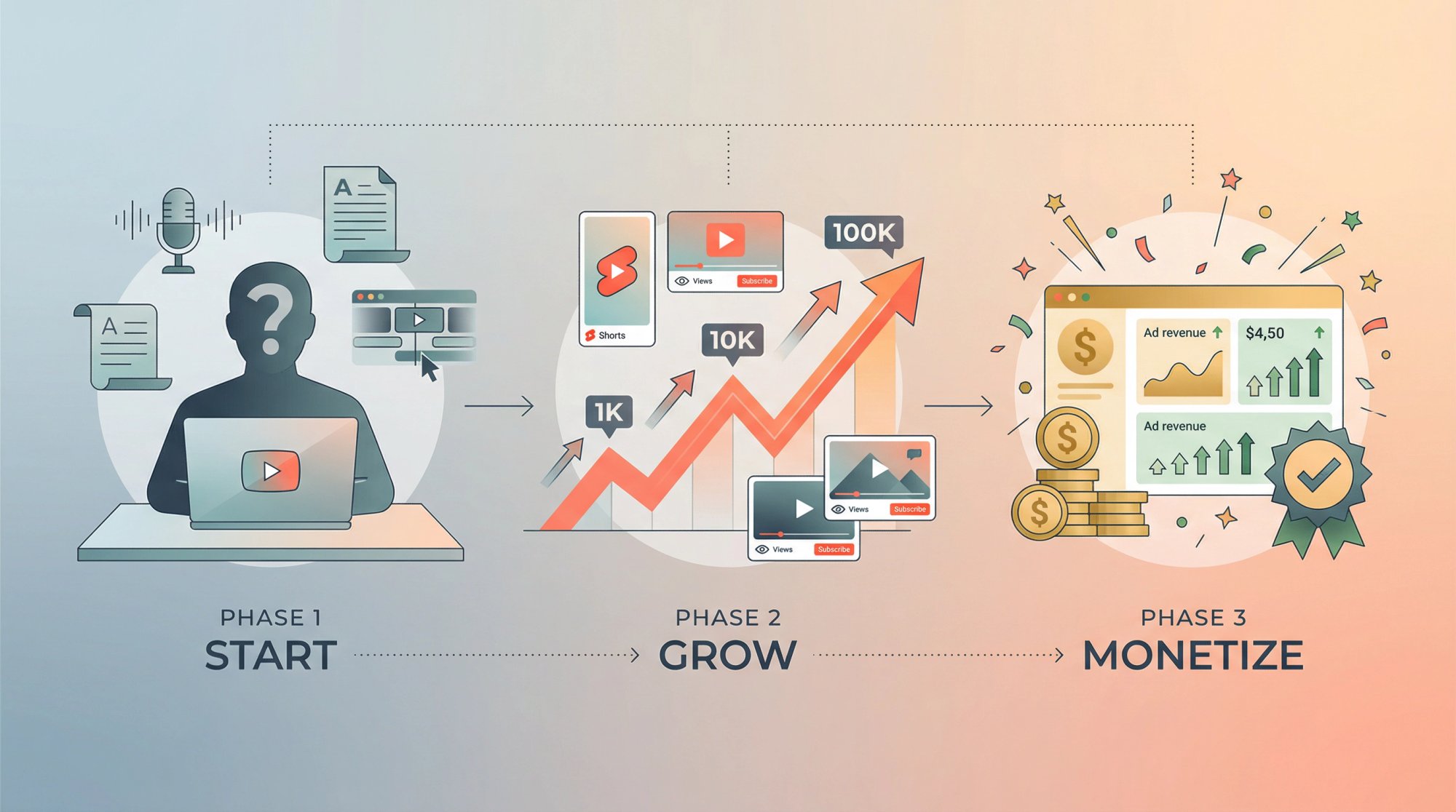
What Is a Faceless YouTube Channel?
A faceless channel is one where the value comes from the topic and storytelling, not your face on camera.
Common faceless formats:
• Voiceover with visuals (stock footage, b-roll, screen recordings, animations)
• On-screen text with sound design
• Tutorials and screen shares
• Animated characters, whiteboard explainers, or slides
Faceless does not mean:
• Reuploading other people's clips with minimal edits
• Pumping out templated videos that feel mass-produced
• Using bots or fake engagement
YouTube has been explicit for years that reused and repetitive content can be ineligible for monetization. In July 2025, YouTube clarified by renaming "repetitious content" to "inauthentic content", signaling they're serious about cracking down on low-effort channels.
You can absolutely stay faceless, but you still need to create original, high-quality content. Many successful creators use faceless account monitoring tools to study what's working in their niche without revealing their identity.
Why Start a Faceless YouTube Channel?
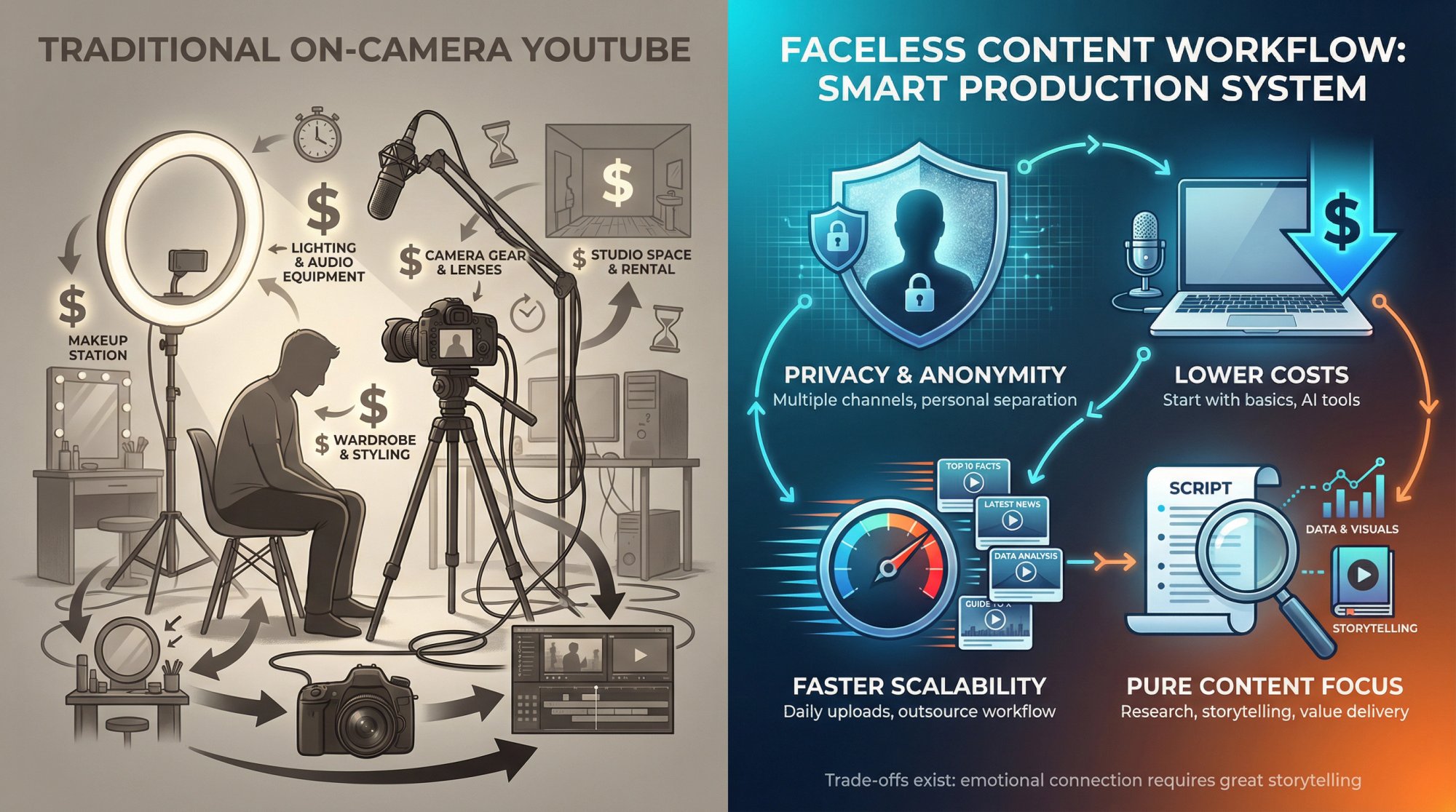
There are plenty of compelling reasons creators choose this path:
Privacy and anonymity. Maybe you're camera-shy, value your privacy, or want freedom to run multiple channels without being the face of them. When you're not tied to appearing on camera, you maintain a clear separation between your online projects and personal life.
Lower production costs. You don't need a fancy camera, studio lighting, or on-camera wardrobe. Many faceless creators start with just a decent microphone and basic editing software. Some even leverage AI to generate voices and visuals affordably.
Faster scalability. Without the bottleneck of filming yourself, you can produce content faster. There's no need for perfect lighting or multiple retakes for on-camera flubs. You can script a video and use visuals to illustrate it, making it easier to outsource or automate parts of the workflow. Some faceless channels churn out videos daily or run multiple channels simultaneously.
Pure content focus. When you remove the "face" element, what's left is pure content. All your effort goes into research, storytelling, editing, and delivering value. Many audiences appreciate this focus. In niche educational or technical topics, viewers often care more that you know your stuff than what you look like.
That said, there are trade-offs. Audiences might not form the same emotional bond with a faceless channel as they do with a charismatic vlogger. You'll need to compensate with great storytelling, a distinctive voice or editing style, and engaging topics. Some sponsors (especially in beauty, fashion, or personality-driven niches) might pass on your channel, though faceless channels absolutely do secure sponsorships if you have a large audience or operate in product-focused niches.
How to Start a Faceless YouTube Channel: 3 Core Steps
If you want this to work, solve three problems in order:
1. Pick a niche where attention already exists
2. Pick a faceless format you can produce weekly for 6+ months
3. Build an iteration loop (publish, measure, improve, repeat)
Everything else is details.
Faceless YouTube Channel Formats That Work Best
Most people pick a niche first and then realize they hate producing it.
Instead, pick your format based on what you can ship consistently.
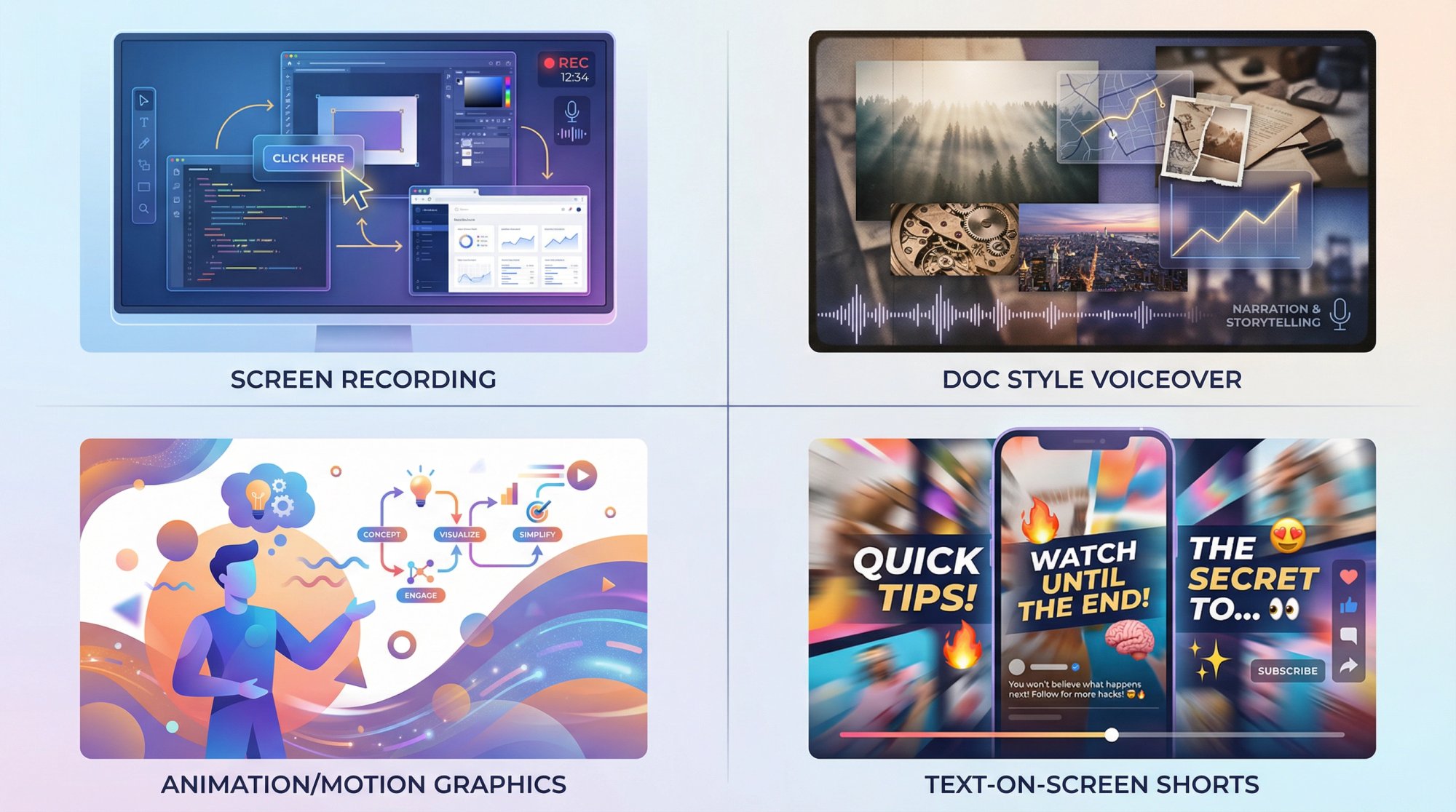
Best Faceless YouTube Formats for Beginners
1. Screen Recording (Tutorial/Walkthrough)
| Aspect | Details |
|---|---|
| Best for | Software, AI tools, finance spreadsheets, gaming guides, productivity |
| Why it works | Real proof, low copyright risk, high trust |
| Production speed | Fast once you have a template |
2. "Doc Style" Voiceover + B-Roll
| Aspect | Details |
|---|---|
| Best for | History, business stories, science, true crime (be careful), geopolitics explainers |
| Why it works | Storytelling plus retention |
| Risk | Copyright/licensing if you use random clips |
3. Animation/Motion Graphics
| Aspect | Details |
|---|---|
| Best for | Education, explainers, storytelling, kids content (extra rules apply) |
| Why it works | Unique visuals signal "originality" |
| Downside | Higher skill requirement or outsource cost |
4. Text-on-Screen Shorts (Caption-Driven)
| Aspect | Details |
|---|---|
| Best for | Facts, motivation, mini-stories, hacks, app growth |
| Why it works | Fast testing plus high volume |
| Risk | Can become "templated" fast if you don't add real originality |
Critical insight: If you can't imagine making 30 videos in that format without hating your life, don't choose it.
How to Choose a Niche for Your Faceless YouTube Channel
You're looking for overlapping demand, not vibes.
The 3-Demand Test (Steal This)
Score each niche 1-5 on each factor:
| Demand Type | Description | Examples |
|---|---|---|
| Search demand | People actively look for it | "how to…", "best…", "review…", "explained…" |
| Feed demand | People binge it when recommended | Weird facts, stories, drama breakdowns, satisfying edits |
| Money demand | Brands/affiliates exist | Software tools, courses, high-consideration products |
Pick niches that score 12+ total.
Faceless YouTube Channel Niche Ideas That Work
→ Tool tutorials (AI, design, productivity)
→ "Explained" channels (business, history, science)
→ Compilation with transformation (your own commentary, structure, and analysis)
→ Meditations and ambient content (but monetization can be tricky)
→ Product research and buying guides (affiliate friendly)
→ Educational Shorts (micro lessons)
For comprehensive idea lists, we actually published 50+ best faceless YouTube channel ideas for 2026 back in December 2025. If you're struggling to choose, our guide on finding low-competition niches for faceless accounts can help you identify underserved markets where you can stand out.
How to Validate Your YouTube Channel Niche
You're trying to answer: Can I win here with my format and quality bar?
Quick Validation Sprint
① Search your topic on YouTube
Look for channels with recent uploads getting consistent views.
② Open 10 top videos from 3-5 channels
Capture:
• Video length
• Hook style (first 5 seconds)
• Pacing (cuts per minute)
• What visuals they use
• What the viewer gets (emotion, info, payoff)
③ Write down 20 video ideas you could realistically make
If you can't get to 20 fast, you'll stall later.
The "Easy Win" Signal
You find videos where:
• The idea is simple
• The execution is decent (not insane)
• The views are still high
That means packaging, consistency, and a slightly better system can win. Simple as that.
To go deeper on competitor analysis, check out our guide on how to conduct competitor analysis for TikTok (the same principles apply to YouTube Shorts). You can also use tools to find top-performing videos in any niche, helping you identify what's already working before you create your first video.
How to Set Up Your Faceless YouTube Channel
You're not building a personal brand. You're building a content product. Think production-scale.
Channel Setup Checklist
| Element | Guidance |
|---|---|
| Channel name | Says the niche, not your identity (good: "Money in 5 Minutes", "AI Workflows Lab", "History in Motion"; bad: "Medhansh Vlogs") |
| Handle | Consistent across platforms |
| Banner | "What you get" in 5 words (not just aesthetics) |
| About section | 1 line: what you cover 1 line: who it's for 1 line: upload frequency 1 line: business email (if you want sponsors) |
| Playlists | Create 3 immediately (even with 0 videos) to force your content pillars |
How to Build a Video Production System for Faceless Channels
Faceless channels win on throughput plus iteration, not inspiration.
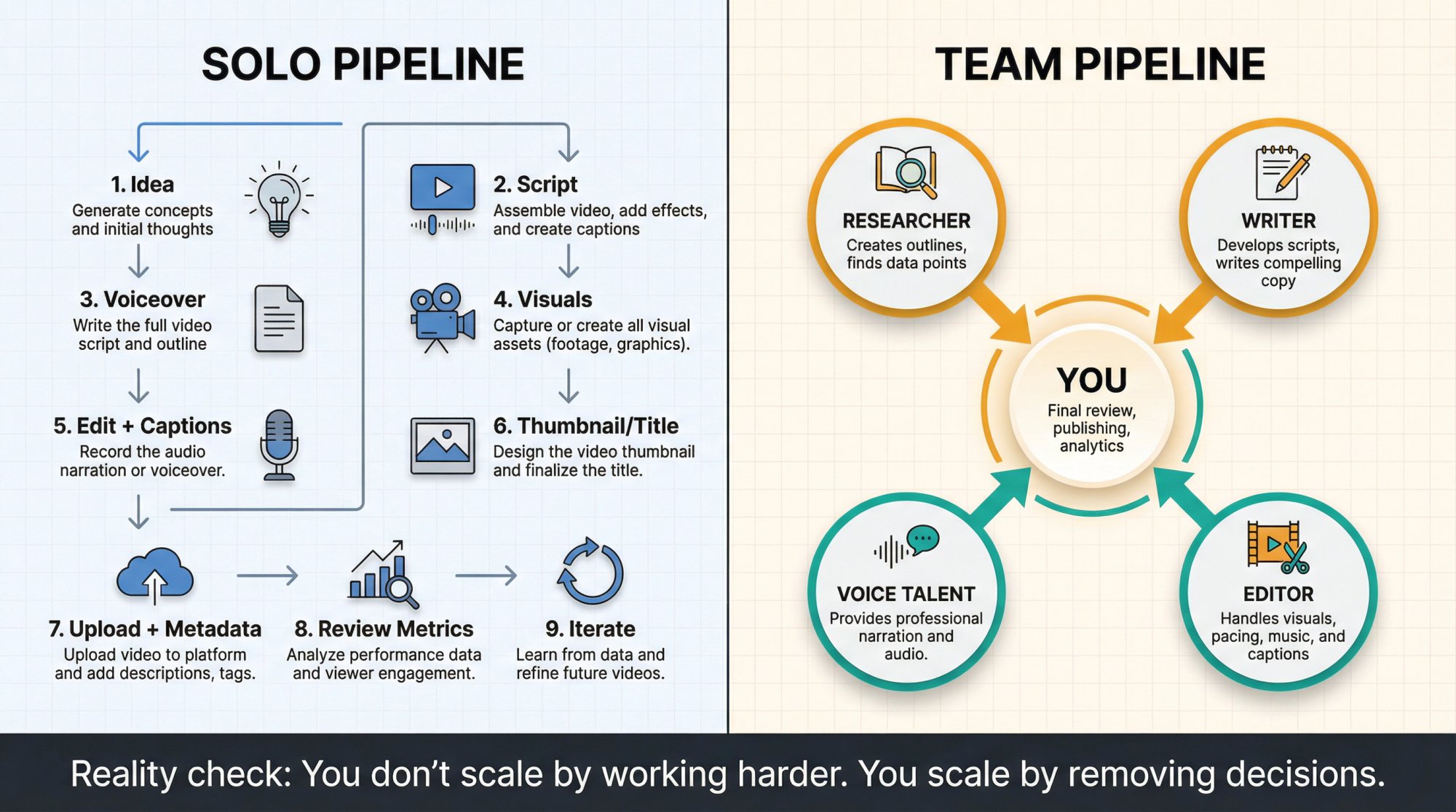
The Minimum Viable Pipeline (Solo)
① Idea (10-minute outline)
② Script (or bullet narration)
③ Voiceover
④ Visuals
⑤ Edit + captions
⑥ Thumbnail/title (for long-form)
⑦ Upload + metadata
⑧ Review metrics after 24h / 7d / 28d
⑨ Make the next one better
The Team Pipeline (Outsourcing-Friendly)
• Researcher creates outlines
• Writer develops scripts
• Voice talent provides narration (human or AI)
• Editor handles visuals, pacing, and captions
• You do final review, publishing, and analytics
Reality check: You don't scale by working harder. You scale by removing decisions.
How to Write Scripts That Keep Viewers Watching
A faceless channel lives or dies on retention. Your script is the retention engine.
Long-Form Script Skeleton
Cold open (0-10s): Show the payoff or tension immediately.
Promise (10-20s): "In this video you'll learn X so you can do Y."
Context (20-60s): Just enough to make the viewer care.
Main story/steps: Chunk into 3-7 sections, each with mini-cliffhangers.
Payoff + recap: Summarize in 20 seconds.
Next action: "If you want X, watch Y next" (point to another video)
Shorts Script Skeleton
0-2s: Pattern break plus promise
2-8s: Setup (why this matters)
8-40s: The actual value
Last 2s: Loop or call-to-action
Pro tip: Write the hook last. Once you know the payoff, you can hook properly.
Understanding what makes content stick is crucial. Our analysis of viral video patterns across niches reveals that successful faceless creators use specific structural formulas that keep viewers engaged from start to finish.
How to Find Copyright-Free Visuals for YouTube Videos
You can absolutely use b-roll and external assets, but you need to understand the line between:
• Licensed
• Public domain / Creative Commons
• Fair use
• Reused content that gets you denied monetization
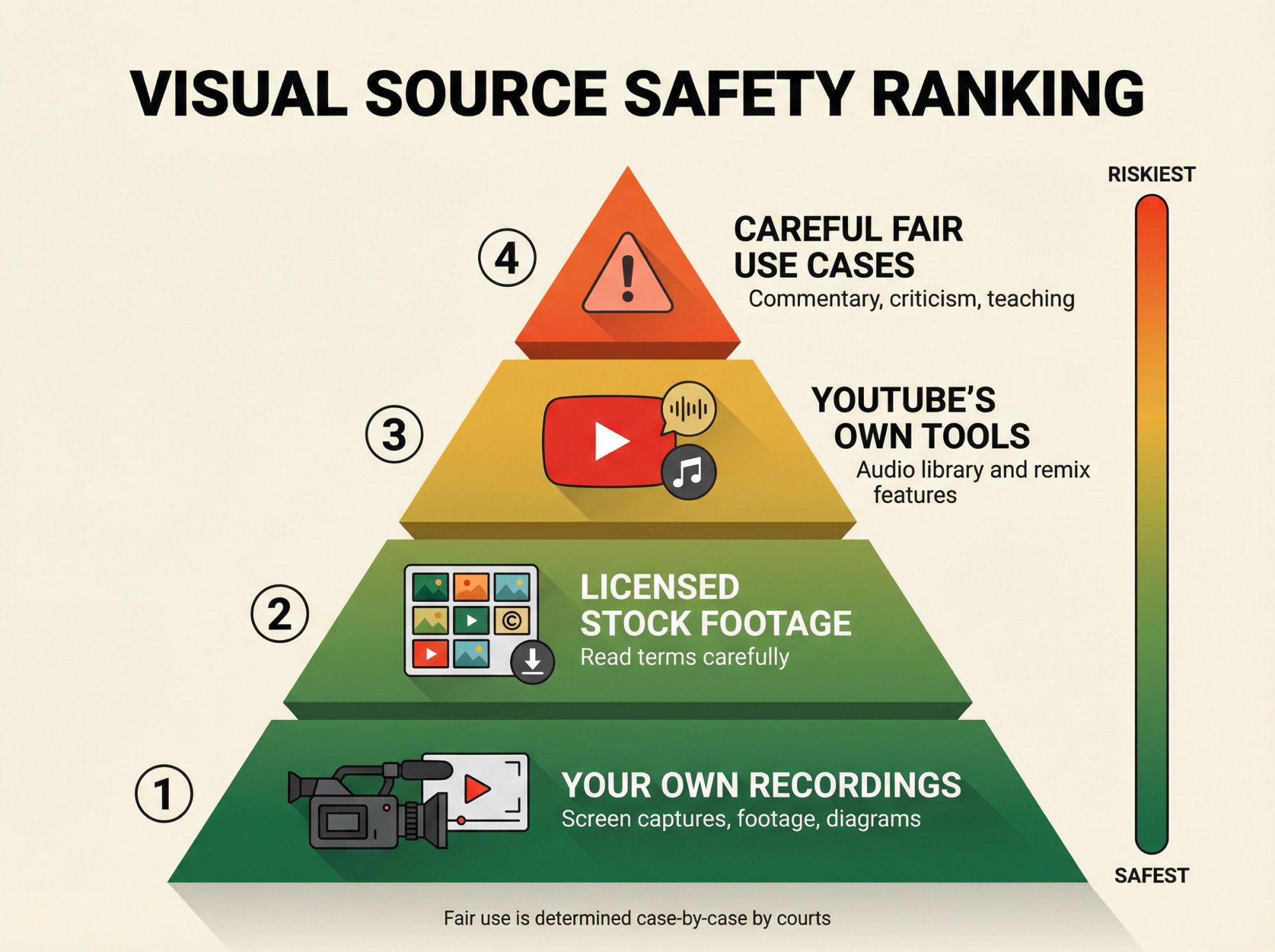
The Safest Visual Sources (Ranked)
| Rank | Source Type | Notes |
|---|---|---|
| ① | Your own recordings | Screen captures, footage, diagrams |
| ② | Licensed stock footage and images | Read terms carefully |
| ③ | YouTube's own tools | Audio library and remix features |
| ④ | Careful fair use cases | Commentary, criticism, teaching |
YouTube's fair use guidance is blunt: fair use is decided by courts, case-by-case. Giving credit or adding a disclaimer doesn't magically make it fair use.
Translation: Don't build your business model on "I hope this counts as fair use."
Voiceover for Faceless YouTube: Human vs AI in 2026
What Actually Matters
• Clarity
• Pacing
• Emotion (even if subtle)
• Audio quality (people forgive mediocre visuals; they don't forgive painful audio)
Human Voice
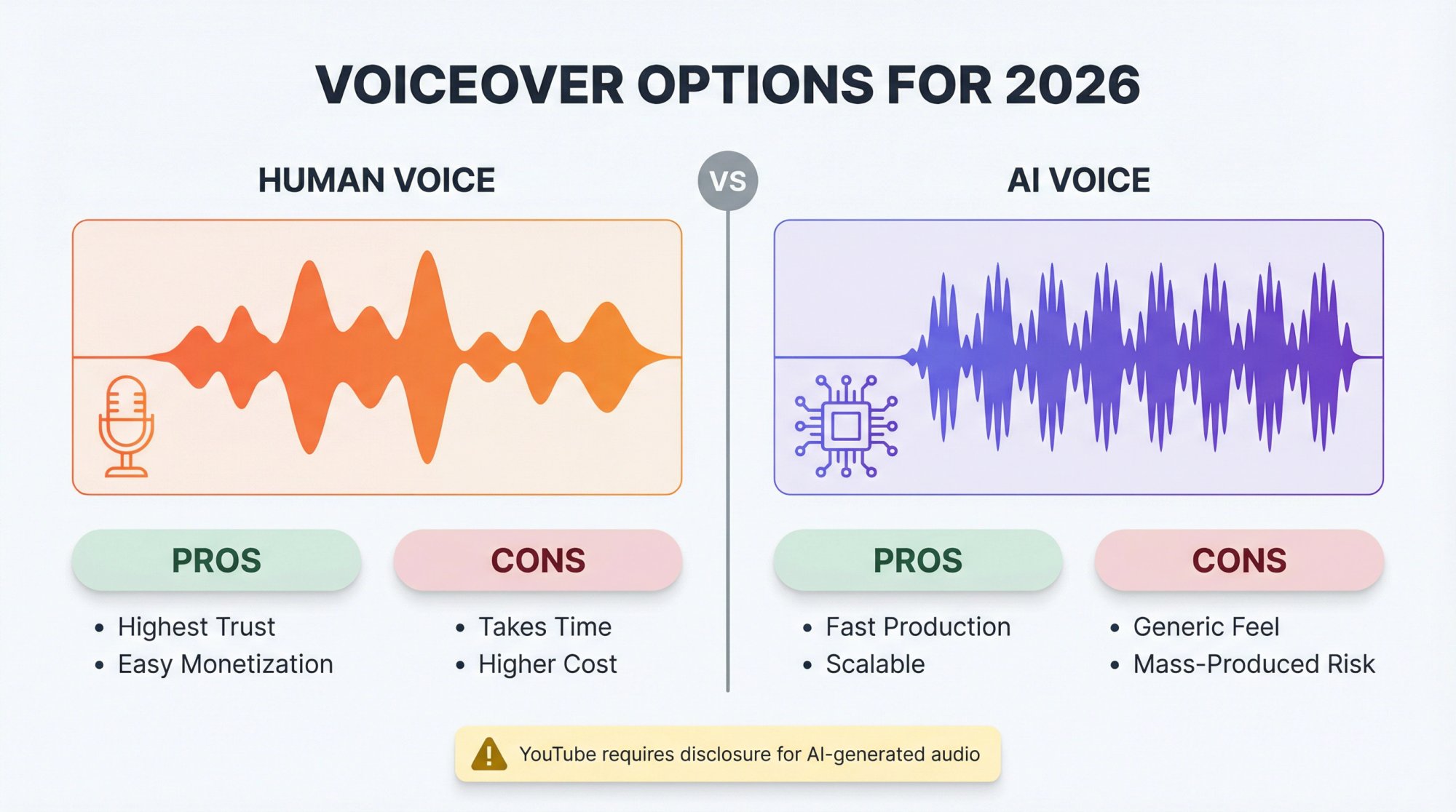
Pros: Highest trust, easiest monetization approval
Cons: Takes time or costs money
AI Voice
Pros: Fast, consistent, scalable
Cons: Can feel generic fast, higher risk of "mass-produced" vibes if the whole channel is templated
Important: YouTube's Disclosure Rules
YouTube requires creators to disclose meaningfully altered or synthetically generated content when it seems realistic. This explicitly includes audio/video/image generation tools.
Examples requiring disclosure:
• Cloning someone else's voice
Penalties can include removal or even suspension from the Partner Program if you consistently don't disclose.
Practical takeaway: If you use AI voice, keep it clearly not impersonating a real person, paired with original scripting and original structure, and not spammy or mass-produced. For more on leveraging AI while maintaining authenticity, see our guide on using AI for faceless content creation.
How YouTube Shorts Work for Faceless Channels in 2026
As of January 2026, YouTube Shorts can be up to 3 minutes long. That's huge for faceless formats like explainers, mini-docs, and tutorials.
But Here's What Changed: "Views" Redefined
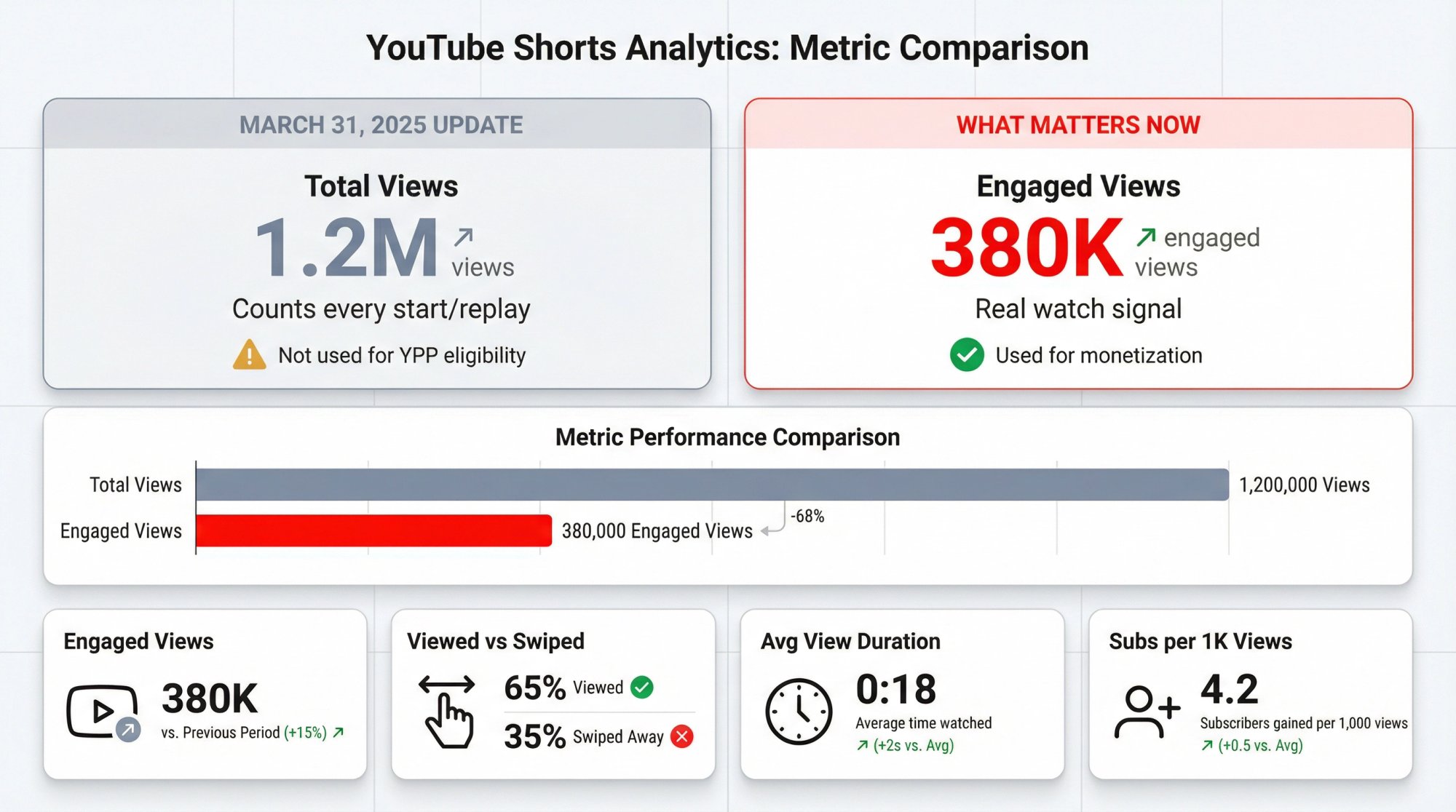
Starting March 31, 2025, Shorts "views" count every time a short starts to play or replay (no minimum watch time). YouTube kept the old metric as "engaged views" in analytics.
YouTube states that YPP eligibility and Shorts ad revenue sharing are based on engaged views, not the inflated "starts playing" number.
What Should You Track?
• Engaged views (real signal)
• Viewed vs swiped away
• Average view duration (and % watched)
• Subs per 1,000 engaged views
For a deeper dive into what these metrics actually mean, read our comprehensive guide on YouTube Shorts retention rates and how to analyze YouTube Shorts performance. Understanding the differences between platforms is also crucial. Our comparison of watch time metrics across TikTok, Reels, and Shorts shows why the same video can perform differently on each platform.
You can use Shortimize's YouTube Shorts analyzer to track these metrics across all your Shorts and identify patterns in your best-performing content.
How to Monetize a Faceless YouTube Channel
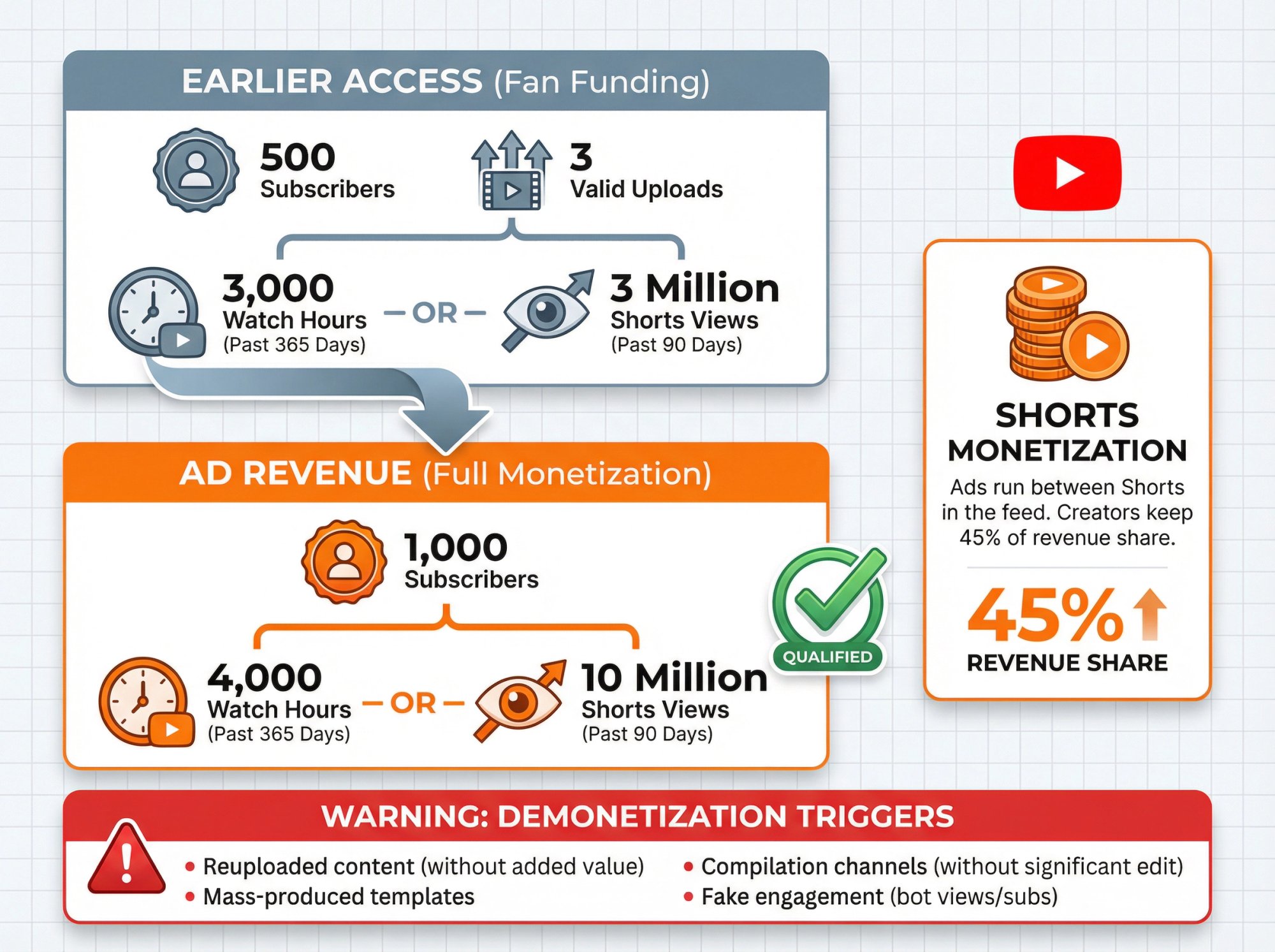
The Actual YPP Thresholds
According to YouTube's Partner Program page, there are two layers:
Earlier Access (Fan Funding/Some Features)
| Requirement | Threshold |
|---|---|
| Subscribers | 500 subs |
| Valid uploads | 3 valid uploads |
| Watch hours (last 12 months) | 3K valid public watch hours |
| OR Shorts views (last 90 days) | 3M valid public Shorts views |
Ad Revenue (The Big One)
| Requirement | Threshold |
|---|---|
| Subscribers | 1,000 subs |
| Watch hours (last 12 months) | 4K public watch hours |
| OR Shorts views (last 90 days) | 10M valid public Shorts views |
Shorts Monetization: How It Actually Works
According to YouTube's Shorts monetization policies:
• Ads run between Shorts in the Shorts feed
• Payments are calculated using eligible engaged views
• Creators keep 45% of their allocated revenue
Examples of ineligible Shorts views:
• Non-original Shorts (unedited clips, reuploads, compilations with no original content added)
• Artificial/fake views (bots)
Also: Shorts over one minute that contain claimed content are blocked and not eligible for monetization. (If you're using random copyrighted clips or music, this is where people get wrecked.)
The "Don't Get Demonetized" Checklist (Faceless Edition)
Avoid:
• Reuploading other creators' content with minimal changes
• Repetitive templated videos that feel mass-produced
• "Compilation" channels with no original narrative or editing value
• Fake engagement or bought views
YouTube's monetization policy pages are clear that inauthentic (mass-produced/repetitive) and reused content can be ineligible. The July 15, 2025 clarification specifically calls out mass-produced/repetitive content under the renamed "inauthentic content" policy.
Where Shortimize Fits (Without the Fluff)
Faceless channels win when you treat content like a growth team treats funnels: track, learn, iterate.
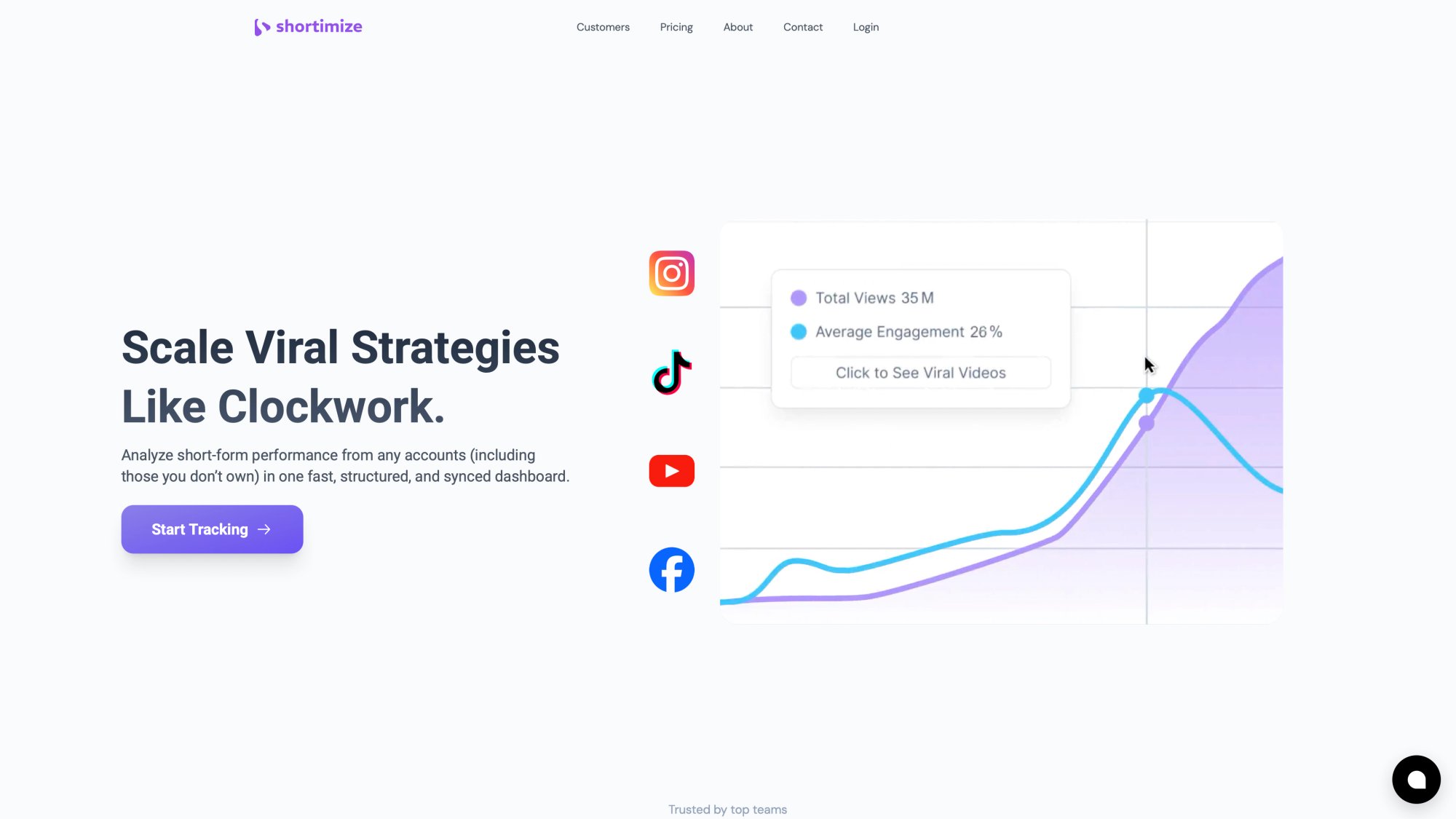
Shortimize is useful here because it lets you:
• Track any account across YouTube Shorts, TikTok, and Instagram Reels
• Monitor performance over time
• Use AI-powered discovery to explore viral videos and hooks
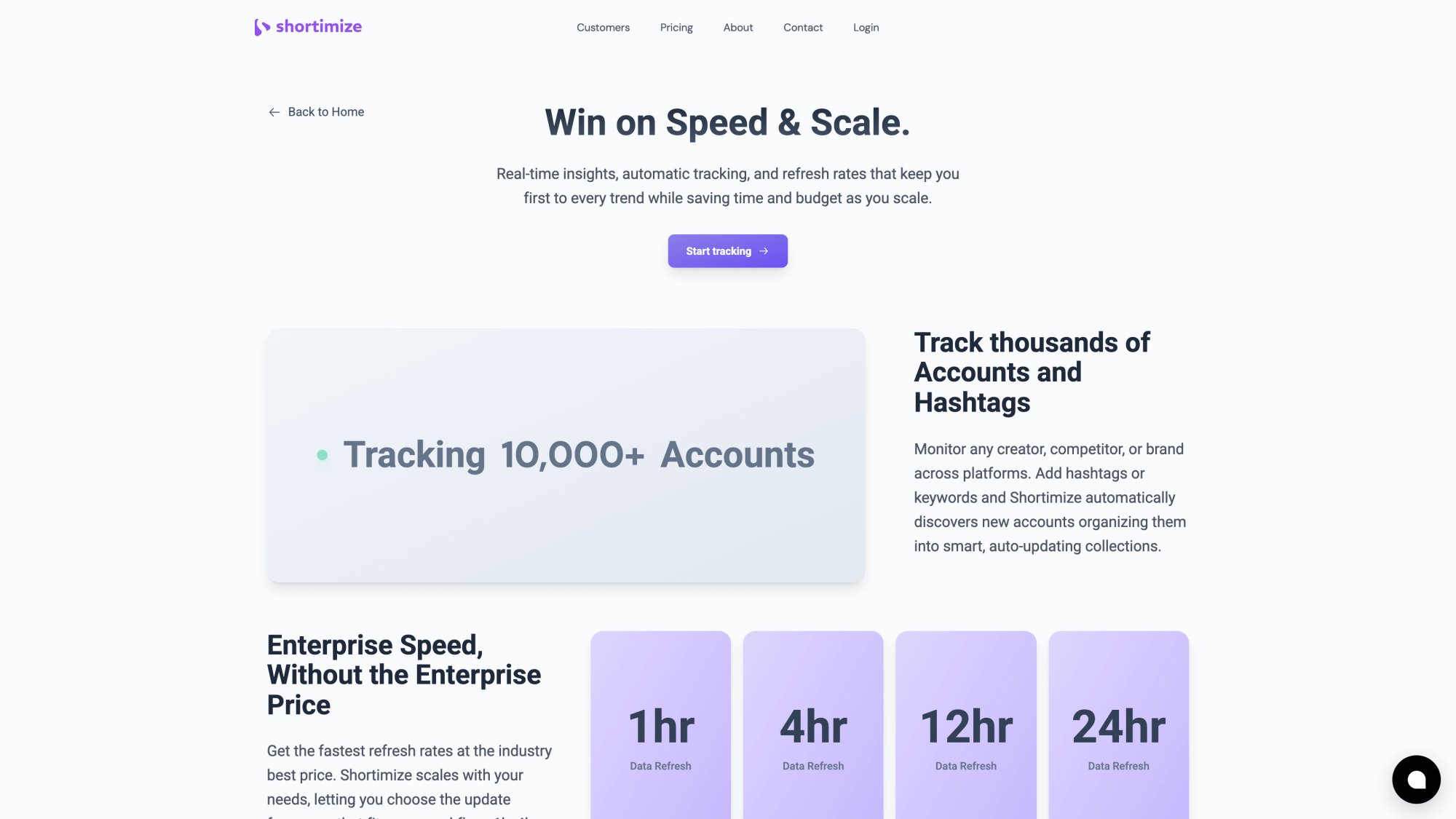
A Practical Shortimize Workflow for Faceless Creators
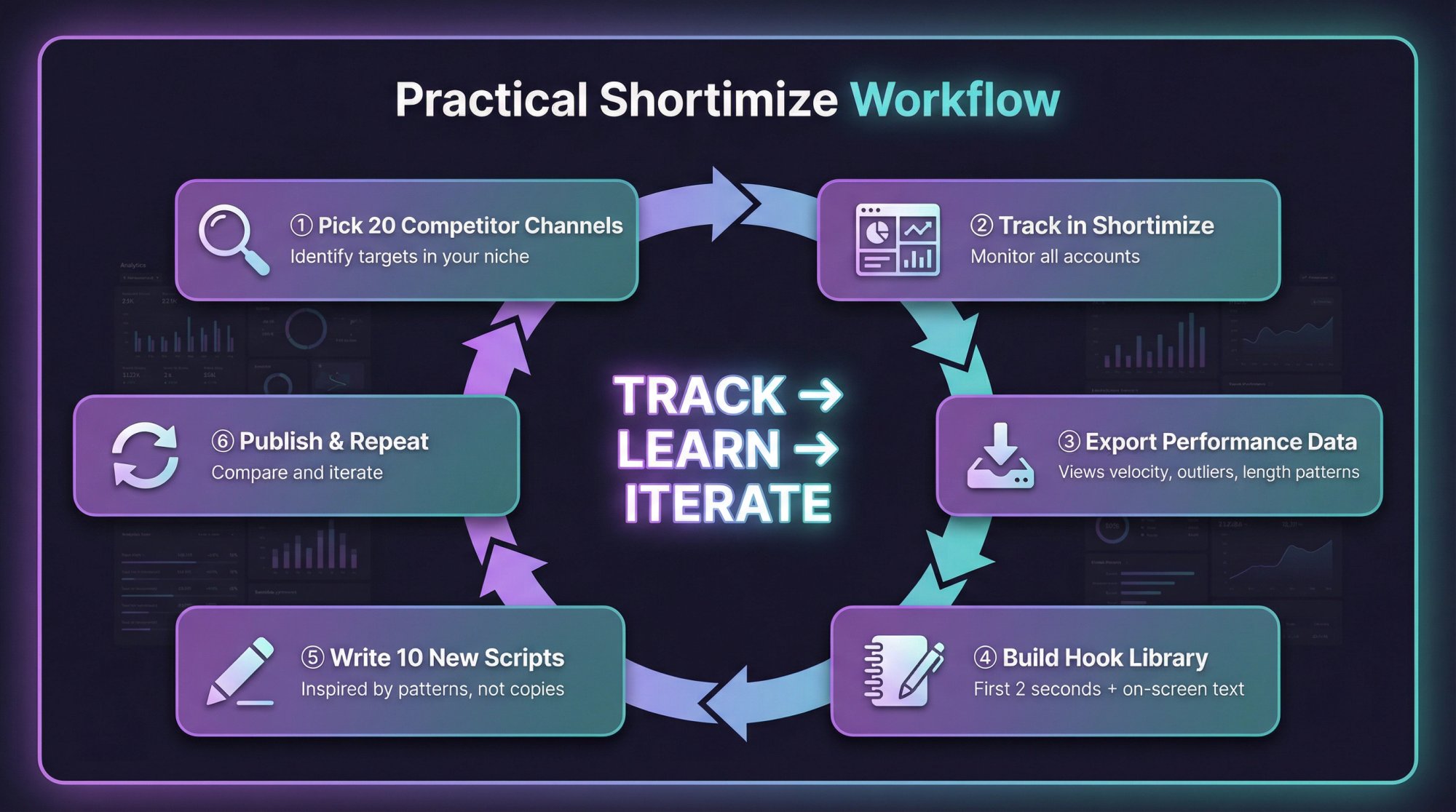
① Pick 20 competitor channels in your niche
② Track them (and their Shorts) in Shortimize
③ Every week, export the top-performing Shorts by:
• Views velocity
• Median vs outlier performance
• Video length patterns
④ Build a "hook library" (the first 2 seconds plus on-screen text)
⑤ Write 10 new scripts inspired by patterns, not copies
⑥ Publish, compare, repeat
You can start by analyzing any account for free using our YouTube Shorts analyzer, TikTok analyzer, or Instagram Reels analyzer. The platform also offers influencer tracking and social media monitoring features to help you stay ahead of trends in your niche.
If you're using Shorts as your growth engine, our Shorts algorithm guide is a solid companion read. And if you want tooling options, our AI video tools directory is basically a giant menu (just double-check current pricing because tools change fast). We also offer free content generation tools for creating captions, scripts, and ideas.
30-Day Faceless YouTube Channel Launch Plan
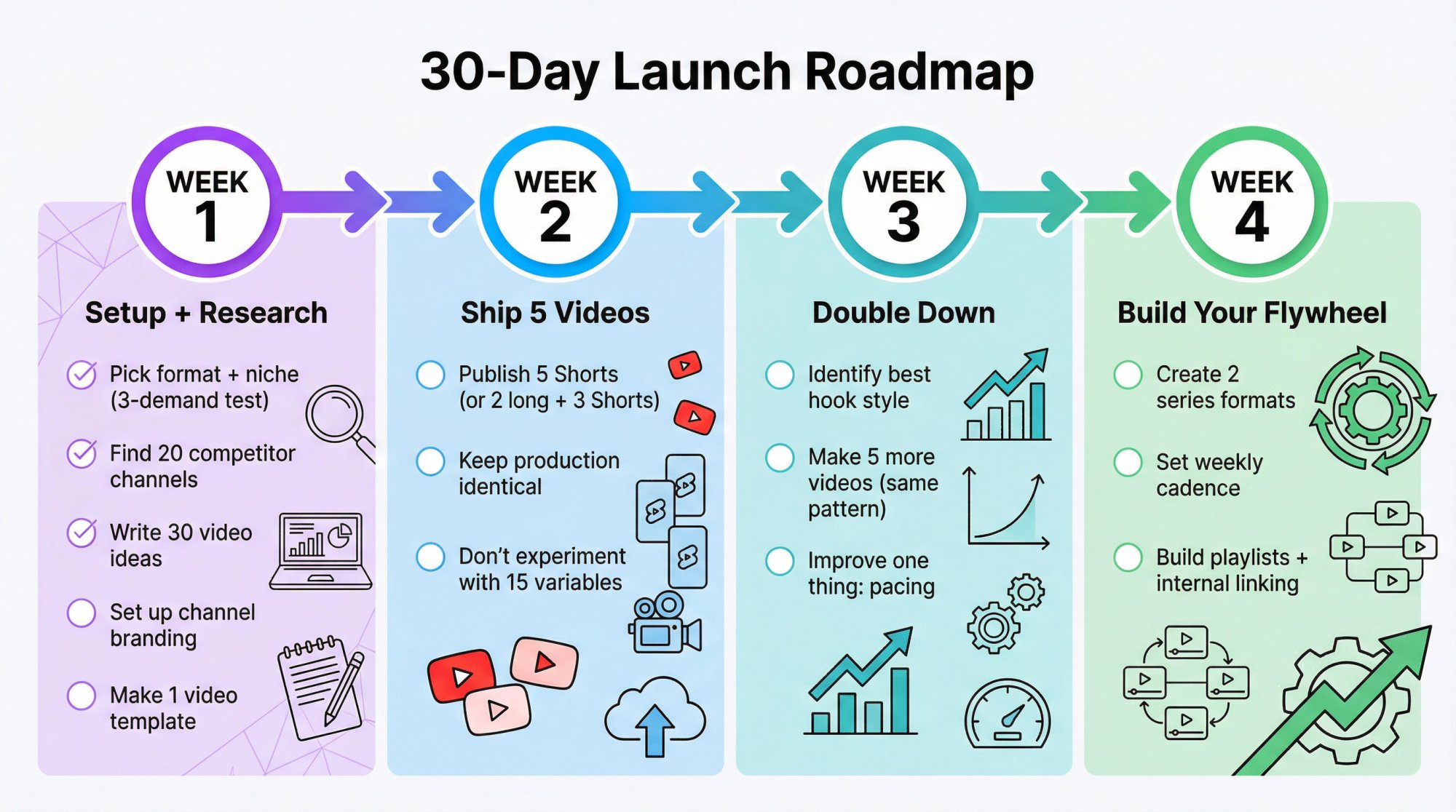
Week 1: Setup + Research
• Pick format plus niche using the 3-demand test
• Find 20 competitor channels
• Write 30 video ideas (yes, 30)
• Set up channel branding
• Make 1 video template (intro style, captions, sound effects)
Week 2: Ship 5 Videos
• Publish 5 Shorts (or 2 long-form plus 3 Shorts)
• Keep production identical so you can compare performance
• Do not "experiment" with 15 variables yet
Understanding optimal video length and posting timing can significantly impact your initial results.
Week 3: Double Down
• Identify your best-performing hook style
• Make 5 more videos using the same hook pattern
• Improve one thing only: pacing (cuts, text timing, tighter scripting)
Week 4: Build Your Flywheel
• Create 2 series formats (recurring episodes)
• Set a weekly cadence you can maintain
• Start building playlists and internal linking ("watch this next")
Copy-and-Paste Faceless YouTube Video Ideas
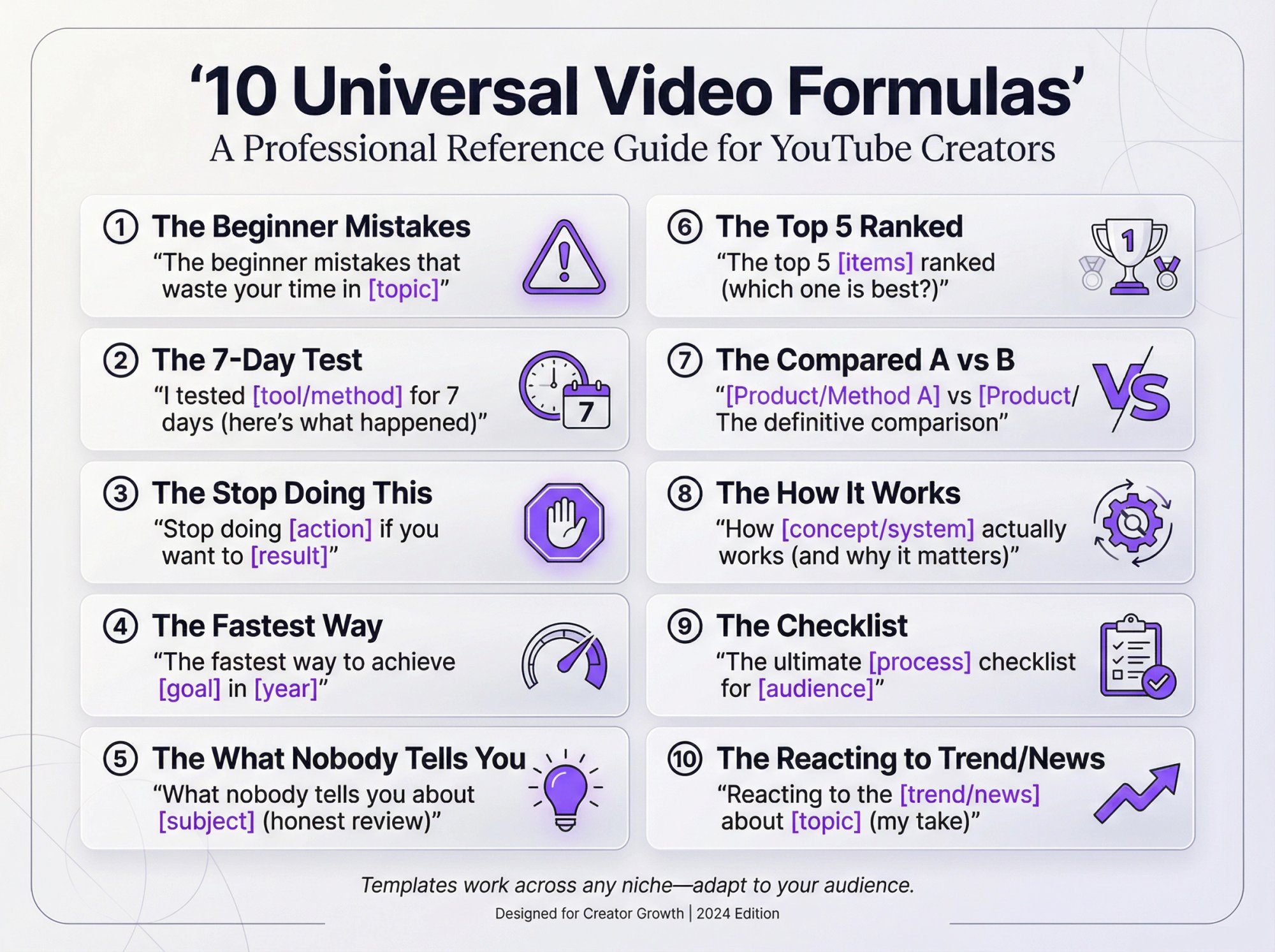
10 Faceless Video Ideas That Work in Almost Any Niche
① "The beginner mistakes that waste your time in [topic]"
② "I tested [tool/method] for 7 days. Here's what happened"
③ "Stop doing [common advice]. Do this instead"
④ "The fastest way to get [result] (no fluff)"
⑤ "What nobody tells you about [topic]"
⑥ "Top 5 [things] ranked by [metric]"
⑦ "I compared [A vs B]. Here's the winner"
⑧ "How [thing] actually works (explained simply)"
⑨ "The checklist I wish I had before starting [topic]"
⑩ "Reacting to [trend/news] with real explanation"
Faceless Upload Checklist (Quality Bar)
✓ Hook within first 2 seconds (Shorts) or first 10 seconds (long-form)
✓ Audio clean (no hiss, no clipping, no robotic pacing)
✓ Visuals change every 1-3 seconds (unless intentionally calm content)
✓ Captions are readable (not tiny, not covering key visuals)
✓ Title makes a clear promise (not vague)
✓ No reused clips unless transformed with real commentary/education
✓ If altered/synthetic content seems realistic, disclose in Studio
A Quick Note on Market Reality (And Why This Is Worth Doing)
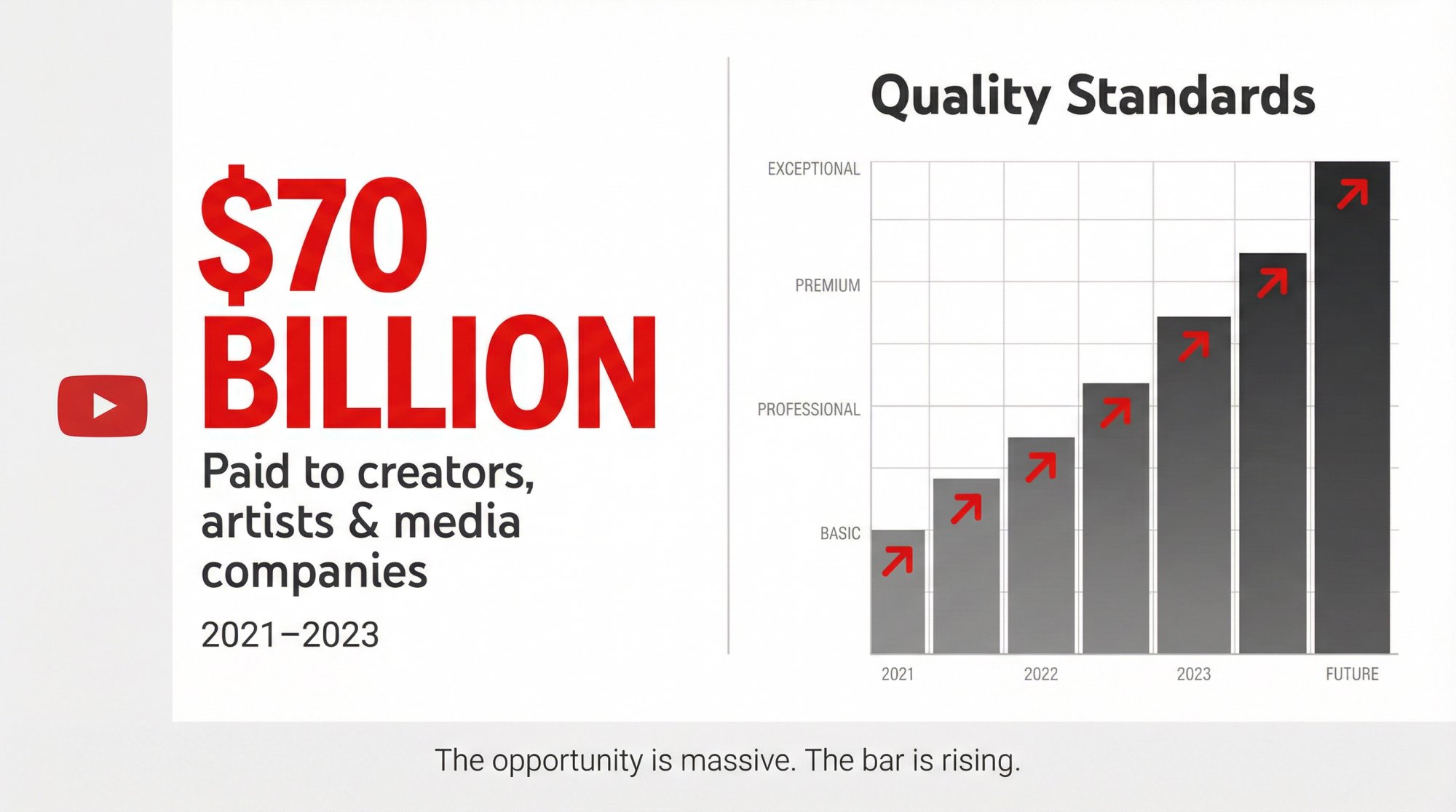
YouTube is not a small game. YouTube's Partner Program page says it paid more than $70 billion to creators, artists, and media companies from 2021 to 2023.
But the platform is also getting stricter about mass-produced, low-effort content.
So the opportunity is real. And the bar is rising.
For those interested in adjacent opportunities, the rise of faceless content has also created demand for UGC creator jobs where brands pay for authentic-looking content without requiring personal branding or large followings.
Your Unfair Advantage Is a System
A faceless channel isn't a loophole. It's a production model.
If you:
• Pick a niche with real demand
• Pick a format you can produce consistently
• Stay on the right side of "original plus authentic" (not reused/mass-produced)
• Measure and iterate like a growth team
You can absolutely build something big without ever showing your face.
If you want the fastest way to stop guessing what's working, use Shortimize to track the channels you're competing with across Shorts/TikTok/Reels and turn patterns into a weekly content plan.
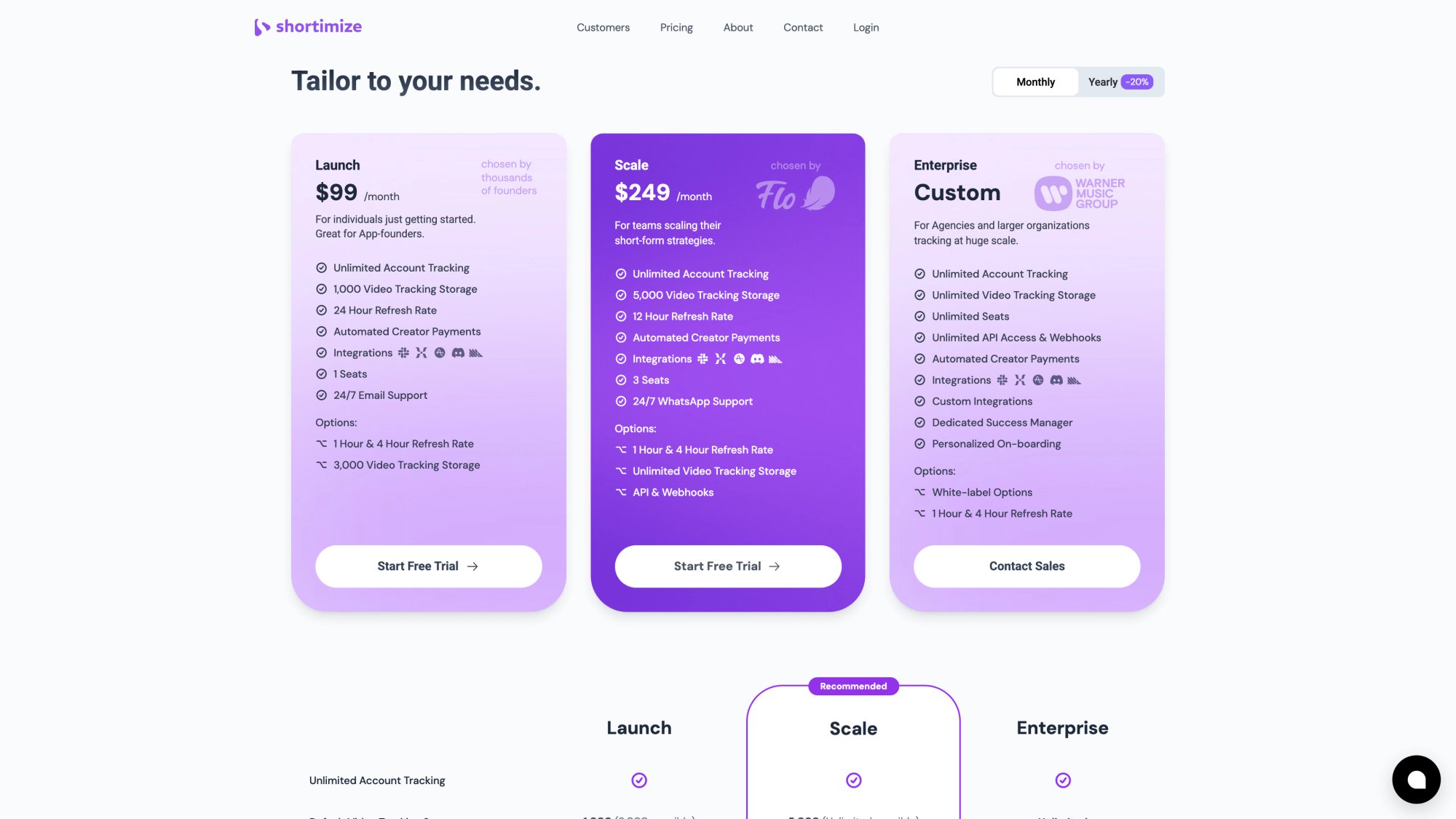
To see all the features available for tracking and analyzing faceless content, check out our features page or explore pricing options that fit your growth stage.