If you're trying to set an influencer marketing budget in 2026, you've probably already noticed the problem: every pricing guide on the internet gives you a different number. One says nano influencers cost $25. Another says they cost $500. A third puts micro creators in a range so wide it's barely useful.
We get it. At Shortimize, we help teams track short-form video performance across TikTok, Instagram Reels, and YouTube Shorts, and one of the most common questions our users ask isn't about analytics. It's about money. Specifically: "Am I paying the right amount for this creator?"
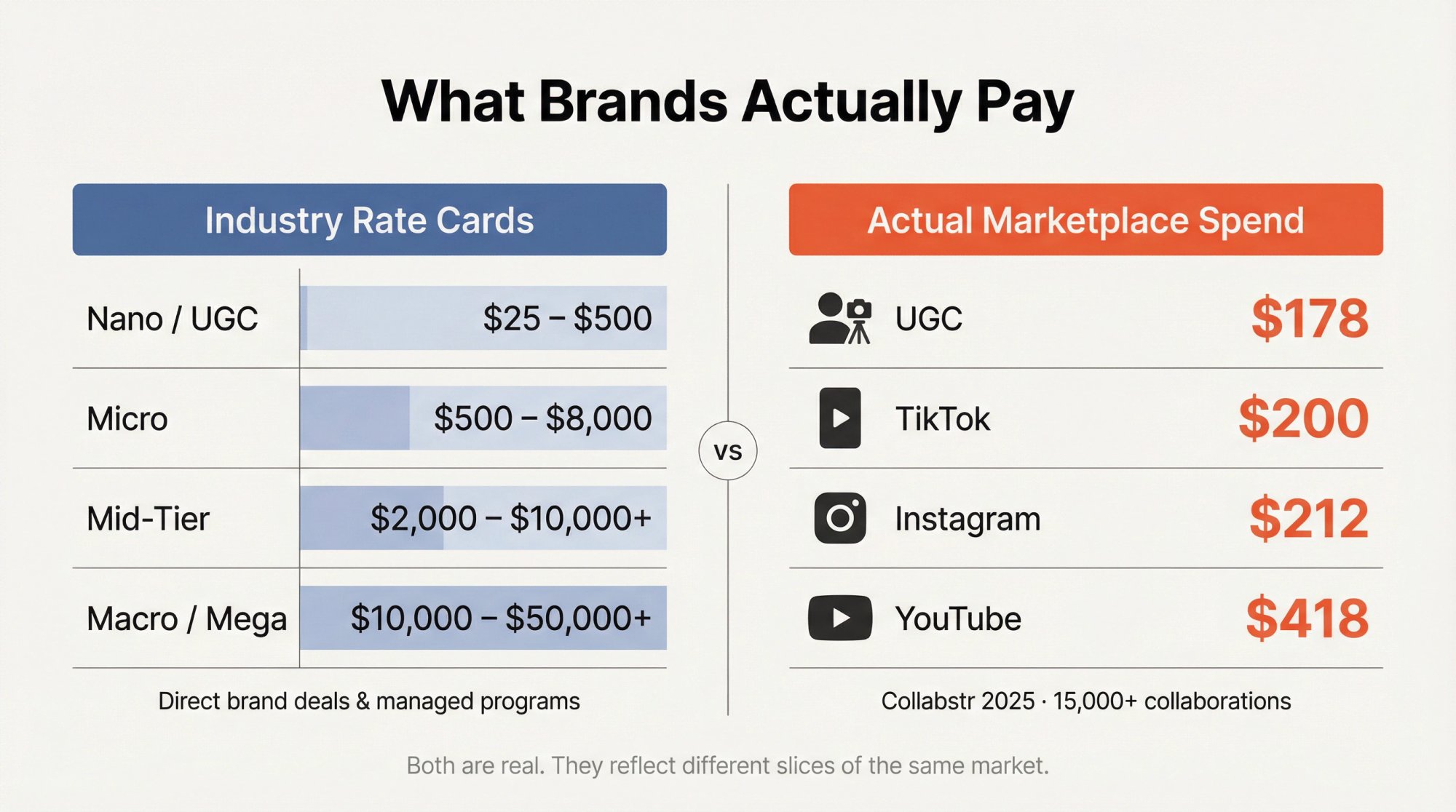
The honest answer is that influencer marketing costs in 2026 range from about $25 for a nano creator collaboration all the way up to $50,000+ for a mega influencer sponsorship. That spread exists because "influencer marketing" now covers gifting, UGC, affiliate deals, one-off sponsorships, ambassador programs, and licensed ad creative. It's not just "paying for a post" anymore.
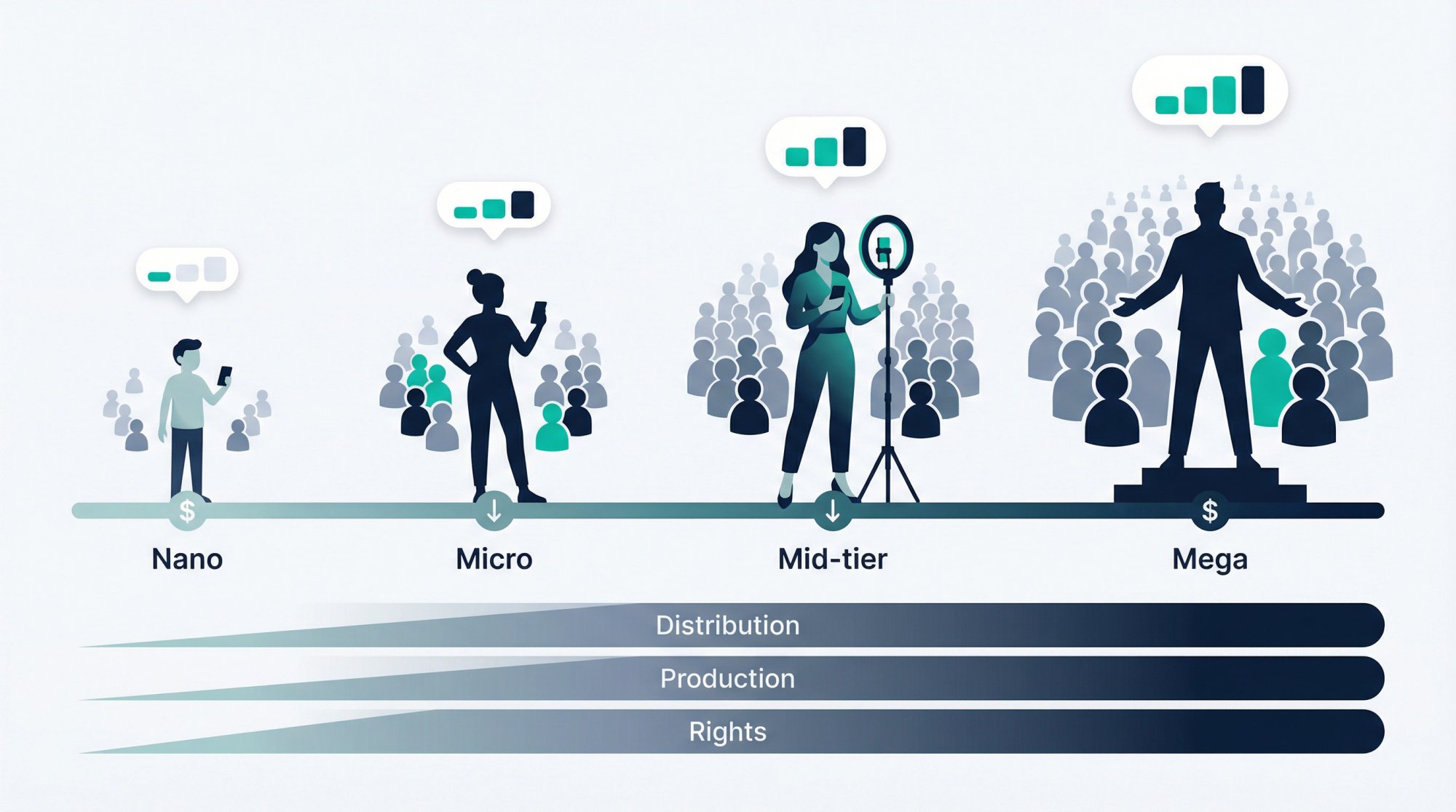
At a first-principles level, creator pricing has three moving parts: distribution (how many people see it), creative production (how much work goes into making it), and rights (how much you can reuse it afterward). The more audience access you want, the more work the creator has to do, and the more reuse rights you need, the more you pay. Most pricing guides blur those together, which is why their advice feels contradictory even when parts of it are technically true.
A note on the data: All prices below are in USD and based on the freshest public data available as of March 2026. The core benchmarks come from Hootsuite's influencer pricing guide (March 16, 2026), Shopify's influencer pricing guide (updated February 10, 2026), Modash's pricing breakdown (February 12, 2026), Influencer Marketing Hub's benchmark report (March 3, 2026), CreatorIQ's 2025-2026 State of Creator Marketing report, impact.com's pricing and trends coverage, Collabstr's 2025 report (based on 15,000+ collaborations), Deloitte Digital's State of Social report (May 2025), and Aspire's 2025 creator data. For ongoing tracking beyond these benchmarks, Shortimize's influencer tracking software guide covers how brands are collecting their own first-party performance data.
What Brands Actually Pay for Influencer Marketing in 2026
For most brands, the practical breakdown looks like this:
UGC and very small creator deals: Often low hundreds per asset, sometimes lower.
Nano to lower-end micro influencer deals on short-form platforms: Typically a few hundred to around $2,000 per deliverable.
Mid-tier creator partnerships: Commonly $2,000 to $10,000+.
Macro and mega sponsorships: Often $10,000 to $50,000+, especially on Instagram Reels and YouTube.
What most articles won't mention: actual marketplace spend is often far lower than the headline rate cards suggest.
According to Collabstr's 2025 report, the average actual brand spend per collaboration was about $200 on TikTok, $212 on Instagram, $418 on YouTube, and $178 for UGC. Creator asking prices were higher across the board, but brands typically paid less. The social media engagement tracking data you collect over time will tell you which of these numbers actually applies to your campaigns.
Compare that with industry 2025 U.S. averages, which put Instagram and TikTok nano creators at $500 to $2,000 and micro creators at $2,000 to $8,000. Those numbers are dramatically higher than marketplace data.
Those aren't contradictions. They're different slices of the same market. Industry numbers reflect direct brand deals and managed programs. Marketplace data reflects marketplace transactions and smaller collaborations. Both are real. Neither tells the whole story.
Key insight: If you're looking for one universal "market rate" for influencer marketing, that assumption will hurt your budgeting. The only useful answer is to ask: what kind of creator deal are you actually buying?
5 Types of Influencer Marketing Deals (and What Each Costs)
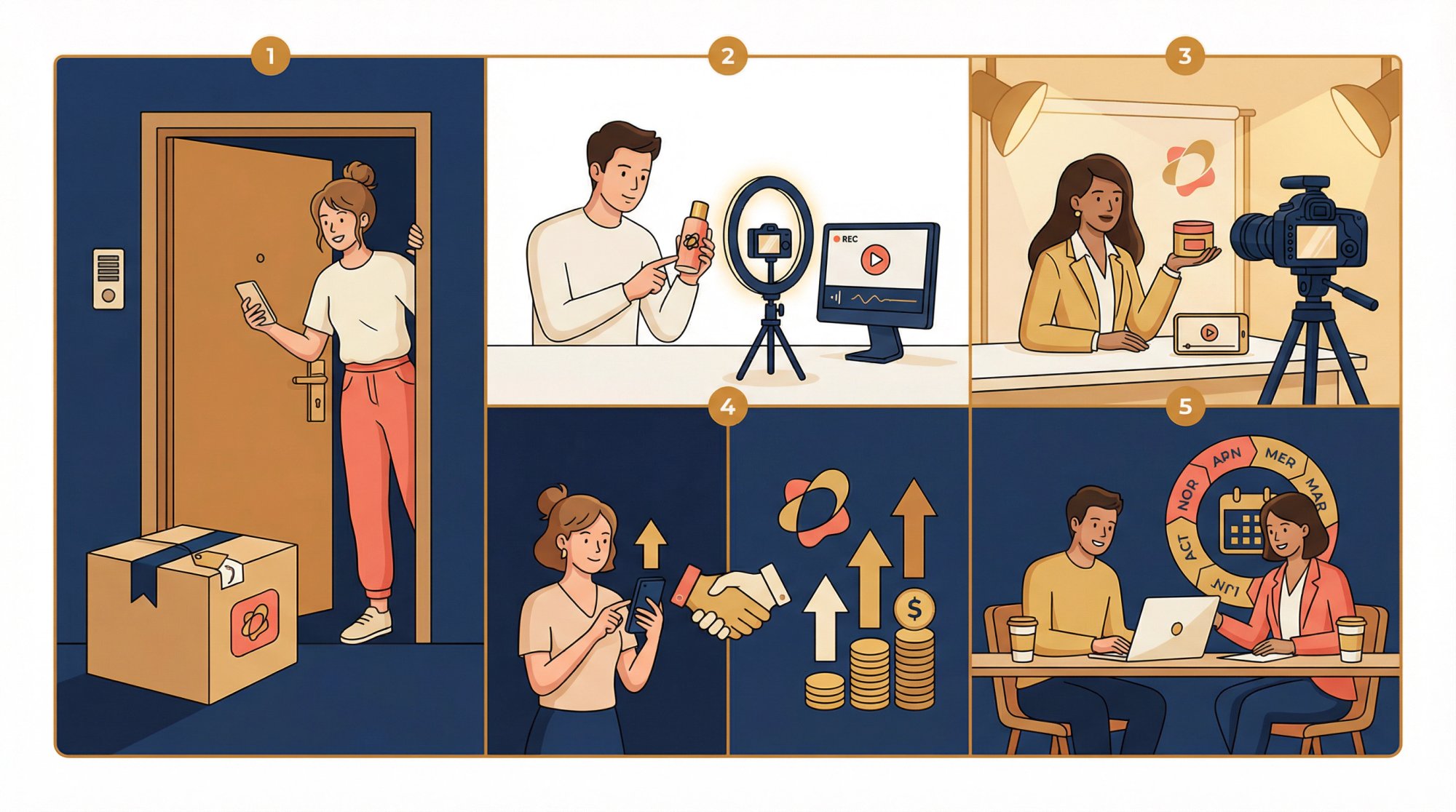
The term "influencer marketing" covers at least five distinct deal types in 2026, and each one carries a completely different cost profile. Understanding these deal types is essential for how to manage influencer campaigns effectively.
How Much Does Product Seeding and Gifting Cost?
This is the lightest cash outlay, but it's not free. You're still paying for the product, shipping, coordination, and follow-up, and there's usually no guaranteed content in return.
Aspire's 2025 strategy data shows that many brands seed products to 20 to 100 creators per month, and their research found that 83% of creators are open to free product only when they genuinely like the brand or the product value is high. So gifting works, but only when the offer is genuinely compelling. Sending a $12 product to a creator who doesn't care about your category will get you nothing but a wasted shipment.
How Much Does UGC Content Cost?
This is when you want the creator's ability to make good content, not necessarily access to their audience. You're buying raw creative assets you can use in your own paid media.
According to Collabstr's 2025 data, average actual brand spend on UGC collaborations was $177.68, while the average asking price was $198.06. That makes UGC one of the cheapest ways to build a bank of creative assets quickly, especially if you're running paid social and need a steady stream of fresh creative. For more on maximizing your creative budget, our guide on top affordable tools for UGC video marketing is a useful companion.
How Much Do Sponsored Posts and Videos Cost?
This is the classic paid influencer deal: one TikTok, one Reel, one Story sequence, or one YouTube integration. It's also where the pricing range explodes, because platform, creator size, content complexity, niche, and rights all affect cost. We'll break down the specific numbers by platform in the next section.
Knowing how to analyze TikTok sponsored content to spot authentic and paid engagement is a critical skill for evaluating whether you're getting genuine value from these one-off deals.
How Hybrid Affiliate Deals Work (and What They Cost)
These combine a guaranteed fee with commission or performance upside. Industry pricing research says brands commonly pair flat fees with 10% to 20% commission, and the strongest structure is increasingly a base fee plus roughly 10% to 15% commission plus tiered bonuses for results.
This structure is gaining traction because it aligns incentives. The creator gets a guaranteed floor, and the brand gets performance accountability. If you care about driving actual sales (not just impressions), hybrid deals are where the industry is heading. You can track how these affiliate collaborations are performing with Shortimize's TikTok Shop affiliate performance tracking across multiple creators at once.
How Much Do Long-Term Ambassador Partnerships Cost?
These are recurring creator relationships, not isolated transactions. Research shows that 62% of creators prefer long-term partnerships, which matters because ongoing relationships usually produce stronger brand fit, smoother negotiations, and more reliable economics than one-off buys.
This shift is part of a bigger 2026 trend. Research on social media trends found that follower count and engagement rate are no longer reliable indicators on their own, and brands are putting more weight on storytelling quality, audience alignment, ROI, and ongoing partnerships. In plain terms, creator pricing is moving away from vanity-based rate cards and toward business value. Learn more about how to optimize influencer campaigns for long-term ROI.
Influencer Pricing by Platform in 2026
Before we get into the numbers, one important caveat: there is no official rate card for influencer marketing. Shopify's February 2026 guide explicitly says its numbers are directional guidance, not fixed expectations, and most public pricing benchmarks skew toward U.S. and English-speaking markets. Use the ranges below as guardrails, not laws of nature.
Instagram Influencer Pricing in 2026
Instagram is still one of the biggest creator ad markets, but format matters a lot. A static feed post, a Story, and a Reel carry very different price tags.
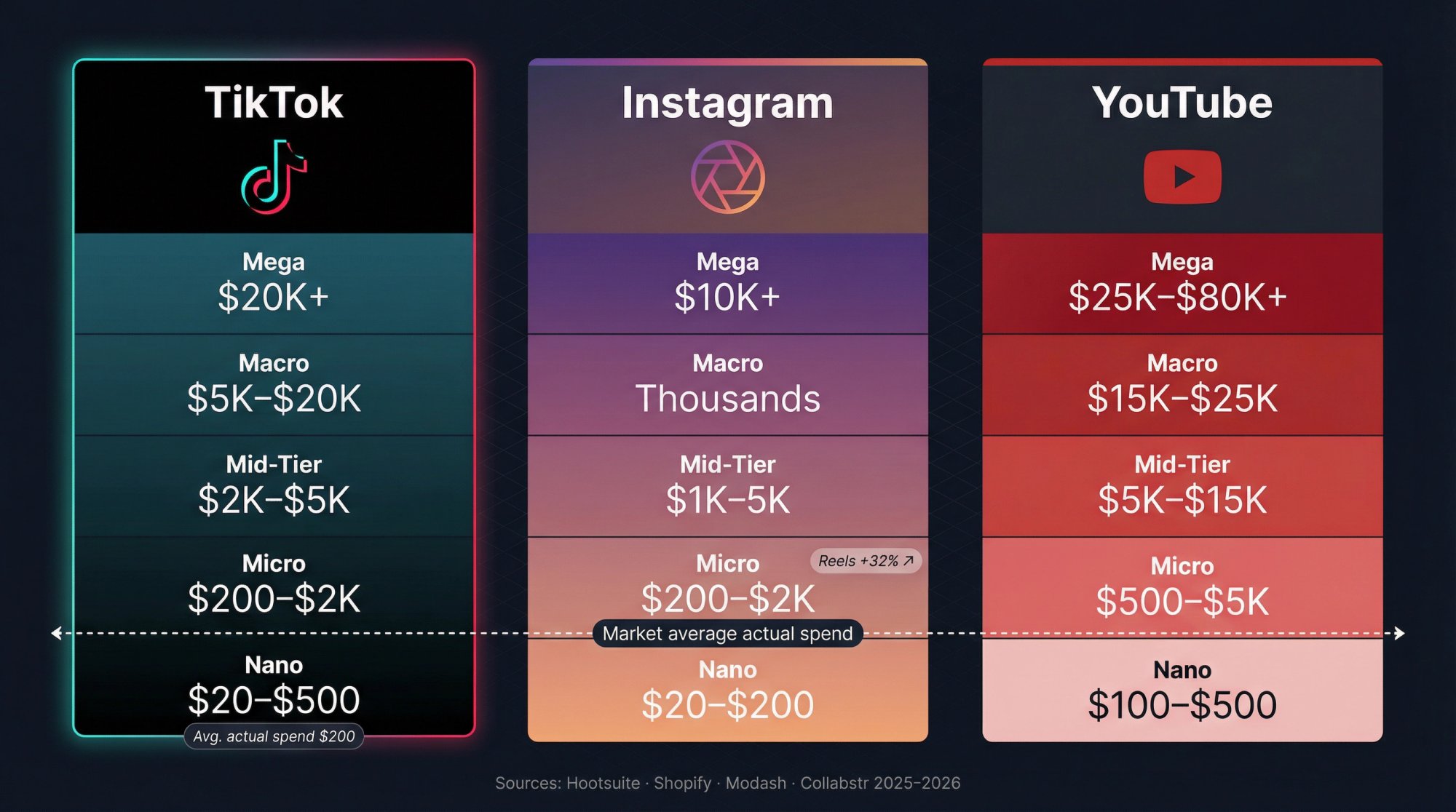
| Creator Tier | Hootsuite (March 2026) | Shopify (Feb 2026) |
|---|---|---|
| Nano (1K-10K) | $20 – $200 | $25 – $150 |
| Micro (10K-100K) | $200 – $2,000 | $250 – $5,000 |
| Mid-Tier (100K-500K) | Low thousands to mid-thousands | Mid-thousands+ |
| Macro (500K-1M) | Mid-thousands to tens of thousands | Higher range |
| Mega (1M+) | Tens of thousands+ | Tens of thousands+ |
The format premium on Reels is real. Modash's February 2026 guide shows micro creators charging about $500 to $3,000 for Instagram Stories and roughly $750 to $5,000 for Reels. And Collabstr's 2025 data found that Instagram Reels averaged about $288, versus roughly $217 for TikTok videos, making Reels about 32% more expensive on average in that dataset.
If you're working with a lot of Instagram content, discovering the best micro-influencers with an Instagram analyzer can help you find more budget-efficient creators at scale. You can also use our Instagram Reels analysis tools to benchmark creator performance before committing budget.
Our complete guide on Instagram influencer marketing covers the full strategic picture for Instagram campaigns.
A useful mental model for Instagram in 2026: feed placements and Stories can be relatively affordable, but polished short-form video plus rights can get expensive fast.
TikTok Influencer Pricing in 2026
TikTok still offers the widest spread between cheap test content and expensive breakout creators. It's also where you can find some of the best value if you know what you're looking for.
| Creator Tier | Hootsuite (March 2026) | Shopify (Feb 2026) | Modash (Feb 2026) |
|---|---|---|---|
| Nano (1K-10K) | $20 – $500 | Lower range | $50 – $200 |
| Micro (10K-100K) | $500 – $2,000 | $200 – $1,200 | $200 – $1,000 |
| Mid-Tier (100K-500K) | $2,000 – $5,000 | Higher range | $1,000 – $5,000 |
| Macro (500K-1M) | $5,000 – $20,000 | Higher range | Higher range |
| Mega (1M+) | $20,000+ | Higher range | Higher range |
At the marketplace level, Collabstr's 2025 report found average actual TikTok spend of about $200. And if you're wondering whether TikTok still deserves top billing in 2026, Influencer Marketing Hub's March 2026 benchmark report found TikTok was the top platform for planned influencer investment among respondents.
That matters because TikTok pricing is often less about sheer audience size and more about repeatable content fit. A smaller creator with stable, credible short-form performance can be a better buy than a bigger account riding one viral spike. This is exactly the kind of pattern Shortimize helps you spot: you can track a creator's median views, posting cadence, and performance consistency across TikTok, Instagram, and YouTube before you commit any budget.
Our TikTok influencer analytics tools guide walks through how to evaluate creator performance data before you pay. You can also use Shortimize's TikTok account analyzer directly to pull any public creator's performance metrics.
YouTube Influencer Pricing in 2026
YouTube is usually the most expensive major creator platform, especially once you move beyond Shorts and into integrations, dedicated reviews, or full sponsored videos.
| Creator Tier | Hootsuite (March 2026) | Shopify (Feb 2026) | Modash (Feb 2026) |
|---|---|---|---|
| Nano (1K-10K) | $100 – $500 | Lower range | Lower range |
| Micro (10K-100K) | $500 – $5,000 | $1,000 – $10,000 | Varies by format |
| Mid-Tier (100K-500K) | $5,000 – $15,000 | Higher range | $500 – $5,000 |
| Macro (500K-1M) | $15,000 – $25,000 | Higher range | $5,000 – $20,000 |
| Mega (1M+) | $25,000+ | Higher range | $20,000 – $80,000+ |
Modash's guide is especially helpful here because it breaks out YouTube integrations by channel size. And Collabstr's 2025 marketplace data found actual average YouTube spend of about $418 and average asking price of about $675, which again shows how different marketplace deals look compared to direct sponsorships.
Why is YouTube usually pricier? Because you're not just renting out reach. You're buying a more labor-intensive asset with a longer shelf life and deeper viewer attention. A YouTube integration can keep generating views for months or years after publication. That staying power costs more upfront, but it can also deliver more total value over time. Use Shortimize's YouTube Shorts account analyzer to evaluate creators before committing to a YouTube deal.
Influencer Marketing Hidden Fees and Add-On Costs
The creator fee is rarely the full price. In many 2026 campaigns, the expensive part isn't the post itself. It's what you want to do with that post afterward. This is a section most influencer pricing articles skip entirely.
How Much Do Usage Rights Add to Influencer Campaign Costs?
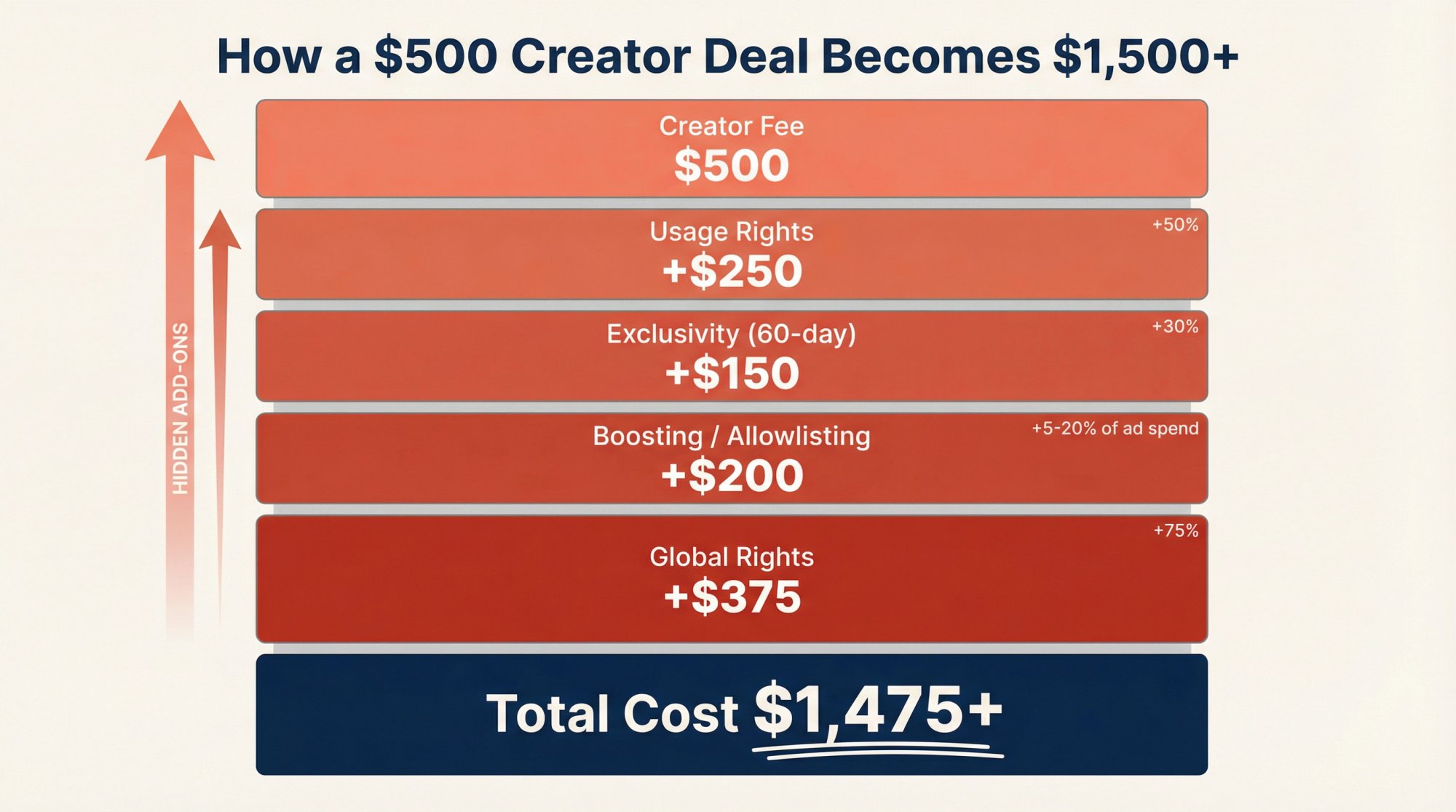
Research from Collabstr's 2025 report found that campaigns with usage rights averaged about $307, versus $221 without them, a 39% increase. Industry usage rights guidance gives a simple example where one month of usage rights adds 50% to a $500 base fee. And Shopify's enterprise guidance goes further: whitelisting or paid usage rights can add roughly 50% to 100% to base rates, while perpetual multi-platform rights can cost 3x to 5x the original fee.
That means a $500 creator deal can quietly become $1,500 or more once you add the rights you actually need.
What Do Influencer Exclusivity Clauses Cost?
If you want a creator to avoid competitors for a set period, expect a premium. Many creators charge roughly 20% to 100% of base rate for exclusivity depending on the time period and brand size. Even a 60-day competitor exclusion can add up to 30% to base rates. Tracking your competitors' influencer strategy can help you understand what exclusivity windows actually mean in your market.
How Much Does Influencer Boosting and Allowlisting Cost?
If the creator's identity is helping your paid media perform, they'll often charge for that too. Creators commonly charge 5% to 20% of ad spend for boosting or allowlisting arrangements. So if you're spending $10,000 on amplification, the creator's cut could be another $500 to $2,000 on top.
How Much Do Global and Editing Rights Add to Creator Fees?
The moment you want raw files, edit rights, website usage, cross-platform repurposing, or multi-country rights, you're no longer buying a simple sponsored post. North America rights can add around 25%, global rights can add 50% to 75%, and editing rights can add roughly 30%.
A quick reference for how fast hidden fees can stack:
| Add-On | Typical Cost Increase | Source |
|---|---|---|
| Usage rights (basic) | +39% on average | Collabstr 2025 |
| 1 month usage rights | +50% of base fee | industry benchmark |
| Whitelisting / paid usage | +50% to 100% | Shopify |
| Perpetual multi-platform rights | 3x to 5x base | Shopify |
| Exclusivity (60-day) | Up to +30% | Shopify |
| Exclusivity (extended) | +20% to 100% | industry benchmark |
| Boosting / allowlisting | 5% to 20% of ad spend | industry benchmark |
| North America rights | +25% | Shopify |
| Global rights | +50% to 75% | Shopify |
| Editing rights | +30% | Shopify |
The Hidden Cost of Seeding Operations and Logistics
Gifting programs often look cheap on paper but carry hidden coordination cost. If you're shipping product to dozens of creators every month, you're paying in fulfillment, communication, approvals, and follow-up even before usage rights or paid media enter the picture.
This is why "cheap creator" and "cheap campaign" are not the same thing. Shortimize's campaign management guidance puts it well: cost per post is a weak metric; cost per outcome and cost per usable asset are what matter. A $500 collaboration that produces several reusable ad concepts can be a better deal than a $2,000 post you can't repurpose.
The key is tracking post-campaign outcomes rigorously. Our guide on post-campaign optimization: turning influencer tracking insights into action for better ROI shows exactly how to evaluate which collaborations actually delivered.
What a Realistic Influencer Marketing Budget Looks Like in 2026
If you're an early-stage brand, a $2,000 to $5,000 test budget is usually enough to learn something real. According to Collabstr's marketplace data, that can buy a small batch of UGC assets, a few nano influencer or micro short-form collaborations, or a seeding-plus-affiliate experiment. Below that, you're mostly buying isolated experiments rather than enough volume to learn what actually works.
If you're serious about finding repeatable winners, $5,000 to $20,000 is a much more practical working range. That gives you room to test multiple creators, compare formats, and put extra rights or paid spend behind the winners. According to industry pricing data, five micro short-form collaborations can land anywhere from low four figures to low five figures depending on platform and rights coverage.
Once you want reach + reusable creative + paid amplification together, costs climb fast. Instagram Reels, YouTube integrations, and any deal with exclusivity or perpetual usage rights can push a campaign into the five figures quickly, even before ad spend.
At the enterprise end, per-post thinking stops being useful altogether. Industry data reported average annual influencer spend of $2.9 million among brands, $4.4 million among agencies, and $5.6 million to $8.1 million among enterprise organizations. At that level, influencer marketing isn't a side experiment. It's a strategic media and content budget.
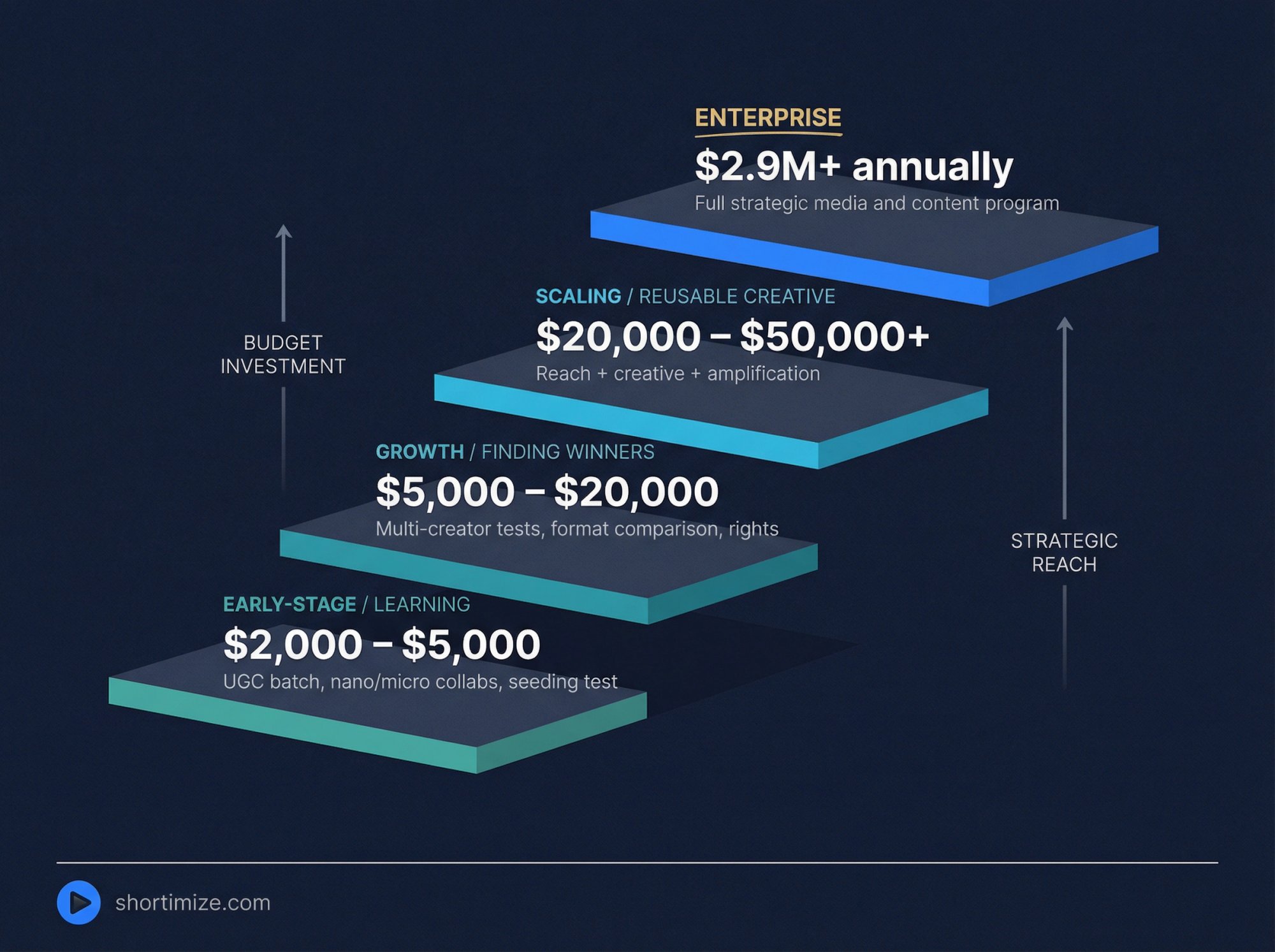
| Brand Stage | Suggested Test Budget | What It Buys |
|---|---|---|
| Early-stage / learning | $2,000 – $5,000 | UGC batch, nano/micro collabs, seeding test |
| Growth / finding winners | $5,000 – $20,000 | Multi-creator tests, format comparison, rights |
| Scaling / reusable creative | $20,000 – $50,000+ | Reach + creative + amplification |
| Enterprise | $2.9M+ annually | Full strategic media and content program |
No matter your budget stage, understanding the growth impact of influencer tracking in emerging markets can help you find more efficient allocation opportunities.
How to Tell If an Influencer Quote Is Fair
A fair quote isn't a low quote. A fair quote is one where the expected return, rights package, and creative usefulness justify the price.
Price Creators on Median Performance, Not Viral Outliers
If a creator's views are wildly inconsistent, don't price them based on their biggest post. Price them based on their baseline. Shortimize's influencer audit guide is direct on this: if views are inconsistent, anchor your estimate on median performance, not the top 1% outlier. And research on social trends points in the same direction by showing that follower count and engagement rate are no longer enough on their own.
With Shortimize, you can pull up any public creator's account and see their median views, engagement patterns, and posting cadence across TikTok, Instagram, and YouTube. That gives you an actual performance baseline instead of relying on a creator's best screenshots. Understanding what a good engagement rate on TikTok looks like helps you set the right performance expectations when evaluating creator quotes.
How to Check If an Influencer Has Fake Engagement
Before you commit to any quote, verify the creator's engagement is real. Learning how to tell if an influencer has fake engagement can save you thousands of dollars on collaborations that look impressive on paper but deliver zero real results. This is non-negotiable due diligence for any paid campaign.
How to Break Down an Influencer Quote Into Separate Fees
Ask for the organic deliverable fee, usage rights, edit rights, exclusivity, whitelisting, revision count, and cross-posting as separate line items. If a creator can't separate those, you can't compare offers properly. The hidden-fee benchmarks above are exactly why layered pricing matters.
Worth remembering: A creator quote that looks affordable as a single number can double or triple once you add the rights and amplification you actually need. Always price the full package, not just the post.
How to Calculate If an Influencer Deal Is Worth the Cost
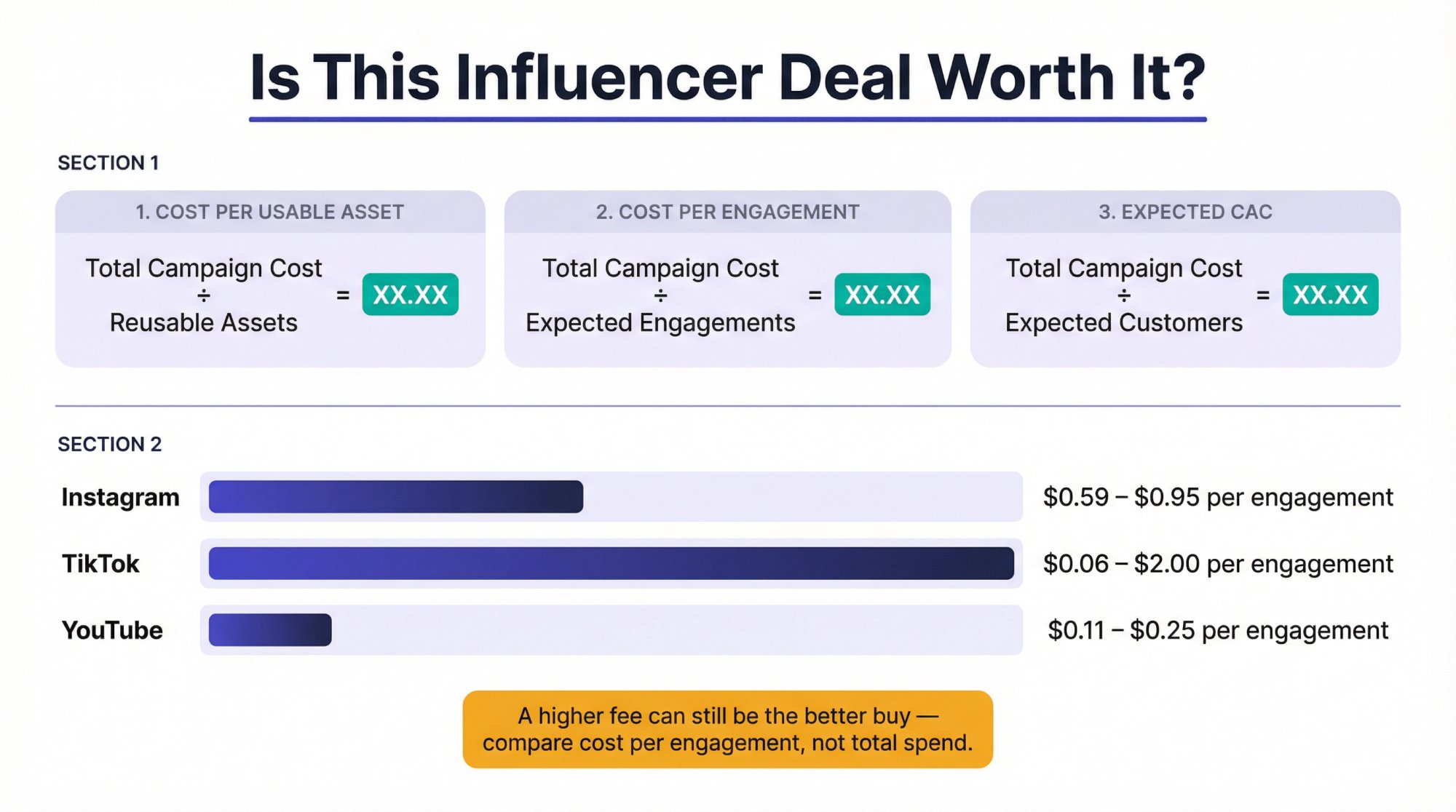
At minimum, model these three numbers:
① Expected cost per usable asset = total campaign cost / reusable assets
② Expected cost per engagement = total campaign cost / expected engagements
③ Expected CAC = total campaign cost / expected customers
Industry analysis put Instagram at roughly $0.59 to $0.95 per engagement, TikTok at $0.06 to $2, and YouTube at $0.11 to $0.25. That spread is exactly why a higher creator fee can still be the better buy. A $2,000 YouTube integration with a $0.15 cost per engagement might outperform a $500 TikTok post with a $1.50 cost per engagement. Understanding what a good view rate for TikTok looks like also helps contextualize these numbers.
When to Use Hybrid Affiliate Deals Instead of Flat Fees
If your goal is revenue, not just content or awareness, hybrid structures usually make more sense than flat fees alone. Industry trends argue that hybrid compensation is becoming the default serious structure, and affiliate revenue on major platforms grew 71% year over year in 2025.
How to Compare Creator Performance Across Platforms
A creator who looks great on one viral TikTok may be weak on Reels or inconsistent over a full month. Shortimize's tracking resources emphasize this point: pricing decisions improve when you compare median views, posting cadence, and cross-platform consistency instead of relying on screenshots or single-post performance.
To truly evaluate a creator across platforms, you should cross-analyze influencers on TikTok, Reels, and Shorts before making any budget commitment. Our deeper guide on cross-analyzing influencers using tracking tools shows the exact methodology.
This is where having a proper influencer analytics tool actually saves you money. Instead of guessing based on a creator's media kit, you can use Shortimize to track their actual performance over weeks or months before committing budget. That kind of due diligence can easily be the difference between a $3,000 collaboration that converts and a $3,000 collaboration that flatlines.
Influencer Marketing Trends in 2026 That Are Changing Costs
Four major trends are reshaping what brands pay for creator marketing in 2026.
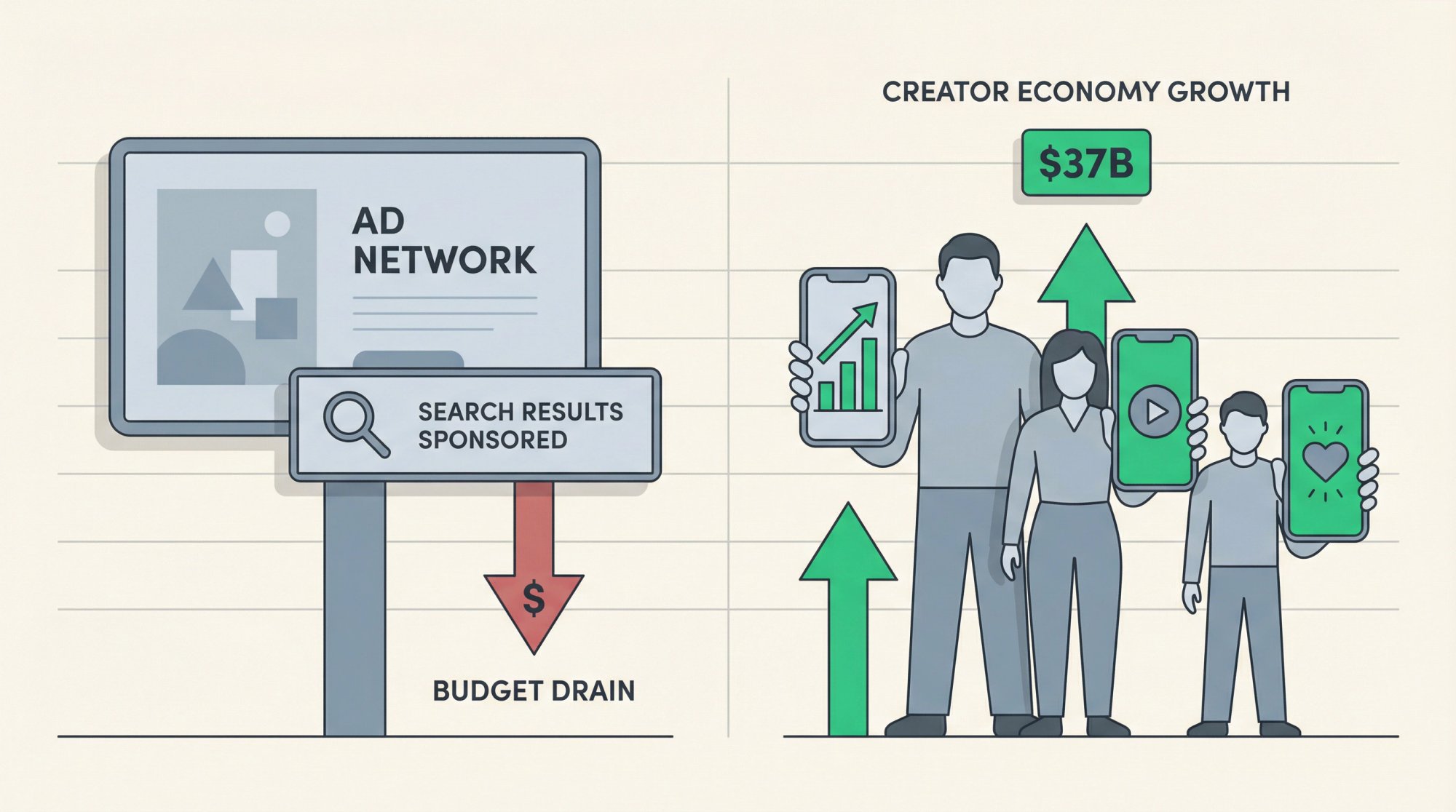
More brand money is still flowing into creators. Industry data says nearly two-thirds of increased creator investment is being reallocated from digital and paid channels, and budgeting guidance says 94% of brands believe creator marketing delivers higher ROI than regular digital ads. The IAB's November 2025 report projected U.S. creator ad spend at $37 billion for 2025, up 26% year over year, and said 48% of creator ad buyers consider creators a "must buy." Deloitte Digital's 2025 State of Social also found creators taking 24% of average yearly social budgets.
Smaller creators and UGC are still winning budget share. Influencer Marketing Hub's March 2026 report found the strongest expansion plans in nano, micro, and UGC programs, and Deloitte Digital found that the most socially mature brands prioritize micro and mid-tier creators far more heavily than lower-maturity brands. Browse Shortimize's nano influencer category and micro influencer category for more in-depth resources on working with smaller creators.
Rates are rising, but efficiency is improving. Research found that rising creator costs are a top challenge for 35.4% of marketers, but the average influencer marketing CPM was $2.68 in 2025, down 42% year over year. The channel can get more expensive at the creator-fee level and still become more efficient overall if the output performs better.
That paradox is real, and it's why social media engagement tracking matters so much. Tracking actual content performance, not just spend, is what separates teams that improve from those that don't.
One-off vanity deals are losing ground to ongoing partnerships and performance structures. Industry data from multiple trend reports all point in the same direction: brands care more about measurable ROI, creators increasingly want long-term relationships, and hybrid compensation keeps growing. Learning how to spy on your competitors' influencer strategy can help you benchmark your partnership approach against what's actually working in your market.
How to Allocate Your Influencer Marketing Budget in 2026
If you're a small brand that needs learning, not scale, start with enough money to run a real test. In practice, that usually means a few thousand dollars, not a few hundred. If you're buying UGC for paid social, you may get useful early learnings on a smaller budget. If you're buying creator distribution plus rights, expect the bill to rise fast. If you need YouTube, exclusivity, or paid amplification, a low five-figure budget can disappear quicker than most first-time buyers expect.
The smarter framing is simple:
Buy UGC when you want creative volume. Browse our UGC creator jobs guide for context on the creator side of this market.
Buy micro creators when you want efficient reach plus authenticity.
Buy hybrid deals when you want sales accountability.
Buy larger creators only when their audience, format, and content quality justify the premium.
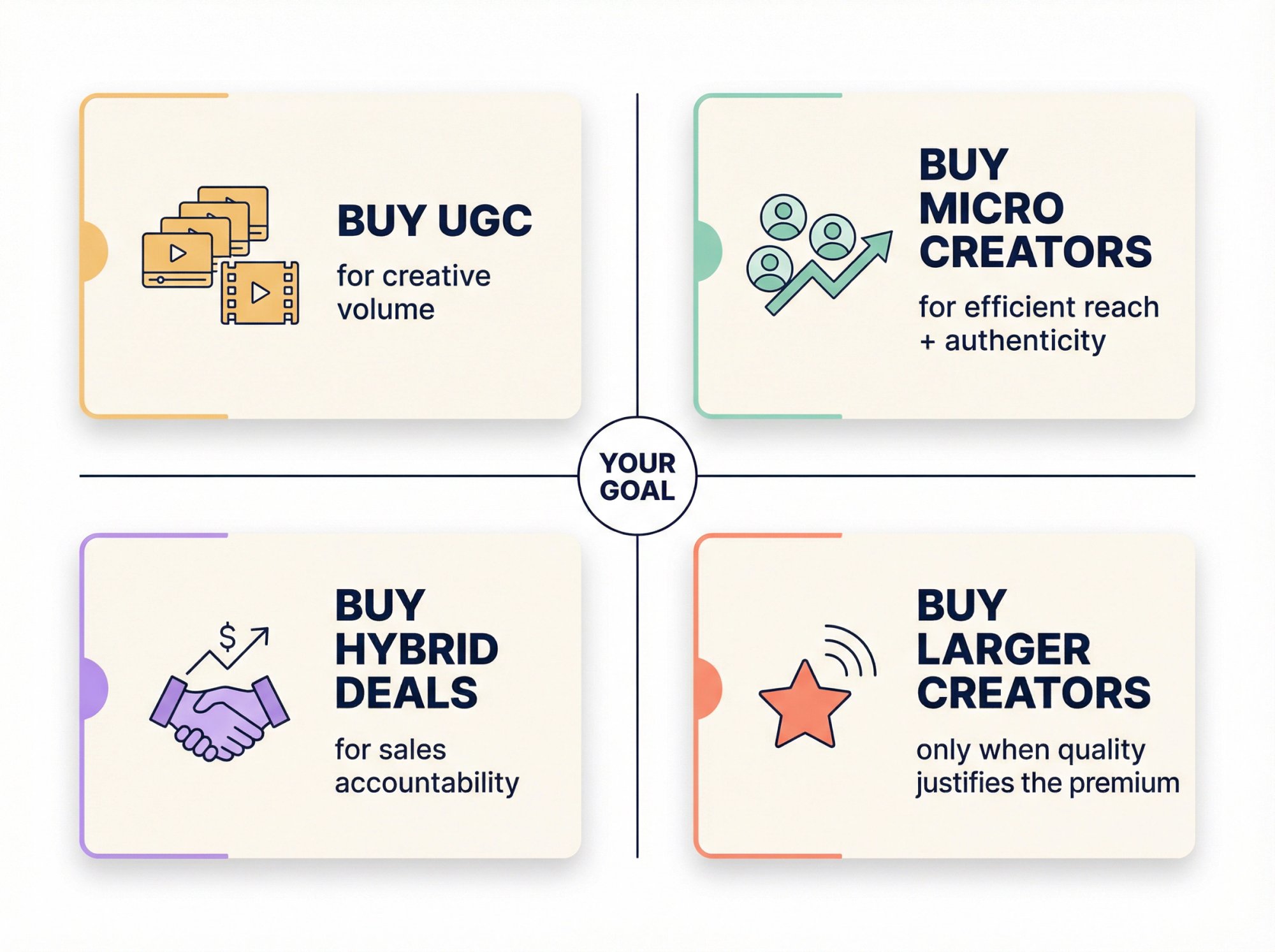
The platform matters. Follower count matters a little. But the biggest cost drivers in 2026 are still outcome, rights, and repeatability, according to industry pricing analysis.
To put the right tools behind your budget decisions, explore Shortimize's best influencer marketing tools roundup or check our influencer tracking software comparison guide.
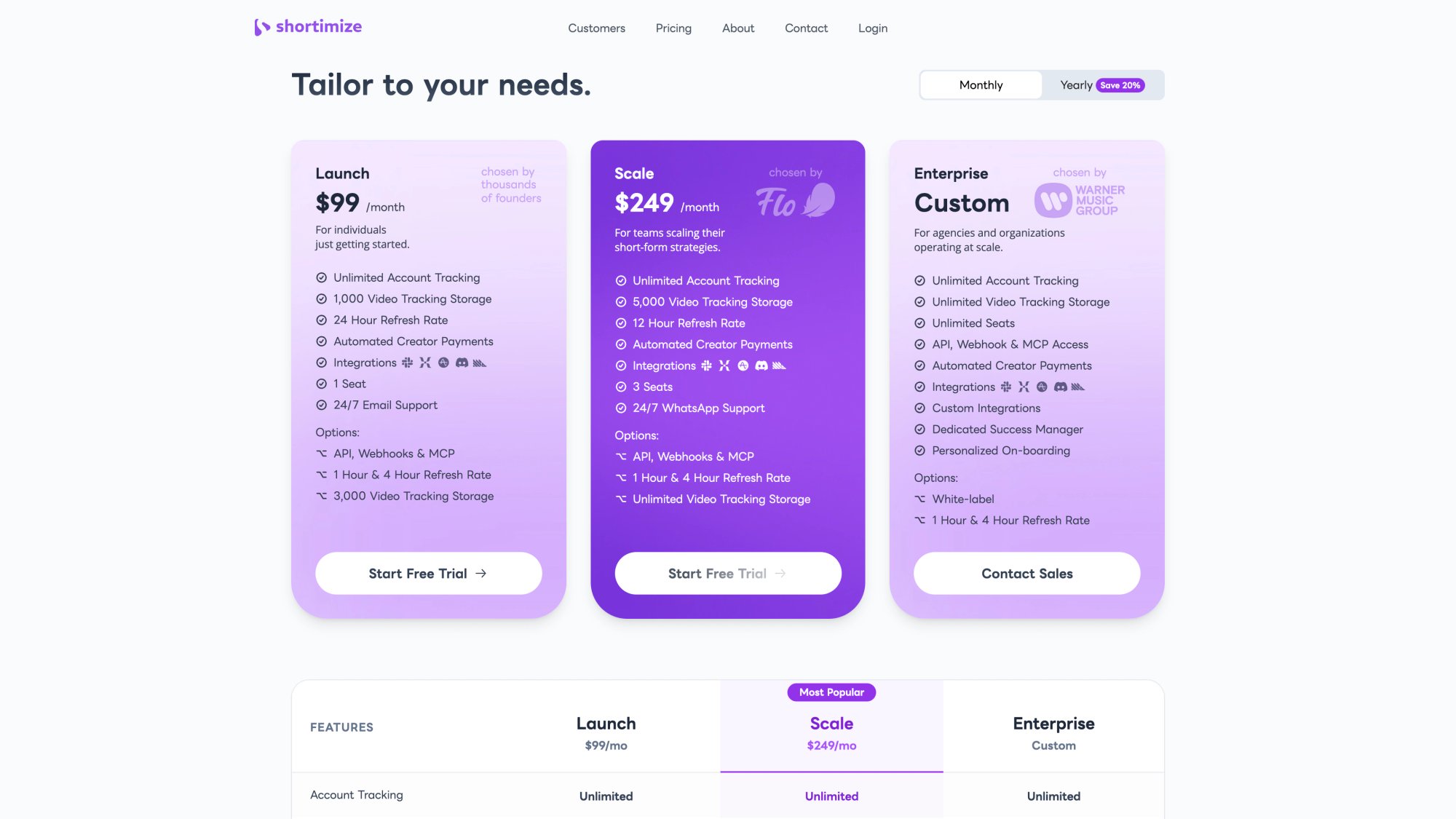
You can also try the Shortimize influencer tracking platform directly. If you're evaluating pricing options for ongoing use, our pricing page shows exactly what's included at each plan tier.
Here is what Shortimize's current plan structure looks like — purpose-built tracking at a fraction of agency overhead:
Influencer Marketing Cost FAQ
Is Influencer Gifting Enough in 2026?
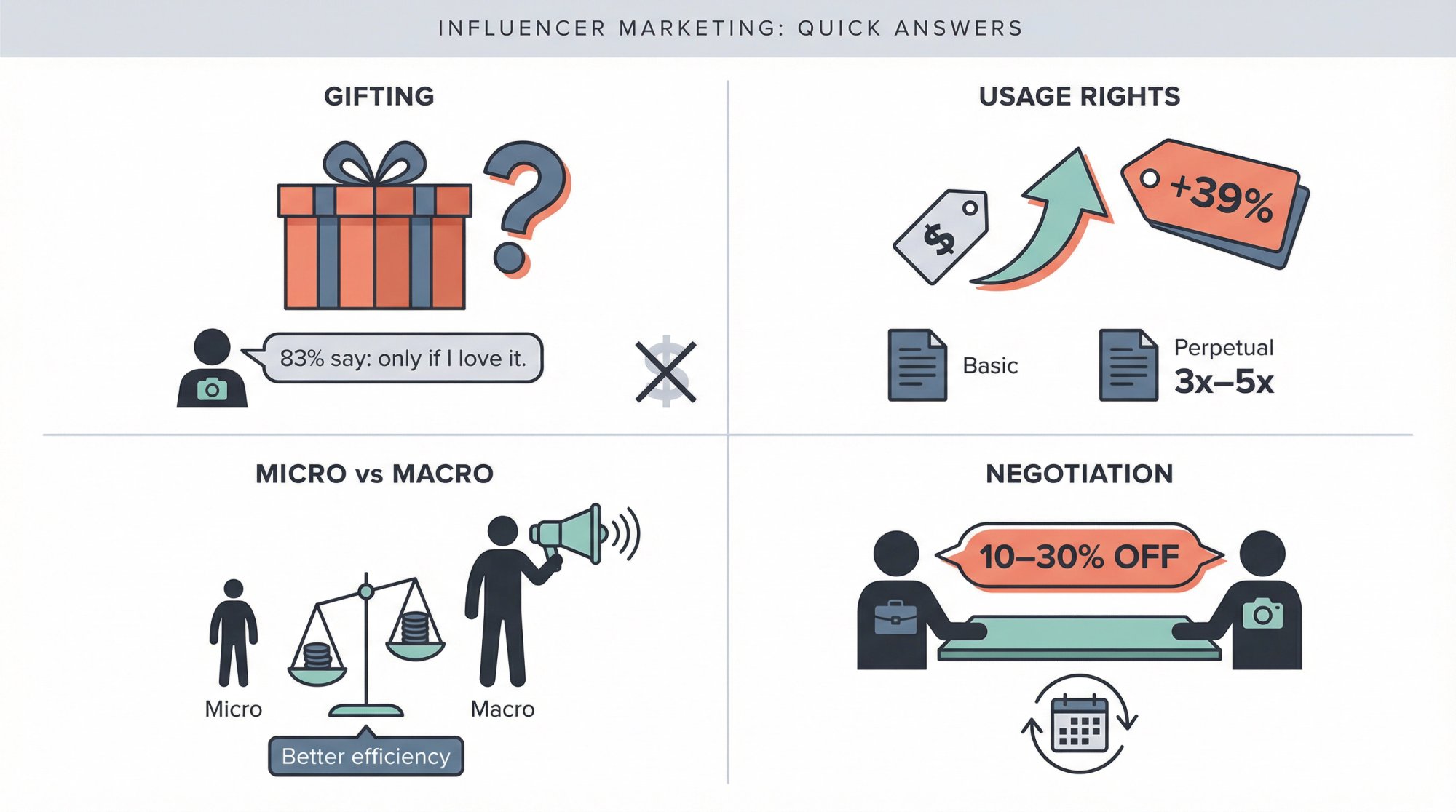
Sometimes, but usually only for seeding programs or when the creator already loves the brand. Research found that 83% of creators are willing to work for product-only compensation only if they genuinely like the brand or the product value is high. Gifting is a sourcing tactic, not a guaranteed media channel. If you're counting on it as your entire influencer strategy, you'll be disappointed.
How Much Extra Do Usage Rights Add?
A lot. Research found campaigns with usage rights averaged 39% higher cost than those without. Industry guidance suggests that whitelisting, paid usage, exclusivity, and perpetual rights can push costs from modest uplifts to multiple times the base creator fee. Always ask about rights pricing before you sign a deal.
Are Micro Influencers Cheaper and Better Than Macro?
They're usually cheaper, and often a better fit for brands that care about efficiency. Industry research found that more socially mature brands prioritize micro and mid-tier creators much more heavily than less mature brands, and trend data suggests follower count alone is no longer a strong enough pricing shortcut. The right answer depends on what you're buying: if it's efficient reach and authentic content, micro creators usually win. If it's mass awareness for a product launch, you might need bigger names. Read our complete guide on Instagram influencer marketing for a deeper breakdown of how tier decisions play out.
Are Influencer Rates Negotiable?
Often, yes. Bundle deals can reduce effective per-deliverable pricing, and longer-term or hybrid structures can produce better economics than isolated one-off deals. Industry research says bundles can create 10% to 30% discounts, while longer-term and hybrid arrangements are a growing norm. The best negotiation lever isn't haggling on price. It's offering a better, longer-term relationship. Our guide on how to manage influencer campaigns covers how to structure these negotiations effectively.
How to Budget for Influencer Marketing in 2026
Influencer marketing costs in 2026 don't live on one clean rate card. They live inside a stack of decisions: platform, format, creator quality, rights, exclusivity, and whether you're buying distribution, creative, sales, or all three at once. The brands that win aren't the ones that find the lowest quote. They're the ones that know what outcome they're paying for and can measure whether they got it.
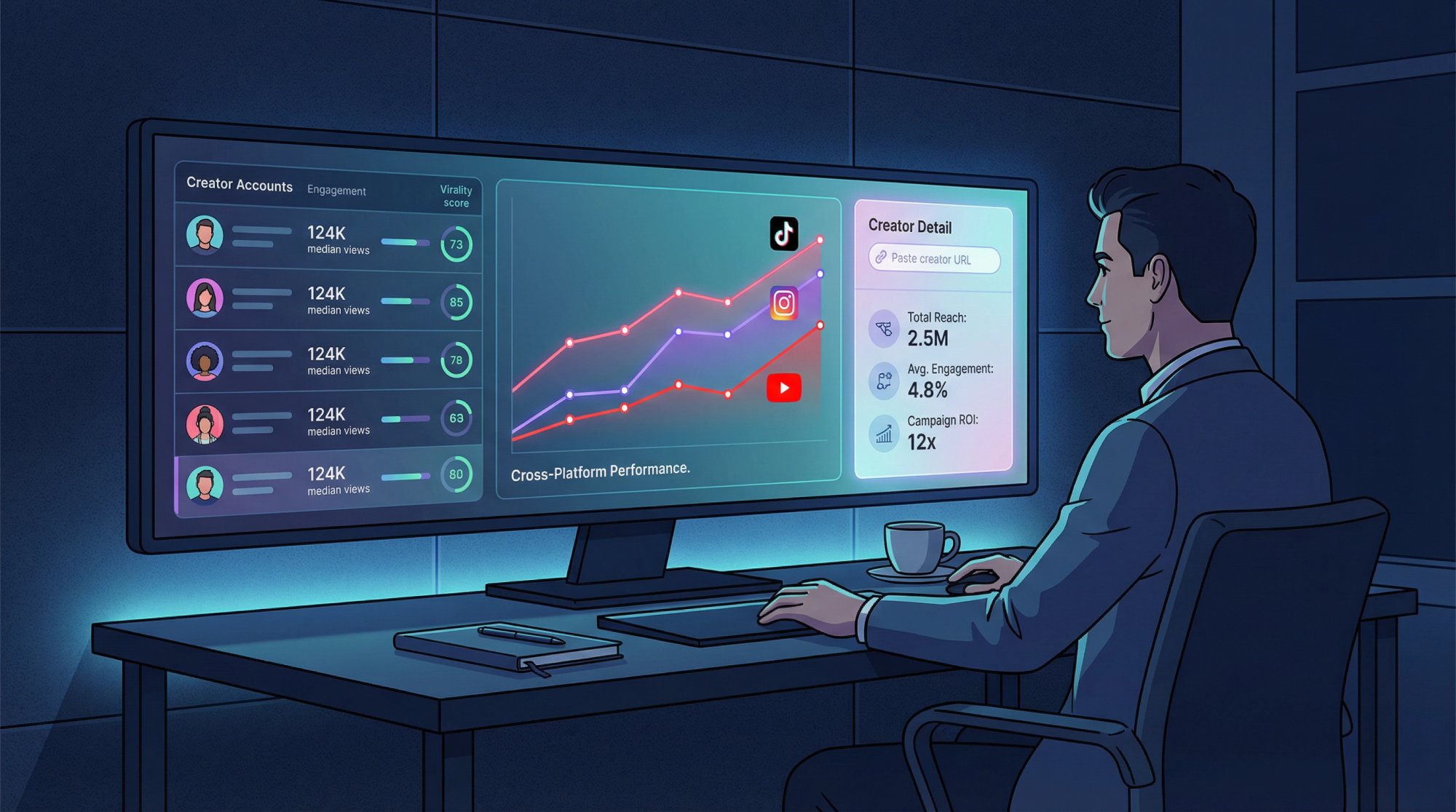
If you want to budget creator marketing with less guesswork, Shortimize is built exactly for this. We let you track influencer performance across TikTok, Instagram, and YouTube, compare median and virality patterns, and audit creators before you pay them. You can paste any public account URL and get performance data within minutes, giving you the confidence to make budget decisions based on real numbers instead of rate card estimates. Explore how our customers use Shortimize to drive measurable outcomes from their influencer investments.
For deeper guidance on the topics covered here, check out these companion resources on our blog: